A Balanced Approach to Wellness!

Archive for the ‘Health afflictions’ Category

Excavating the Pain

Pain-no

Our bodies are constant communicators.

______________

Here’s the message: pain has reasons. Pay attention and care for your body before it rebels.

______________

Here’s the explanation:

Aches, pains, urges, dizziness, and intuition are some of the communication devices. Feelings of satisfaction and comfortable exertion announce states of comfort. Fatigue, turning inwards, and explosions of boiling announce states of upset. Nausea and weakness transmit helplessness. Feelings of myself (no special physical sensations) and unawareness (of other physical sensations) convey self-realization (here, self-realization means being or doing in an absorbed or forced fashion).

pain

Subtle, intimate messages convey alerts for physical, emotional, and unsettled states of the body. The urges to perform daily physical actions start with subtle messages. Slight rumbling in the abdomen calls for attention to needs for nutrition. Urges to urinate and defecate are less subtle after sleep, but are more subtle when attention is focused on other activities. Mild pain in the back or legs conveys the need to move around. Yawning can signal tiredness or disinterest.

Louder messages are conveyed through less subtle means. Gnawing feelings in the abdomen shout for food intake. Leaking or spasming shout for attention to relief from waste materials in the body. Inability to move parts of the body shout for care of the affected body parts and the need to move more. Inability to focus shouts the need to change activities or to sleep.

Ignoring subtle messages can lead to the inability to care for one’s body. The body will actually give up the subtle messaging system and will work in distress mode until relief comes or relief doesn’t come and breakdown begins to occur.

Treating needs of the body with the wrong remedies contribute to the inability of the subtle messaging system to work. Examples: Drinking coffee late at night instead of sleeping upsets the body’s rhythms. Late night shift work after a day of not sleeping shuts down some functioning.

When pain is felt, a pain reliever is not the answer unless the pain reliever involves release of pain through natural or gradual means. Pain relievers that alter the communication between the body and the person are last resort options. The pain means that the body itself fights with itself—self-conflict with no winners. Relieving pain requires listening to the body’s subtle and not-so-subtle messages and relieving the body of its conflicts.

Message: the body is designed to function with proper care. Care for your body, listen to its messages, and go!

Awe-tism to Caregivers

autism

Note: The source of the information provided here is divine inspiration. The information has not been scientifically verified.

Autism is discussed in two earlier posts: “Awe-tism” https://energy-guidance-complete.com/2014/08/31/awe-tism/ and “Awe-tism Reality” https://energy-guidance-complete.com/2015/09/12/awe-tism-reality/.

Today’s post looks at the view of autism from the position of the caregivers. In the post “Awe-tism”, the following statement is made about the caregivers:

“Those who live with people that present autistic characteristics are determined, overwhelmed, searching, and/or sad.”

Determination is necessary for handling the daily uncertainty that comes with autism. Feeling overwhelmed occurs when autism presents its difficult reactions. Searching, searching for answers, searching for help, they are always searching for ways to make life better for the one afflicted with autism. Sadness is an undercurrent for oneself, one’s family, and the one afflicted with autism.

People who live with autism in their family treat their autistic one according to their own sense of how the person should be treated and according to advice from those who have studied autism.  The trouble with following the advice from those who have studied autism is that

“Those who study the phenomenon of autism are confused and unsure.”

Many theories abound about how to handle autism, but correct they often are not. The caregivers end up being worn down and discouraged. Not all, but many.

Caregivers learn to appreciate small gestures and moments of connection. Caregivers must treat themselves kindly and live for themselves as well. Caregivers must remember to see their autistic care as a person with differences rather than as a person with difficulties.

Awe-tism Reality

autism

Note: The source of the information provided here is divine inspiration. The information has not been scientifically verified.

Autism disconnects. Disconnection is autism’s reality. Disconnection in relationships and disconnection in cue exchanges.

Generalizations are easy to make when talking about autism, but this disconnecting reality actually differs from person to person. Only one generalization can be made about autism and that is its disconnecting nature. (The reason that generalizations cannot be made is because people with autistic interference have the normal differences that people without autistic interference have. They have a temperament [as do “normal” people], they have likes and aversions [as do “normal” people], they have a natural pace [as do “normal” people], and they have sense dominance—stronger sense of hearing or smell or vision or touch or taste [as do “normal” people]. That each person has an individualized character and nature is accepted in “normal” people and should be for those affected by autism.) The disconnection happens to all who are affected by autism, but the expression of autistic behavior will differ because of each person’s character, nature, severity of autism, and external happenings.

Each person who experiences autism’s disconnection experiences it with self-created intensity (due to the person’s character, nature, severity of autism, external happenings, and current state of well-being). The causes of autism are explained in the blog post “Awe-tism“ https://energy-guidance-complete.com/2014/08/31/awe-tism/ and the causes contribute to each one’s disconnection and stoppage. Stoppage refers to autism’s halting of stimuli messaging. This stoppage affects the body’s interpretation of feelings and gestures. Feelings are internal signals slowed or deflected by the autism. Gestures are external movements and spoken expressions by others that are echoed or misdirected depending upon other stimuli occurring internally and externally. External background stimuli and internal state of well-being affect the stoppage as well.

Autism is experienced anew every day, because the varying of stimuli each day requires the person experiencing autism to relate to the slowed or deflected or echoed or misdirected messaging differently each time.

Living with autism is a Sisyphean feat, and people who do not face autism’s challenges should be in awe of those who do.

Wearing invasive items

invasive items

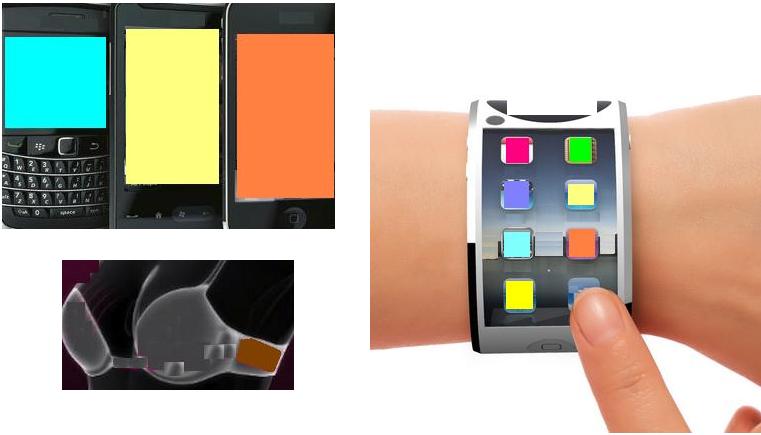
Technology has enabled us to continuously harm ourselves by creating wearable invasive gadgets. Smartphones that are constantly in our hands and next to our ears, in our pockets near sensitive organs, and even in bras and undergarments. Smart watches that are constantly attached, near our bones and our pulse points. Smart glasses that sit near our brains! And more wearable invasive items are in development.

These gadgets are seemingly helpful to us. In reality, they harm us in ways that are yet unknown. The harm depends on how long the invasive items are next to us and on our ability to battle the effects.

The strategy for minimizing the damage is to keep the “smart” items as far away from our bodies as possible. The easiest way is to not buy the wearable items. As for smartphones, keeping them in away-from-the-body containers is best. Pockets are too close, much too close. As is holding them all the time.

Using technology is fine when we use it wisely. Using technology wisely is the challenge.

The Head Signals: Migraines

headache

Migraines are the body’s way of signaling for help. They are front-line announcers of distress. A person who ignores other bodily signals will usually get migraines.

Migraines are not genetically transmitted, but they can be learned. A child whose parent experiences migraines on a regular basis learns migraine behavior. That doesn’t mean the child will suffer with migraines, but the child feels the effects in a subtle—or not so subtle—way which transmits migraine behavior as a coping mechanism.

Migraines signal that shutting down is necessary for the body to recoup its equilibrium. The shutting down is a response to lack of sleep or lack of water or too much visual stimulation or too little self-care or irritation by overhead lighting or lighting on the computer or emotional confusion. Improper food intake can contribute to migraines as can seasonal changes. Each person experiences life in a unique-to-me way; therefore, the causes and contributors to migraines are different for each person. There are many more reasons for migraines to occur and my partial list is to give a sense of migraine triggers.

Migraines require care. Dulling them is not care, it is foolhardy. Yes, feeling less pain is better, but it is temporary relief until the next one and the next one and the next one and the next one. Migraines require examination of lifestyle and life choices. Migraines require changing routines and changing lights (if lighting is a cause).

Relief from migraines is worth the investment in removing the migraine causes and contributors. Not only will migraines lessen, but other aspects of health will improve.

Body talk and the meaning, part 2

PeopleA pain in one part of the body is often related to that part of the body, but not always.  The body is a complete entity, and what happens in one part can have an effect on many other parts. Illness and afflictions have causes, causes that are often not easy to understand.

An example is fibromyalgia. Fibromyalgia syndrome is not understood because it acts differently in each body. There are many hypotheses as to the cause and some of the hypotheses are accurate for some people. But not for all, which make it a confusion. Each person with fibromyalgic symptoms has reasons for the symptoms, the reasons are body talk unheeded.  Each person with fibromyalgia syndrome suffers from body talk unheeded that multiplied because of ignored messages. When the body is trying to communicate and the person doesn’t listen the body will shut down, overreact, or take over. Fibromyalgia syndrome is an example of the body doing all three.

Whether the cause of illness or afflicitons is a physical cause or an emotional cause, the body will speak to you.  If you listen and work out the cause, your body will reward you with well-being and reliability. If you ignore the whispers and the shouts, your body may lose its ability to communicate which can lead to many ill effects.

The next time your body calls, aim to listen carefully. You will be grateful in the future.

More about body talk: Body talk and the meaning

Illness and its consequences

illness

Illness is end result of improper or incorrect care. Illness reflects prior actions and illnesses. Emotional responses and imbalance can also trigger illness.

The main contributors to ill health are discussed in an earlier post: https://energy-guidance-complete.com/2014/06/05/the-forty-contributors-to-ill-health-and-to-possible/ These contributors also contribute to the various illnesses that strike. For example, sleep deprivation and dehydration can lead to general ill health and to succumbing to a virus.

The body has defenses to protect against invading germs, but if these defenses are troubled by internal weaknesses or disruptions, then the germs can overcome the defenses. Balanced health is required to keep the germs at bay.

When the body is chronically weak and disrupted, illness can cause life-changing consequences, as happened to an acquaintance. He is now in a facility that handles people who are well enough to not be in a hospital, but are too far gone to be at home. He was an active and innovative community member who overlooked his own physical needs. He slept too little. He ate too little, and when he ate, he often ate foods that did not nourish. He forgot to drink water regularly and he forgot to wear warm clothing when it was cold. He was emotionally inundated with other people’s problems and he would forget to address his own emotional hurts. He was spiritually searching, but not spiritually open to personal spiritual connection. His health was overlooked, and illness was seen as a nuisance. He became ill a few years ago, ignored the illness, became ill a few more times, took various medications (but not better care of himself), and  his body eventually “turned” on him. His decline was all-encompassing affecting his physical, emotional, and intellectual health. Doctors were consulted; medications were administered (with some success, but with too many side effects); workload was lessened; people were avoided. His chronically ill-cared-for body could not overcome the onslaught of germs, worry, medications, more worry, and more germs.

This post is a reminder to take care of yourself and to treasure the body that houses your soul.

Closeting

Closet

Secrets. Thoughts. Emotions. Worries.
Hiding away in the crevices of our minds. Jumping out of their hiding places when we purposely retrieve them or accidently let them surface. Reminding us of desires or events or suspicions or fears that we prefer to hide or forget or ignore or overcome.

Thoughts.
Thoughts distinguish each person. We all think about matters that enter our lives, and our thinking is individualized, like a fingerprint. Each person with fascinating thoughts about life, living, and edge-existence (edge-existence is awareness of oneself as a part of larger-than-self [nature] and of oneself connected to beyond-self [the spiritual realm]). Thoughts that seem too unusual are kept closeted unless the person has a secure sense of rightness.

Secrets.
Hidden away are the actions and thoughts that cause embarrassment, excitement, and anguish. They influence behavior even though they are meant to be buried. Each person has secrets that simmer. The simmering lessens or boils over depending upon availability of nonjudgmental support, the urgency to unload sequestered information, and the closeness of death.

Emotions.
All people experience life emotionally. Emotions are extensions of awareness. Awareness of one’s environment and one’s physical state elicit emotional responses. People whose emotions are nonexistent or are uncontrollable have suffered a trauma—through genetics or through injury. People whose emotions are denied by themselves often suffer from chronic illnesses that cannot be explained. Emotions reflect dynamism, and hiding them impact intellectual and physical health.

Worries.
Accidents can happen and misfortune can befall, but constant worrying about these things causes stunted development. Pretending not to worry, while secretly worrying, causes stunted development and inability to reach potential. Worrying is a result of fearful upbringing. Closeted worries require determination to release them.

The opening for repressed baggage is acknowledgement.

Life with pain

pain

Back pain, headaches, knee pain, reflux, stomachaches, plantar fasciitis (heel pain), toothaches, constipation, tendonitis, neck pain, and more.

Pain occurs because of deliberate infliction, injury, poor choices, ill-use, and improper posture (when standing, sitting, reaching, lifting, reclining, or working). Pain can be interesting or fearsome, over-preened or overlooked, intense or annoying. The anticipation of pain is less frightening when awareness of its cause and extent are known. Chronic pain causes curbed activity, poor decision making, despair, and questioning.

Chronic pain is exhausting. Chronic pain can be empowering—if the pain enables refusal of unpleasant tasks (such as disliked household tasks) —or if the pain provides attention (for people who like to complain and feel that they don’t receive enough attention). Chronic pain is one more hurdle to overcome (for those who see it as a challenge) or defeat (for those who see it as an overwhelming obstacle).

Many therapies and lifestyle changes are able to reduce, and often rid, pain that is bothersome or chronic. People who suffer from pain benefit from introspective focus on the causes and intensification of their pain. Life with pain is not the given; it should be the exception.

Awe-tism

autism

Note: The source of the information provided here is divine inspiration. The information has not been scientifically verified.

Those who study the phenomenon of autism are confused and unsure. Those who live with people that present autistic characteristics are determined, overwhelmed, searching, and/or sad. Those who have the autistic presentations are diSTraCteD, kaleidoshcopic, d r i v e n, sensitive, and companionship-aware.

The causes of autism are partially in utero and partially after birth. In utero causes are smoking tobacco, nutrition that decreases estrogen (for example, too little phytoestrogens during pregnancy or too much calcium lactate before and during pregnancy), injury to the cervix after the fourth month, and contracting a certain virus during pregnancy (not a cold or flu virus).

An infant can display autistic presentation soon after birth if one or more causes of the autism occurred in utero. Each cause does not affect every infant. If that were the case, all mothers who smoke during pregnancy would have an autistic child. No, there is something else, something beyond physicality that determines autistic presentation. It is related to the mother’s emotional well-being and to her feelings of security and acceptance. Without these emotional safeguards, the mother cannot protect her fetus from the onslaught of autism instigators. The mother does not have to be happy at all times during her pregnancy to protect her fetus, but if she is emotionally fragile at the moment the autism cause occurs (or in the case of smoking and decreased estrogen, at the moment that the amount reaches the too-much or too-little point), autistic presentation will most likely develop.

Post-birth, an infant who has not experienced any of the in utero causes can still develop autistic tendencies because of allergies to formula or other supplemental nutrition (supplemental to breast milk) and respiratory malfunctioning. These causes depend upon the health of the infant and his or her own emotional well-being. If the infant has autistic presentation from in utero causes, post-birth causes can deepen the autistic presentation.

Autism is new: new name, new causes, new awareness. Autism existed before the official diagnosis, but it was less widespread, less afflicting. The new causes did not exist then. They have developed with technology. They have developed with changes in society.

To protect against autism, a mother must not smoke during her pregnancy. She must eat foods containing phytoestrogens (in moderation) to supplement her body’s need for increased estrogen. She must not use products containing calcium lactate during and a year before her pregnancy. She must strive to stay healthy by eating properly, exercising wisely, and surrounding herself with supportive people. After the baby is born, breastmilk should be the food of choice rather than formula.

Autism won’t occur when all these safeguards are in place. Other afflictions can happen, but not autism.

The next post about autism will be about lessening autistic presentation.

———

The reality of autism is discussed in this post: https://energy-guidance-complete.com/2015/09/12/awe-tism-reality/. Caregivers are discussed in this post: https://energy-guidance-complete.com/2015/09/16/awe-tism-to-caregivers/

Psoriasis

psoriasis

Psoriasis is one of the conditions that evades resolu-standing (resolution and understanding), The main way to handle psoriasis is to recognize this situation and work around it. There are many things to do that will lessen psoriasis presentations.

Note: The source of the information provided here is divine inspiration. It has not been scientifically verified.

Food

Each person who has psoriasis has a food sensitivity. The sensitivity exacerbates the psoriasis but does not cause it. Limiting exposure to this food(s) can help lessen the psoriasis presentation, but only if the person is not under stress.

Exposure to Environmental Toxins

Environmental toxins, such as chemicals in the home, can trigger the first appearance of psoriasis. Each person is affected by different environmental toxins (whether or not they become afflicted by psoriasis). A person who is vulnerable to psoriasis can succumb to it if environmental toxins are used in amounts and in the environment that prolongs exposure (for example, lack of air circulation).

Continued exposure to environmental toxins deepens the psoriasis entrenchment.

Bodily Bacteria

Balance of flora in the gut is of utmost importance. Imbalance prevents psoriasis from being ridded. The psoriasis will present more frequently when gut flora cannot process carbohydrates.

Skin Factor

The condition of the dermis affects psoriasis. The dermis requires adequate hydration, limited exposure to water, and proper removal of potassium ions by the kidneys. When any of these conditions is not met, the other two conditions are even more important. The appearance of psoriasis presentations is determined by dermis inability to maintain equilibrium.

Internal Toxins

Poor nutrition can cause outbreaks of psoriasis areas (psoriasis presentations in new places on the skin). Especially when the psoriasis is outwardly active should balanced nutrition be maintained. Foods that strengthen the liver should be eaten.

Emotions

The following emotions can trigger the first outbreak: deep sadness and despair. Either of these emotions, when felt very deeply can trigger the first outbreak. Usually a traumatic event that causes either of these emotions will preface the outbreak.

Connection to One’s Emotions

People who suppress emotions have a greater chance of developing psoriasis.

Sweat

Sweating is natural body temperature regulation. Sweating is good for psoriasis; therefore, exercises that produce sweat help heal psoriasis. Sweating in a dry sauna helps, but sweating in a wet sauna does not. Antiperspirants exacerbate psoriasis.

Stress

Stress does not trigger the first outbreak, but it can trigger subsequent outbreaks.

Other auto-immune problems

People who have existing auto-immune afflictions have increased susceptibility to psoriasis. For example, some people who have asthma also have psoriasis.

Feeling less than

Post 12 Screen beans mom and kids

I’m feeling less than. I caught a virus so I’ve had to slow down to let my body rev up.

This post is about illness and I’m very curious to learn what Spiritual Presence has to teach me.

Illness, and its cousin depression, occur when we allow ourselves to deteriorate. Deterioration in sleep, healthy food intake, or other important ingredient in each person’s life. In other words, each person has a point of deterioration at which good health is not viable. Some people can manage with too little sleep, but will then fall ill if they don’t have enough social interaction.

Illness is simply a call to pause. Pause to examine previous lifestyle or changes in lifestyle. Illness is not a reason to solicit sympathy. Everyone gets sick at some point, therefore there is no need to overdo the sympathy or the misery. You’re sick? OK, take care of yourself and try not to share your virus/bacteria/fungus. Put on a happy face, because most likely you will be well within a few days. (not discussing serious illness in this post)

Feeling less than causes us to remember our mortality. Feeling less than should cause us to appreciate our just-fine days.