A Balanced Approach to Wellness!

Posts tagged ‘Energy Guidance Complete’

Enjoying zoo-protected animals

My latest visit to the zoo was uplifting. Most of the animals were enclosed in spaces that are supportive of their needs. Many were eating or interacting with one another, and their antics reflected a protected existence. These animals live well in this particular zoo.

The animals with large space needs, like the zebra, fox and scimitar oryx (a species related to antelope), lack space to move as they instinctively know they should. The zoo I visited cares for animals such as these, providing them with areas that are too inadequate. These animals are well cared for, but restrained in their opportunities to move breathlessly (like children at school or factory workers who do sit-down, repetitive work). The zookeepers want these animals to be content, but without more area, the animals cannot be fulfilled.

An attraction that brings people to zoos is the petting zoo with its animals-meet-unsure, pushy, enthusiastic or frightened humans. The animals in a petting zoo are always living an unnatural life. The need of humans to approach and interact with the animals and the need of the zoo to attract visitors supercede the needs of the petting zoo animals. As the Shetland pony in the book Zoo Conversations—Giving Voices to the Animals, A Play discloses about life in the petting zoo:

“Many animals [referring to humans] sit on me. Sometimes, the animals that sit on me give me food. I like when they give me food. Some of the animals that sit on me are quiet and touch me with softness. I like them.

Some of the animals that sit on me are loud and pulling. I move away from them when I can. The animals that pull are not wanted. I am slow with them because they have strength and ropes.”

“I prefer to be with my type and not with the animals that put heavy things on me and pull me.

I like to do things at my speed, fast or slow depending on how I feel. I feel different speeds when I am tired or hungry or with others.

When I am with others like me, I am as I should be. I run and I jump and I do what the others like me do. I am sure when I am with others like me.”

Protecting the animals is the goal of those who are aware of their responsibility towards Earth. Support for zoos that direct their efforts towards empathy for animals is important.

“If only we could return each animal to its natural home.
To eat and roam in freedom,
To live as designed,
With fear from natural predators,
And with contentment from natural surroundings.
But the natural surroundings are changing
Through people’s involvement.
And the natural surroundings are threatened
As are the animals’ lives.
To live enclosed is to live partially
But to live enclosed means remaining alive.
Zoos are a way of righting the wrongs.
The more we support them,
The more they can support the animals.”

If you would like to feel the life of zoo animals, Zoo Conversations fulfills your goal. In this book, Spirit used me to record contentment and strain, restlessness, and ennui of the animals in their zoo homes. Each animal that shares his or her story is speaking for other animals in the zoo.

When we know what the animals feel, we can understand the ways to make them feel fulfilled. When we know what they feel, we can treat them as we should. How rich our lives can be when we appreciate the animals!

Click here to buy Zoo Conversations—Giving Voices to the Animals, A Play: 

Prevention of Alzheimer’s disease

Alzheimers

Alzheimer’s disease is confusing. Life becomes unenjoyable and challenging. Memories hide and knowledge distances. Likes and dislikes are buried so that decisions are difficult to make. Aromas that once delighted now waft by unacknowledged. Flavorful foods once desired now become bland.

Alzheimer’s disease alienates family members and creates shadows. A shadow is a person who looks like someone who once existed, but exists in physical form only.

Alzheimer’s disease is terrible. It is frightening. It is defeating.

Alzheimer’s disease can be thwarted by eating nutritiously and appropriately for your body, avoiding unnecessary aids to the modern lifestyle, and connecting with others. Here are guidelines to strengthen yourself against Alzheimer’s disease’s confusion.

1. Build social connections

The importance of social connections cannot be overemphasized. Interacting with other people is our natural state and is part of our health.

Strengthen family ties, join community organizations, invest in friendships. The social connections are like a cocoon that envelops us in resistance to external stressors and internal wounding.

2. Avoid stomach medicines

For many people, stomach discomfort is avoided through the use of digestive impediments. Over-the-counter and prescription medicines are used for lessening or increasing digestive functioning. Not all medicines weaken the natural digestive processing, but some do, and their interference can lead to changes in sense functioning (taste, smell, etc.) that can then impact brain functioning.

By listening to your body and knowing the foods that make it feel nourished and well, you can avoid stomach discomfort.

3. Avoid ear medicines

The body can heal most internal upsets. The body’s healing requires patience and awareness. Many people want immediate healing and doubt the body’s abilities to heal itself. Some ear medicines weaken ability to communicate with the body and contribute to weakening of communication in the brain.

Allowing your body to heal itself is the best path. Proper sleep, adequate water consumption, and healing foods usually restore health.

4. Use your brain creatively

The importance of using the brain throughout one’s life is known. Creative thinking is even more powerful than doing brain exercises. Creative thinking such as writing poetry, choreographing a dance, and designing a garden strengthen the mind and focus its functioning. Creative thinking doesn’t need to be done every day for it to strengthen the mind, but the more creative the endeavors, the more resilient the mind.


These guidelines are general, but they provide important information if you are open to see it.

Notes: This blog post is spiritually advised. It does not apply to other types of dementia. This blog post was previously posted in 2016.

Why I can’t write

For the last few weeks, I have floundered while writing these wisdom posts. I’ve started posts about healing, depression and marriage, and on each topic I’ve given up as I struggle to receive the wisdom. I haven’t understood my inability to get enthused about the spiritual wisdom I receive. Usually I’m amazed as I work out the words and am eager to share them.

A month ago, I finished writing the book that has been my most difficult, Descending into War, Descending into Contempt. This book is currently being proofed, and I’ll receive a draft version in a few weeks. Writing this book took me years, because the questions for Spirit were too hard for me to formulate and I didn’t want to ask the questions that would provide the book’s text.

War and conflict felt too difficult to write about, so my response to Spirit’s prompting was to ignore and ask for different wisdom to share. There’s so much wisdom to share that is not about war and conflict, and I’ve busily written about health, environmental issues, spirituality, and connections. I managed to put off writing Descending into War for years.

Spirit eventually nudged me into the conflict book with the blog posts about superiority. Once these posts were written, I became interested in conflicts among people and I opened to the task of channeling about aggression. The information I received has caused me to see my role in society differently, because I’ve learned how each person, including myself, contributes to the conflicts and to chaos.

After having immersed in conflict, contempt and death, my ability to be excited about other topics has been dampened. The importance of conflict resolution—between nations, regions, cultures, and neighbors—overshadows the other topics. Conflict resolution affects everything!

These days I’m focusing on working one-on-one with people through Energy Guidance Complete, which gives me great satisfaction watching them take the wisdom and use it for positive change. One of these days, I’ll finish the blog posts I left mid-sentence, and I’ll inundate you all with the wonderful words from Spirit!

Your soul is longing for connection

Each of us has a soul that was endowed when we were born. This soul of ours knows our true self and our abilities and gifts. Somehow, life takes us away from the soulful connection, and to regain it takes dedicated effort.

In the book Faith–A Wisdom Poem Sharing Spiritual Connection, we are guided to reconnect with Spirit through reconnection with our souls. The reconnection takes focus and awareness. Here is an excerpt from Faith about reconnecting with the soul:

Faith–A Wisdom Poem Sharing Spiritual Connection provides a path to soul reconnection and connection with Spirit. It is available here: 

Image

Real Connections

Harvey

Superiority Because of Race

Not long ago, I received wisdom about the sense of superiority. The posts about superiority discussed gender, religion, and nationality; however, race was alluded to but not specifically addressed.

Here is Spirit’s judgement about superiority and race:

Condescension because of race is irrational. Belittling because of race is weak. Generalizing about race is uninformed. Thinking disparaging thoughts about other races is contemptuous.

Superiority because of the foolish thinking that race has influence on value is deluded. No race is superior to any other. Race is variations of people. No more, no less.

Superiority is discussed in detail in my upcoming book, Descending into War, Descending into Contempt.

The two-headed side of hate

Post 20

Picture a two-headed creature with the heads facing one another. Each head has a nose, eyes, ears, and mouth. Each head has its own brain and reasoning. The heads are connected to the same body so that the heart that beats for one beats for the other. The heads share needs and oxygen.

The hate-filled, turning at each other in Charlottesville, Virginia was a hate expression. It was not unique, but it was introductory to the coming conflict. This conflict reminds the present of past mistakes, but gathers anew the actions of aggression.

The body is one but the heads are two, and one has bared its teeth and the other is offended and defensive. This unaccepting coexistence damages the heads and confuses the body.

The Charlottesville negativity is one of many in the world–all two-headed creatures blowing hate. The world holds these creatures with all the gifts the world has to give. How much better for the creatures if they would focus on the gifts.

Note: I asked Spirit about the events in Charlottesville and this blog post shares the answer.

Changing the things we know fail us

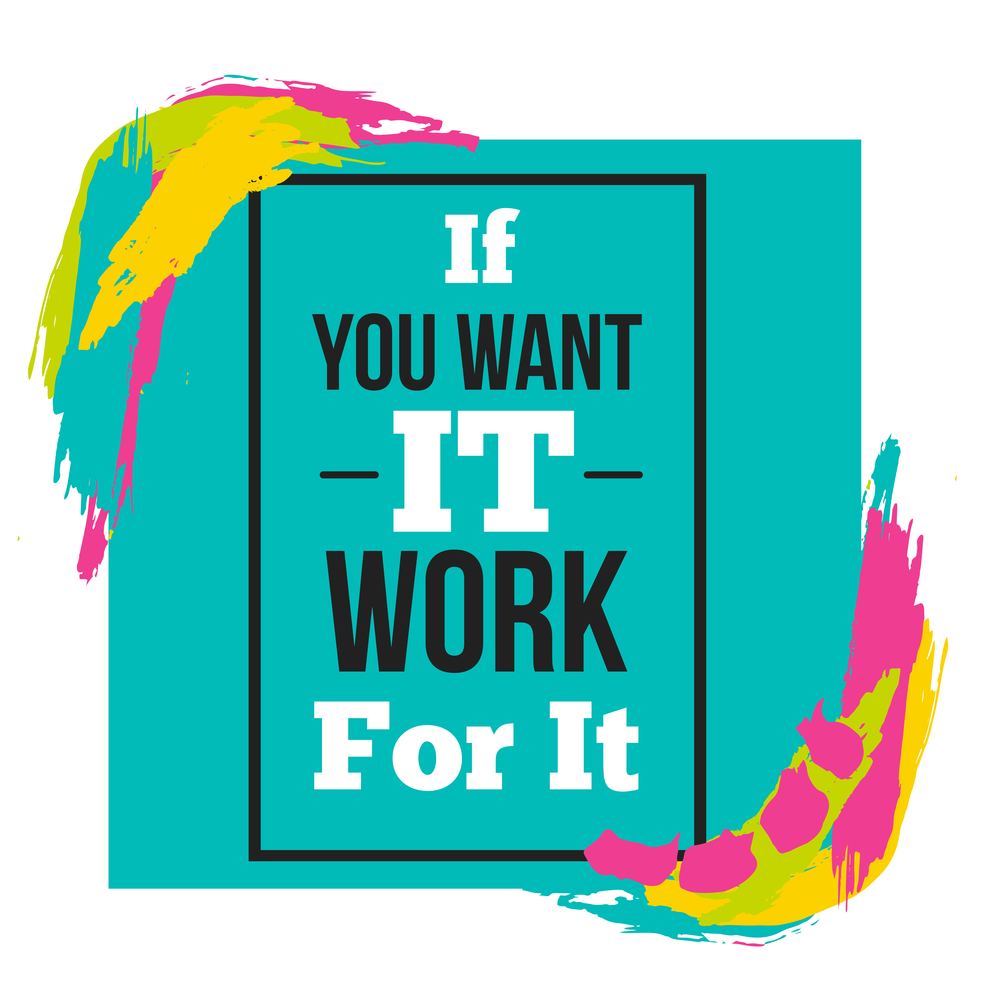
If you Want it Work for ItThe previous post was about changing ourselves and the will to change. Today’s post delves into my personal failing habit, with hope it can speak to others.

A thing that fails me is my addiction to sugar. I wrote about it in the post “My Contract for Overcoming Cravings“. My sugar addiction was bestowed upon me by well-meaning parents and a food industry that pushed sugar. From a young age, my addiction to sugar affected my health and my food choices, and it followed me into adulthood. Even as an adult educated in the insidiousness of sugar, I have continuous cravings for sugar, which I indulge too often.

The sugar-sneaked-in foods feed the addiction when I’m “off” sugar. The struggle to resist the sugar receives lip service from me, not conviction, because as soon as a host offers me sweet refreshments, I abandon my convictions and knowledge and say, “Sure” rather than explain or offend. My convictions are easily swayed by a pretty sugary confection.

My will to change is affected by the addiction. I’d like to be able to focus on so many other significant aspects of life, but the sugar addiction often takes the focus.

Spirit prompts me to make many changes in my life so that I can be reverent and virtuous in my living in order to be a conduit for the wisdom that is sacred. You would think that the closeness of my connection to Spirit would simplify the process of change. It should, but the force of the sugar addiction, and a few other negative habits, thwart my efforts.

So how can I change the things that I know fail me? Here’s what Spirit says:

  • Acknowledge the areas that create negativity, shame and imbalance, and then develop ways to change them.
  • Acknowledge the actions that are in line with goals. Small and large actions are worth acknowledgement.
  • Look an addiction straight in its glory and acknowledge its power. Then do the work to end it.

One step at a time, change is achieved. The things that fail us can be changed when we really want to change them.

The Will to Change

Will is a powerful force.

Wanting something—really wanting something—really, really wanting something—wanting something determinedly—inspires us to invest our time and thoughts to the wanted thing. When we know our energy is concentrated on achieving desires, we are willing to work and struggle. We are even willing to change!

Sometimes we say we want something—and we really mean to mean it—but the work seems too hard, the struggle feels endless, and the resolve to change is unsure. We waver, because the effort to change and invest ourselves fully overwhelms our self-fabricated existence.

Perhaps the desired thing is desired by someone else for us. Perhaps the desired thing is wanted, but not mightily. Perhaps the desired thing calls, but it conflicts with our obligations and schedules. Sometimes the desired thing is unattainable because of habits, opinions, or addictions we have entrapped ourselves in.

Really wanting something can be tangible awareness of soulful communication when the desired goal fulfills soulful elevation. The wants that give us true fulfillment are the ones that deserve investment.

The will to change: willing to strive and to invest effort, willing to make mistakes and to embrace differences, willing to change habits and to persevere. We can all live satisfying lives when we are willing to know ourselves and change the things we know fail us.

The color of your soul

Each person has individualized likes and dislikes, personality traits, reactions, and habits. These individualized self-definitions are influenced by genetics, family influence, societal influence, and the times in which the person lives. Beyond these influences is the influence of the soul.

When a person is born, he or she is the recipient of a soul and this soul brings color—soul-color! The color of the soul is the starting point for a person’s individual character and personality.

What Are the Personality Characteristics of the Soul?

According to Awaiting Light—Understanding the Development of the Soul, soul-color is a combination of four attributes: shade, hue, contrast, and coloration. Each of these attributes determines a part of a person’s personality, likes, dislikes, temperament, and family connections. When a baby receives the soul, all these attributes are given, and they are the person’s direction for life. As the baby grows, and depending on outside influences, the soul-color shines or is smudged.

What Is the Soul-Color Attribute Hue?

Hue is the attribute that sets attractions—attractions to certain activities, colors, shapes, knowledge, sounds, scents, textures, foods, etc.

“From the moment a person is born, distinct preferences are evident. A baby reacts to various stimuli in positive or negative ways, but adults are unaware that issues other than hunger, wetness, or discomfort are at play. As the baby ages and is able to communicate through movements and sounds, adults slowly grasp the interests and triggers that pull or repel the infant.” from the chapter “Soul-Color Attributes” in Awaiting Light.

>> Knowing which interests are innately fixed is a step towards knowing your soul-color attribute hue.

What Is the Soul-Color Attribute Contrast?

Contrast is the attribute that sets opposite-sided emotional reactions. Examples are joy-sorrow, warmth-indifference, and excitement-insensitivity. Contrast determines the passion that is felt as life is experienced and the conviction that is felt when opinions and thoughts are formulated. Some people feel their emotions in a large way, some feel their emotions in a reserved way, and some feel their emotions differently depending on circumstances. All of these ways are normal and are soul-endowed.

>> Recognizing depth of emotion innately felt is a step towards knowing your soul-color attribute contrast.

What Is the Soul-Color Attribute Shade?

Shade is the attribute that affects pace, temperature tolerance, circadian calibration (natural affinity for certain times in a day), and acceptance of boundaries. Pace determines the speed at which a person naturally lives, ranging from living without rush to living at an exuberant speed. Temperature tolerance is the coolness-warmth range that is determined by the location to which a person is born. Circadian calibration determines the time of day that is most comfortable to a person. Acceptance of boundaries refers to a person’s natural moral compass of knowing right and wrong.

>> Sensing your natural rhythm of movement, temperature, day or nighttime preference, and sense of right and wrong is a step towards knowing your soul-color attribute shade.

What Is the Soul-Color Attribute Coloration?

Coloration is the attribute that determines the soul-groupings for souls of similar colors. Coloration provides the possibility of group connections. It causes the feeling that you’ve known some people forever, when you’ve just met them.

>> Coloration is a group attribute. Being able to recognize group traits in your family and friends is a step towards knowing your soul-color attribute coloration.

Conclusion

Each soul is combination of soul-color attributes that are spiritually linked to one another. Each soul is unique, like a person’s fingerprints.

The more you can know and understand yourself, the more you can see your soul’s color and the more authentically you can live.

Awaiting Light—Understanding the Development of the Soul can be purchased on amazon.com. Click the book cover to order this book: 

The importance of delight

OLYMPUS DIGITAL CAMERA

Delighting in simple pleasures has become a lost art. Very young children do it; they can’t help themselves. They haven’t yet been conditioned to expect more.

Being told to delight in simple pleasures is a rather broad commandment.  First of all, what is a simple pleasure? Second of all, what exactly does it mean to delight in something? And third, why is it so important?

What is a simple pleasure?

A simple pleasure is a thing, a connection, or an event that causes a person to feel a smile within the body. In general, large and elaborate things or events that, while positive, create different reactions within the body.

Simple pleasures rarely change in life. What delights a child should delight an adult, unless the adult has been too tarnished or damaged. There are infinite simple pleasures and each person feels perhaps 3,000 in his or her lifetime. The more open a person is to the amazement of life on Earth, the more simple pleasures he or she can feel.

Examples of simple pleasures are:

  • Seeing a beautiful flower, smelling it, touching its petals
  • Approaching a large tree, looking up into its leaves so high above, touching the bark
  • Walking barefoot on sand and feeling it between the toes
  • Standing outside during a mild rain shower with face uplifted to the sky, feeling the drops on the face
  • Being held by someone who loves you
  • Being rocked by someone who loves you
  • Holding a pet in your arms, stroking the fur, seeing the pet’s reactions
  • Feeling strength in your hands, their versatility, their capability

What does it mean to delight in something?

To delight in something means to roll in its hold on you. Not to really roll, rather to let it take you over in childlike amazement. As if you are a small child witnessing wonder.

Many people lose the wonder of things as they age and experience experiences over and over again. To see a tree for the millionth time is less amazing than seeing a tree for the first time, and yet, the millionth tree is really as amazing as that first one. Finding delight in each and every experience that is pleasurable is a goal worth pursuing. Avoiding becoming jaded, avoiding becoming apathetic.

Why is it important to delight in delight?

The more we let ourselves be moved by the joyous moments in life, the more balanced we are. Our bodies and souls require HAPPY for proper functioning. Even when life is difficult and challenging, finding delight in simple pleasures can affect the way in which we handle the challenges and low tides. Finding moments of un-joylessness, un-annoyance, and un-restlessness lead to balance and to meaningful existence.

Tip

A simple way to recall the joyousness of childhood is to be outside near a plant that has a scent you find pleasing.  Sit down next to the plant and let yourself be absorbed by its scent and its fullness of life. (Be sure to protect your clothes before you sit; otherwise, you’ll be upset when you see your dirty clothes and forget the joyous moment!)

Conclusion

“The importance of delight” is the title of this post. It is also a directive from Spiritual Presence about our lives. Life is not meant to be easy, but it is meant to be interesting. The more we find pleasure in the world, the more we can contribute and receive.

Investing for a rainy day, the good and bad news

This blog post is not about investing money. It is about investing in what’s around you—in friendships, in committed relationships, in neighborly relations, in family, and in the community. Investing in these important relationships is investing for a rainy day at its best!

Good News: Investing in family, friends and community builds a safety net

“Investing in friendships and giving and taking from friends is nourishing. Investing in relationships is natural and is needed to live a balanced life. Investing in family—children, children’s children, siblings, cousins, and so on builds a network of support that is reliable. Investing in communal activities builds a network of support that nourishes and strengthens the individual community members and the collective group.”… from “Oneself—Living”.

Investing time is necessary in order to build a safety net for when life becomes difficult or too hard to bear alone. Often, people put work obligations before obligations to family, friends, and community. This behavior has become acceptable in society, but it is short-sighted. The more a person gives to the relationships that truly matter, the more protection from the surprises that occur in life. Of course, a person must perform work obligations with an enthusiastic spirit and with focus, but work obligations should be one section of life, not all of life.

 Good News: Investing in family, friends and community supports good health

The more people invest in their relationships and community, the more balanced their health. Time spent with people who are meaningful creates memories that enrich beyond the moments in which they occurred. Positive memories are better, but even negative memories create experiences that build and nurture if the negative experiences are within the realm of realistic disagreeable treatment. In other words, interactions with family members, friends, and community acquaintances do not always have to be positive for the investment to be worthwhile. Learning to negotiate the varying needs of the various people is balancing.

Tip:

Choose a community betterment activity that excites you so you’ll want to participate. If you enjoy the arts, volunteer at a museum or in an enhancing-the-neighborhood project. If you prefer working on your own, volunteer with community building or cleaning projects. There are enough volunteer opportunities to suit all personalities.

 Bad News: Not investing is unwise

“Non-investment in relationships with others leads to loneliness, sadness, aloofness, insensitivity, and unsureness. Non-investment in friendship—foolish. Non-investment in marriage—incorrect behavior. Non-investment in intrafamilial connections—mistake. Non-investment in neighborly relations—short-sighted. Non-investment in societal obligations—selfish thinking.”… from “Oneself—Living”.

The less people invest in their relationships and community, the less balanced their health. Simple as that.

Conclusion

Investing for a rainy day means being prepared for whatever may come. Rain is not negative, but it can cause a change in plans. The same is true for changes in health, family structure (through births, deaths, divorce, etc.), and societal balance. Being prepared means planning ahead—making sure to invest in the connections that truly matter.

To purchase the book Oneself-Living, click on the book cover: 

Balancing the balancing—the intertwined design of life

“The design of the body is just exact and nearly as beautiful as the most beautiful object. Being brilliantly designed and executed, the body accompanies its inhabitant throughout the body’s existence. Beautiful in motion, in repose, in its beginning and in its ending, ….”  from the chapter “Connection of the Four Components of Health” in Pond a Connected Existence.

“Being brilliantly designed and executed” is the description of the human body. This description refers not only to the physical component of the body, but also to the nonphysical components—the emotional, intellectual, and spiritual components. The body is a complex interconnected creation that demands balance of all the components to be truly itself. Balance is the key to life as designed.

What does it mean to live in balance?

Achieving balance is important to living well. Living well does not mean being prosperous or famous. Living well means living with purpose and with vitality, with awareness of the rhythms of the world, and with connections. Connections to other people, to the environment, to other creatures, to spiritual presence, and to oneself.

Knowing how to live within the constraints of the human body while enabling it to thrive permits the growth and development of a balanced being. Knowing how to give and take love, kindness, and support permits the widening of the emotions and the strengthening of the body. Knowing how to take interest in the world around and in its inhabitants permits the development of the intellect, the development of the emotions, and the versatility of the body. Knowing how to open to spiritual presence enables the relaxing of the spirit, which then relaxes the intellect, emotions, and body. Spirit—mind—emotions—body; all connected, all the time.

What is the first step towards balance?

The first step to bringing balance to the whole composition that is a person is to accept the intertwined design of life. It is important to understand that each decision, each movement, and each interaction affects the connected body in each of the components. By living as a connected human being—connected to oneself and to one’s interconnected composition and connected to all that is around (the environment, other people, the many creatures), a person can thrive and shine in a life well lived.

What is the second step towards balance?

The second step to bringing balance is to create realistic goals that achieve purposeful living. Here are three examples of steps to purposeful living:

  1. Creating warm and lasting relationships with family members and chosen friends balance all four components of health. This balancing goal can be achieved by scheduling time for visits with, calls to, and fun adventures with family and friends.
  2. Avoiding intentional damage to the environment balances the components of health. Thinking of ways to individually create less havoc in the world—less use of disposables, less reliance on animal products, etc.—balances the intellectual and emotional components of health. Following through and doing these things balances all four components of health.
  3. Avoiding intentional damage to our own selves balances the components of health. This step is not easy, but is necessary for balancing. Examining one’s lifestyle, choices, and activities balances the intellectual and emotional components of health. Following through and making changes balances all four components of health.

A simple way to bring balance

One way to balance yourself is to feel the weather. Rather than rush out of the rain, walk in it and feel the raindrops. Rather than avoid the cold weather, dress appropriately but let yourself shiver and notice your body’s shivering. During the hot months, let your body feel the heat and let it sweat.

Conclusion

By taking steps to connect with ourselves and with our situation (our surroundings, our society, and our ability to bring change), we can create meaningful and well-lived lives!

Individual:Group:Self-Reflection

People see. They see what others are doing and do the same—or  not. What they observe in others causes them to adjust their own behavior. People are always adjusting, and self-reflection is the vehicle to the adjusting.

Self-reflection has several meanings. It means seeing an image of oneself in others. It means reflecting back to others their humanness. Reflecting back and forth actions, ideas, and emotions, sometimes with thoughtful reflection and sometimes just reflection.

People are individuals, but group members too, and they reflect on themselves varyingly. The varying self-reflection is dependent upon age, society, and awareness of the soul.

Self-reflection of children

People start life through exploration of themselves and their close companions. The sense of self—one’s boundaries and one’s impact on the environment and others—thoroughly entrances and busies the infant, and leads to understanding of self and others. As the infant gains awareness of caregivers, unknown people, and animals, self-reflection begins. Comparing oneself to others, as a tool to learning how to be, is natural development. When the behavior of others is admirable, the child learns to depend on others, to desire their company, and to identify with them.

Self-reflection of sufferers

When the behavior of others is unkind, indifferent, or impatient, children’s development is affected. They lose their desire to connect with others when the negative reflections are internalized. Children naturally reflect what they learn from their caregivers, except when childlike wonder and happiness prevail. Caregivers who are difficult influence opinions of self and of the community. Close companions negatively influence when they model unkind behavior. Community members and other people negatively influence when they model unkind and unaccepting behavior.

Each person is a reflection of others’ behavior so that the suffering of one reflects over and over as others internalize and reflect the suffering back.

Relationship reflectors

Relationship reflectors are the people in a relationship. People are highly influenced by lovers, close friends, and siblings. They continuously serve-return-volley to one another when the relationship is close. Relationships nurture and balance, and they are required for well-being.

True Reflection

Each person has a soul that provides a personality, likes and dislikes, emotional reactions, and connection to energy from beyond. When the soul is able to influence actions, the person is reflecting soulful definitions.

Living that is true to oneself is self-reflection realized. Living that is true to oneself is expected. Living one’s capabilities and gifts, as an individual and as part of the group, sustains. Individual:group:self-reflection—the meeting point for the soul!

How to say NO to animal testing

Beagle-save beagles

(This picture is from the Beagle Freedom Project website.)

I just watched a moving video about beagles that have been released from their cages after having lived their entire lives in cages because they were used in animal experiments for people products.

The video prompted me to ask Spiritual Presence about animal testing, and the answer I received is straightforward. Here is the answer:

If people would use natural products, there would not be a need for testing on animals.          I’ll repeat that sentence, If people (us) would use natural products, there would not be a need for testing on animals.          I’ll repeat the sentence again: If people (each and every one of us) would use natural products (even if they cost more or require more work on our part), there would not be a need for testing on animals.

Steps to rely less on animal-tested products
  • Maintain your health so you don’t get diseases that require medications that were developed using animal testing. This step is simpler than you think. Look at the post on aging well: https://energy-guidance-complete.com/2014/05/20/health-throughout-aging-post-7-2/
  • If you are ill, try using natural healing products first and only if they don’t help after a reasonable amount of time, use the possibly animal-tested products.
  • Use natural cleaning products. Vinegar is a wonderful cleaning agent. Look it up on the Internet.
  • Use personal care products that specify no animal testing.
  • If you use nutritional supplements, buy those that do not use animal testing.

Making these changes is small in comparison to what it does for the animals that are used for our “betterment”. As stated in The Gift of Intuitive, Dedicated Comfort:

 “Intuitively, we must live as if we understand that our lives are gifts to the world, that we are here to link ourselves with the rhythms of the world, that we are caregivers of others and of the creatures and natural elements of the world, that our presence brings betterment to the world, and that each step we take resonates with the knowledge of our responsibilities.”

This area is one in which individual buying habits can make a difference. This area is one in which caring for oneself affects other aspects of the world in myriad ways.

Spread the word!

(This post was originally posted on June 3, 2014. In today’s post, I’ve added a few more suggestions.)

Mending the Memories

Sequoia

Sometimes we remember mixed up. A memory that felt so clear loses its details. A different memory disappears and reappears a few years later happier than the original memory was. Sometimes a memory is someone else’s telling of an event that we were at, and we remember it partially through our own senses and partially through someone else’s words. Sometimes an event is too traumatic and we remember just little parts.

Sometimes, our memories of an event are actually memories of our feelings at the time. We don’t see the event clearly, because we were ill or tired or busy. Or we were very happy or disappointed or worried. The event takes on the feeling and is remembered through a filter of emotion. The event might have been wonderful, but the emotion was not, and so the memory of the event is not of the real event. The event might have been sad, but the emotion was not, and so the memory might be fond.

Memories can’t really be mended, because our memories aren’t really broken; they’re just slanted. A slanted memory can be “straightened” if we are able to talk to others who were also there or if we think about the event with determination to see it differently.

Memories that make us happy are memories that can be left alone. Memories that bring sadness can sometimes be reexamined to find other sides. Memories that are traumatic and affect our living are helpful if they push us to live fully, but if they hold us back then we need to reexamine them and see them differently. Sometimes the old memories that hold us back are best put away in storage.

(If you want help with memory storage, read this blog post: “Enough Drawers“)


Autoimmune healing!

Psoriasis

Our bodies are designed to function properly.

Autoimmunity is dryness in a flowing river. It is soil that feeds concrete sidewalks and makes them grow. It is a snowball rolling upwards. It is gravity that pulls haphazardly.

Autoimmunity is rewiring. It is not meant to happen unless a defect before birth occurs.

There are so many examples of autoimmunity. Here are a few of them: fibromyalgia, psoriasis, eczema, ankylosing spondylitis, transverse myelitis, multiple sclerosis, scleroderma, and cancer.

Each autoimmune dysfunction has possibility for not occurring, but new types develop nonetheless. The body is strong, but autoimmune dysfunction sabotages it.

A balanced body can ignore autoimmune developments, but a body that is resentful or grieving or fearful or besieged physically gives way when autoimmune genes rule or traumas strike.

Causes that combine with resentment, grief, fear, and physical distress to allow autoimmune dysfunction are: certain ingredients in processed foods; certain ingredients in medications; exposure to certain products used in manufacturing; artificial living conditions; and injuries to bones, muscles or lymphatic nodule arrangements. Some of these causes build in the body until it is weakened and gives way. Some of these causes compromise the body immediately.

The rewiring by autoimmune syndromes and diseases, once in place, is hard to correct. Each person’s autoimmune life has been created individually so that return to pre-affliction is personal. There are general guidelines to heal, but customization is required. Here are five changes that can bring strengthening of the body in its struggle against autoimmune dysfunction:

  1. No to processed foods, especially when the body feels weak. Eat whole foods and prepare meals from scratch.
  2. Yes to spending time in nature. Breathe deeply in nature and experience the natural beauty.
  3. No to sleep deprivation. Schedule sleep so that tiredness is rare.
  4. Yes to thinking about others. Be sure to regularly connect with people you like and help others less fortunate.
  5. Drink water rather than other beverages.
  • Read the side effects on medications you take. More could be said about this guideline, but allopathic medicine “rules” so that’s it.

Autoimmune influence on the body definitely changes functioning, but its ability to overtake can be stopped by making its movement more difficult. Healing comes from understanding that autoimmunity needs to be redirected. The redirection comes from helping the body focus on non-acceptance of autoimmune changes rather than on digestion of foods that stress the digestion, defense against invasive substances, tiredness, self-absorption, perpetuation of the autoimmune response, and unnatural disturbances.

Inhibiting the autoimmune function are the brakes that slow autoimmune damage and create new processes that sidestep autoimmune syndromes and diseases. Each small contribution to inhibition—drinking water instead of coffee, eating vegetable soup rather than fast food fare, walking in a park rather than in a mall, paying attention to the needs of others, choosing sleep over watching a late night movie, overcoming a sugar addiction or a tobacco addiction or a cocaine addiction—helps the body sidestep the rewired reality.

Healing autoimmunity? Not easy, but possible through understanding and day-by-day, small contribution-by-small contribution steps.

Note: The health information presented here is not an in-depth explanation of autoimmune syndromes and diseases, because the causes and treatments are so varied. This information is what Spiritual Presence wants me to share at this time. It is not based on scientific information.

Another book of wisdom poetry published

Cover-Growth

After I finished writing the third book of wisdom poetry, there were still more poems to bring to light.

The fourth book, Growth, is a collection of poems about growing through natural processes, struggles, spiritual connection, and societal movement.

Growth can be purchased through this link: http://a.co/fpl41JV.

Here are two poems from the book:

Poem-Pushing the Difficulty

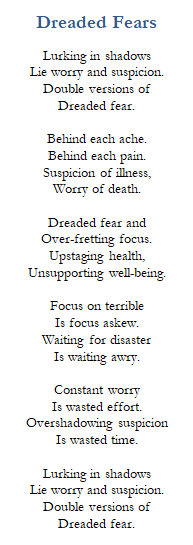
Poem-Dreaded Fear

Politically Correct

Making fun of people is MEAN. It’s not a question of politically correct or not—it’s just MEAN. It has always been WRONG!

The damage from ridicule is usually hidden, but it is LARGE. It hurts the feelings and hurts the heart, literally. Hidden pain can cause generational harm—that’s how LARGE the damage is.

Making fun of people who are unknown to us or are famous is the same—it’s all MEAN. Being well-known doesn’t change a person’s sensitivity and doesn’t lessen the harm. People who think it’s fine to ridicule well-known people are WRONG—it’s damaging to their own well-being even more than to the people they ridicule.

Hurt feelings from being ridiculed can lead to compromised judgment and to destructive actions. Saying hurtful jokes or opinions about others can lead to self-chastisement and to shame which lower health. Both sides of the ridicule suffer, with each side harmed differently in physical and emotional ways.

Making fun of people is BELITTLING. It has never been right; it has always been WRONG. Reverberations from ridicule compromise whole societies and multiple generations. The effects are incredibly DESTRUCTIVE!

Being politically correct is not the answer. Being generous of spirit is.

The heart heals and the emotions balance when acceptance of others leads the way!

Insomnia and Its Effects

insomnia

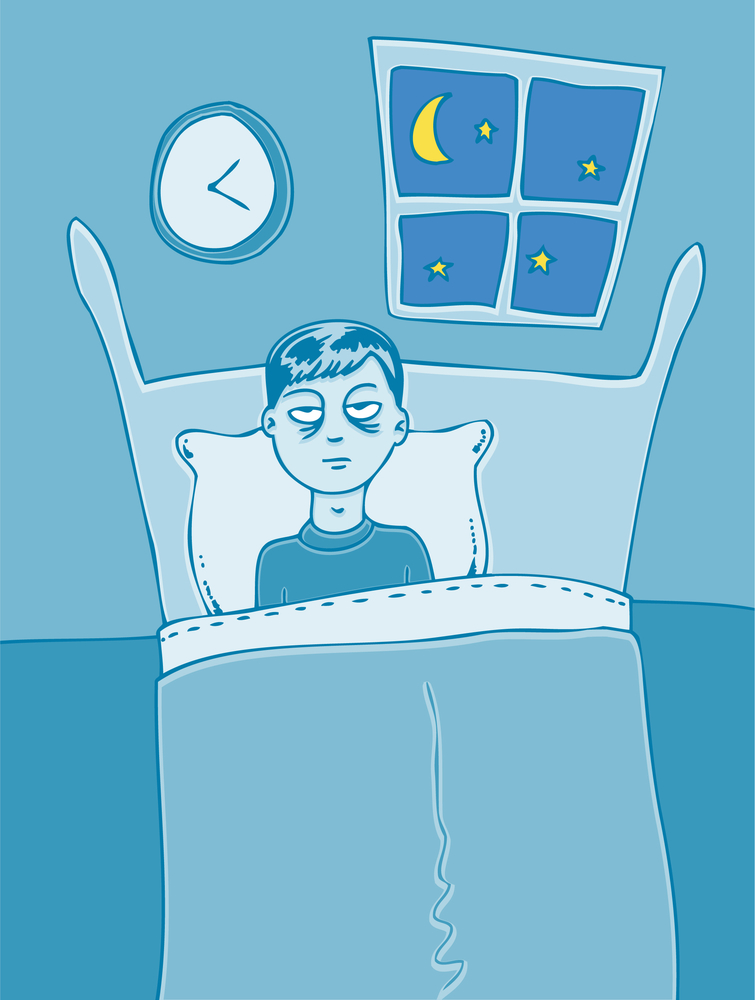
The inability to fall asleep and stay asleep affects animals, not just humans. Environmental and health factors contribute to sleep troubles for the sufferers of insomnia.

For people, insomnia has existed throughout history. It is not new, but the causes of insomnia have changed so that the incidents of it have become sources of pride rather than conditions to solve. Pride is the certainty that is heard when some people speak or write about their troubled relationship with sleep. These people view their lack of sleep as a confirmation to their overtaxed way of life.

Many enticements contribute to insomnia: screen addiction (social media, entertainment, porn), television shows, social pressure, medications that affect sleep, tasty caffeinated foods and drinks, deadlines for work or projects, nighttime jobs, overscheduling, events being followed in other time zones, and disdain for time spent sleeping.

The enticements lower the desire to sleep. They entice and dampen communications with the body so that the signals to sleep can be ignored or missed. Insomnia created from ranking activity above sleep, when sleep is the “activity” needed, is hard to cure because of faulty understanding of sleep.

Inactivity is another cause of insomnia. The body is designed for movement—and plenty of it! Lack of movement, when awake, jolts the body while trying to sleep. When the body is not tired but is instructed to sleep, restlessness or wide-awakeness encroaches upon sleep’s sacred territory.

Problems requiring solutions or thoughts that endlessly cycle bring on sleeplessness that is worsened when the thoughts are fearful. Fearful thoughts do not worsen insomnia, but they do increase its harmful effects.

Insomnia that temporarily disrupts sleep activity slightly affects health. Insomnia that becomes chronic has repercussions. Age and location influence the repercussions, but in general, the repercussions are: addled brain function, stressed optical functioning, less sensitivity to discernment of flavors, disrupted olfactory function, confusion of glands, downsized pulmonary functioning, disrupted flow of urea and lactic acid in the blood, overtaxed gallbladder function, stressed kidney functioning, and slowed bone regeneration.

Sleep is life in action! Full action, just like when awake, except that the action is directed towards growth, uninterrupted flows, and repair. The action that takes place during sleep can occur when awake-activities are taking place, but they interrupt each other’s processes. The body must repair itself. The body must grow replacement cells. They body must move life-sustaining nutriment and by-products to their places. Interruption to these processes disturbs balance.

Insomnia deserves healing. The healing required includes removing enticements that interfere with sleep, resisting the urge to glorify issues with sleep, dealing with problems and worries, and learning about the magnificence of sleep—because sleep is truly magnificent!

Note: This information is received from Spiritual Presence.