A Balanced Approach to Wellness!

Posts tagged ‘inspiration’

The basic tests for maintaining health, Test #7

treble_staff

The post “Monitoring Health” (https://energy-guidance-complete.com/2014/08/24/monitoring-health/) brings awareness of the seven tests that should be performed in order to evaluate health.

Look at your “I deserve it”s and your excuses and your complaints and your excesses, and consider how they prevent a life lived fully. A life lived fully is thankfulness & gratitude and appreciation & hope and kindness & patience and focus & striving and gusto & vitality.

Here is Test #7.

Test #7: Full engagement in life

This test reveals the fullness of your life—if you are attentive to the possibilities and gifts that are within your grasp.

For this test, there are colors and circumstances that can be used to “color” the possibilities:

*blue    *life     *raspberry     *green     *brown     *purple     *shadow    

Consider which color(s) or circumstance(s) match your attitude. More than one color can be used on a line.

  • my place in the world
  • contemplation about my death
  • body-soul connection
  • my hidden skills
  • my choices that I didn’t make (someone else made them and I went along)

After you have selected the colors/circumstances, think about why you selected them and what they mean.

Living with awareness of your gifts and the possibilities to use them is good for your health!

Post 132-breathe-in unison


The basic tests for maintaining health, Test #5

treble_staff

The post “Monitoring Health” (https://energy-guidance-complete.com/2014/08/24/monitoring-health/) brings awareness of the seven tests that should be performed in order to evaluate health.

“People—are—designed—for—doing some of this, doing some of that, moving here, then moving there,…” from Oneself—Living.

Sitting still for extended periods of time was not part of the design. Nor was letting inanimate objects do the work for us. Life has greatly changed for people, but the basic design has not. Rather than ditch the vacuum cleaner and return to the tree-branch broom, people must add movement into their lives that is nourishing, that exercises the body, and that is challenging.

Here is Test #5.

Test #5: Physicality

  1.  If you sit for longer than 50 minutes, do you change position or do a different activity?
    (Sitting for longer than 50 minutes without standing or stretching while sitting is taxing for the body.)
  2. Do you stretch your body when you wake up from sleeping? Even after short naps?
    (The body requires movement after sleep—the entire body!)
  3. When you visualize yourself, do you picture a person who is inconsistent about exercising, is good about exercising with a group but negligent when at home, is in need of someone to make you exercise, is physically fit, or is too focused on physical appearance?
  4. What is your attitude about movement off the ground (biking, skating, surfing, skiing, etc.) What is your attitude about movements on the ground (yoga, sit-ups, push-ups, etc.)? What is your attitude about swimming and walking? What is your attitude about dancing and kicking/hitting a ball?

Allowing your body to move frequently is good for your health!

Huff n puff exercise


The basic tests for maintaining health, Test #4

treble_staff

The post “Monitoring Health” (https://energy-guidance-complete.com/2014/08/24/monitoring-health/) brings awareness of the seven tests that should be performed in order to evaluate health.

Here is Test #4.

Test #4: Rhythmic breathing

“The more varied the breathing, the less chance for illness to set in..” -from the post “Aging is manageable when done properly” (https://energy-guidance-complete.com/2014/05/12/aging-is-manageable-when-done-properly/).

The importance of breathing cannot be overstated. Not only does breathing sustain us in life, but it sustains us in good health. Breathing that is appropriate for the activities we do is necessary for the body to refresh itself.

For this test, use the following descriptive words to describe how you breathe during the activities presented in the list:

*tight    *quick     *neutral     *deep

1 working/concentrating at the computer or smartphone

2 singing/playing an instrument/talking

3 reading/cooking

4 moving briskly through exercise, sport, rhythmic movement, work, or walking

5 laughing/talking with friends/playing with grandchildren, children, young siblings, or young children in one’s charge

For each of the activities that you do, pay attention to your breathing.

  • In general, tight breathing is reserved for tense emotions. If your breathing feels tight at other times, you should consciously relax more often.
  • In general, quick breathing occurs during brisk movements. Out-of-breath during brisk movements can be a sign of too little water in the body, too much movement at the current time, or illness.
  • Neutral breathing is appropriate for most activities. It is not the right rhythm for brisk movements or moments of deep focus.
  • Deep breathing requires conscious effort until it becomes habitual. Deep breathing is the most cleansing and strengthening of all the types of breathing, but is not necessary during brisk movements. Deep breathing strengthens the organs, flows, and spirit.

Allowing your body to breathe deeply and variedly is good for your health!

Sequoia2

The basic tests for maintaining health, Test #2


treble_staff

The post “Monitoring Health” (https://energy-guidance-complete.com/2014/08/24/monitoring-health/) brings awareness of the tests that should be performed in order to evaluate health.

Here is Test #2.

Test #2: Interactions with other people

“People were never meant to live alone. The idea that life is elevated by depending on no other person is incorrect. People are meant to depend on one another. They are designed to work in groups: to build together, to create communities, to help one another in times of difficulty, to find common purpose, and to help those entering and exiting life.” -from The Gift of Intuitive, Dedicated Comfort.

Connection to other people is the given. Avoidance of other people is the deviation.

For this test, use the following descriptive words to describe how you feel about the people presented in the list:

*kindness    *unkindness     *hurt     *admiration     *I don’t think about them

  1. spouse/current partner
  2. close friends, cousins, aunts and uncles
  3. children, grandchildren, step-relatives
  4. inhabitants in my city, inhabitants in my county/state
  5. people driving in cars or in other modes of transportation
  6. coworkers, shopkeepers, casual acquaintances, clients
  7. parents, siblings

There are other words to describe how you feel about these people; however, the words given are a measure of connection and caring.

Being connected to others is good for your health!

Post 69-People

Clarifications about the basic tests for maintaining health, Test #1


treble_staff.extended

I was asked for more information about the test questions that were presented in the previous post.  I am reposting with more information.

Test #1: Sensitivity to environmental concerns

The state of the environment directly affects the health of people. People who live in a highly polluted and vegetation-free environment are subjected to damage that can cause physical ailments, but also can cause damage to the soul. People who live in a vegetation-rich area, but are careless in their relationship to their environment, can suffer from damage to their physical and soulful selves too.

Disregard for plant life, water sources, and conditions for animal rearing undermines the grounding of the world and damages physical and intellectual health. Knowingly contributing to abuse of fauna and flora damages people—body and soul.

Here are the questions for the basic test:

  1. Recycle? Yes/No/Partially
  2. Use water judiciously? Yes/No/Sometimes
  3. Use chemical agents for cleaning or insect infestations? Yes/No/Only for insect infestations/Only for cleaning
  4. Support conservation efforts and interested in well-being of trees and plants? Yes/No
    (explanation: being aware of and actively participating in maintenance of local and distant environments. For example, contributing money to and/or volunteering with organizations that maintain and protect the environment [local arboretums, global or national environmental organizations, picking up trash in a littered part of the city, local environmental advocacy groups])
  5. Care about animal welfare? Yes, including the animals that I eat/Yes, I care about my pet/Yes, except for animals who disturb my garden/No/Sometimes
    (explanation: animal welfare is broad and can be overwhelming. It includes awareness about conditions at places that raise animals for food [industrial meat, egg, and dairy industries], raise animals for our enjoyment [puppy mills, fur farms], zoos [humane or not], importation of endangered animals and birds.)

There are additional questions; however, these five are a good beginning. Consider your answers and then consider the meaning of each question.

Being sensitive to the environment is good for your health!

Post 94-nature

The basic tests for maintaining health, Test #1

treble_staff

The previous post “Monitoring Health” (https://energy-guidance-complete.com/2014/08/24/monitoring-health/) brings awareness of the tests that should be performed in order to evaluate health.

Here is Test #1.

Test #1: Sensitivity to environmental concerns

The state of the environment directly affects the health of people. People who live in a highly polluted and vegetation-free environment are subjected to damage that can cause physical ailments, but also can cause damage to the soul. People who live in a vegetation-rich area, but are careless in their relationship to their environment, can suffer from damage to their physical and soulful selves too.

Disregard for plant life, water sources, and conditions for animal rearing undermines the grounding of the world and damages physical and intellectual health. Knowingly contributing to abuse of fauna and flora damages people—body and soul.

Here are the questions for the basic test:

  1. Recycle? Yes/No/Partially
  2. Use water judiciously? Yes/No/Sometimes
  3. Use chemical agents for cleaning or insect infestations? Yes/No/Only for insect infestations/Only for cleaning
  4. Support conservation efforts and interested in well-being of trees and plants? Yes/No
  5. Care about animal welfare? Yes, including the animals that I eat/Yes, I care about my pet/Yes, except for animals who disturb my garden/No/Sometimes

There are additional questions; however, these five are a good beginning. Consider your answers and then consider the meaning of each question.

Being sensitive to the environment is good for your health!

Post 94-nature

Monitoring health

treble_staff

People monitor their cholesterol levels, their blood pressure, their iron level, their blood sugar level, and their BMI. They monitor other physical issues based on family history, age, sex, race, and individual health concerns.

People are focusing on the wrong health issues. Here are the areas that people should monitor for optimal health (the order is not important):

  • Interactions with other people. (Too little interaction undermines emotional and spiritual health.)
  • Rhythmic breathing that is varied and appropriate for the body’s activities.
  • Consumption of nutritious and satisfying foods. (Focusing on foods that are bereft of nutritional value or are lacking in the aspects that naturally gratify [for example, fat-free foods] undermine physical, emotional, and intellectual health.)
  • Participation in physical activities that bring joy and challenge. (Participation in physical activities that are not enjoyed undermines emotional and spiritual health.)
  • Attention to self-needs. (Ignoring one’s needs damages all the aspects of balanced health. This area does not mean self-centeredness. It means self-support.)
  • Sensitivity to environmental concerns. (Disregard for plant life, water sources, and conditions for animal rearing undermines the grounding of the world and damages physical and intellectual health.)
  • Full engagement in life—filling life with attention to the possibilities and gifts available to grasp.

The tests and chases after physical symptoms are easier to do, but are not the real issues that should be followed. The real issues that should be monitored and cared for are the focuses of true living.

Insights into health and life

Exist

In the book Pond a Connected Existence, there is wisdom that calls out for action:

  • From the chapter “Behavior & Release”:

“The state of extended over-tiredness can lead to general overall unwellness, affected decision-making, and overestimation of abilities. Sleep is essential.”

  • From the chapter “Pliable and Different”:

“Many people think they can’t change; that is false thinking. By design, people are made to adapt, adopt, and be adept.”

  • From the chapter “Luck! What Luck?:

“The importance of preparation cannot be overemphasized. Without it, opportunities are squandered, missed, lost.”

How are these morsels of wisdom connected?

  • With adequate sleep, a person can think more clearly and take the actions necessary to be prepared.
  • Adaptability contributes to preparation for the future. Adaptability is available to those who are willing to examine their decision-making and change when a decision no longer brings clarity.
  • One can never be prepared for all events, no matter how prepared, because life is so unknown. Sleep prepares for handling life’s uncertainty and refocuses perspective about one’s ability to change and receive the future.

Energy Guidance Complete is gifted awareness from beyond.

Open your eyes and see the connection!

Open your heart and feel the call!

Open your arms and receive the guidance!

Post 25 Logo

Moving to the beat of the fight


incorrect

The news is full of stories about threats, bloodshed, and revenge. There are people who are unable to get along with other people, and they drag innocents into their madness. Wars, gang fights, tribal skirmishes, and individual anger explosions—all lead to upheaval and cruelty. Other causes of upheaval and cruelty are incorrect beliefs of superiority and deservedness.

Today, I was thinking about how our lives are so manipulated by the violence and intimidation around us. My thoughts reminded me of a song that ABBA released in 1981 on their album The Visitors named “The Soldiers”. Here is a part from the chorus:

Soldiers write the songs that soldiers sing
The songs that you and I won’t sing
Let’s not look the other way
Taking a chance
‘Cause if the bugler starts to play
We too must dance

And here is the song:


The message from Spiritual Presence: the drive to control is controllable. People are imbued with a desire to possess and to condescend – and – with a sense of justice. These innate, conflicting urges are influenced by family and society. The less control of the desires for more, the less moderation in life and in the world. People can overcome their desires for more by focusing on equality.

Giving up is not the best option

Graphic-giving up article

Sometimes it is easier to give up than to fight for, aim for or live for. Giving up is one way to determine, but it is also a way to destroy. Both results can occur when a person gives up—be it fighting for a cause or fighting for continued life. Giving up determines that efforts will stop and that future possibilities are destroyed.

Yes, people need to know when a struggle is not possible, but not before they attempt and attempt again and try anew. Acknowledging defeat causes lowered balance in the body, lowered resistance, lowered opinion of oneself, lowered attempts at other things, lowered connections to other people, lowered connections to spiritual support, lowered enjoyment of pleasures, lowered sharing of experiences, lowered interest in oneself (less love for oneself), and lowered performance.

In cases where many attempts have been made yet nothing changes, people must be realistic and acknowledge reality. Fighting a terminal disease is a fight or a task. When it is a fight, it is all-consuming. When it is a task, it is part of one’s life, but not the whole life.

Life is much bigger than the disease or the lost cause or the forsaken dream. Each of these “challenges” is part of the picture that is life. Part, not all—not even a large part, just a part. The real challenge is to live fully while experiencing the painful and exhausting segments of existence.

Living with vitality and with determination. Yes, these forces of a directed life can bring purposeful and sustaining living!

The soul-color attribute Shade and its Moral Boundaries setting

Shade-moral boundaries setting

The previous blog post explains the color attributes of the soul, one of which is Shade. Shade has several actions that determine the comfort a person feels in his or her surroundings. One of these actions is the sense of morality, the ability to naturally know right and wrong. Each person has a morality setting that guides. Here is an excerpt from Awaiting Light—Understanding the Development of the Soul:

“The society in which one lives pushes against the natural moral-balance boundaries setting, especially when the society imposes a moral scale different from the person’s own.  The same for different settings in a family. The person with the most influence in a family usually sets the moral boundaries, and the other family members adjust or rebel.

When a society is repressive, the moral-balance boundaries settings for all who live in the society are affected. Even for those who support the repressive ways. People are forced to ignore their natural sense of moral conduct when the society is morally selfish, and they must themselves repress their knowingness about proper and moral behavior.

When a society is tolerant of nuances, moral-balance boundaries settings are also affected; and so, the boundaries are much more available for making personal decisions and for formulating opinions and actions. Societal morés do come into play, but they can be weighed with relatively equal weight to one’s own sense of right and wrong.

Sometimes people with repressive tendencies gain influence in a tolerant society. When a repressive energy takes hold, it affects the populace in three main ways: (1) for those who support the repression, it causes them to ignore their own sense of right and wrong; (2) for those who are unwilling or unable to oppose, it causes them to modify their sense of right and wrong; and (3) for those whose personal sense of right and wrong is strong, it causes them to oppose the repression.

A society that is tolerant is a society that has connection. Connection to its inhabitants. Connection to people-boundaries of moral balance.  Connection to soul.

The moral-balance boundaries setting has effects on the body: on digestion, on breathing, on circulation, and on thinking. When people are able to live by their morality boundaries, they are able to live in balance with themselves. They can evaluate and act based on personal judgment.”

The color of your soul

(taken from my article “What Color Is Your Soul?” on Healing.Answers.com)

parachute


Each person has individualized likes and dislikes, personality traits, reactions, and habits. These individualized self-definitions are influenced by genetics, family influence, societal influence, and the times in which the person lives. Beyond these influences is the influence of the soul.

When a person is born, he or she is the recipient of a soul and this soul brings color—soul-color. The color of the soul is the starting point for a person’s individual character and personality.

What Are the Personality Characteristics of the Soul?

According to Awaiting Light—Understanding the Development of the Soul, soul-color is a combination of four attributes: shade, hue, contrast, and coloration. Each of these attributes determines a part of a person’s personality, likes, dislikes, temperament, and family connections. When a baby receives the soul, all these attributes are given, and they are the person’s direction for life. As the baby grows and depending on outside influences, the soul-color shines or is smudged.

What Is the Soul-Color Attribute Hue?

Hue is the attribute that sets attractions—attractions to certain activities, colors, shapes, knowledge, sounds, scents, textures, foods, etc.

“From the moment a person is born, distinct preferences are evident. A baby reacts to various stimuli in positive or negative ways, but adults are unaware that issues other than hunger, wetness, or discomfort are at play. As the baby ages and is able to communicate through movements and sounds, adults slowly grasp the interests and triggers that pull or repel the infant.” from the chapter “Soul-Color Attributes” in Awaiting Light.

>> Knowing which interests are innately fixed is a step towards knowing your soul-color attribute hue.

What Is the Soul-Color Attribute Contrast?

Contrast is the attribute that sets opposite-sided emotional reactions. Examples are joy-sorrow, warmth-indifference, and excitement-insensitivity. Contrast determines the passion that is felt as life is experienced and the conviction that is felt when opinions and thoughts are formulated. Some people feel their emotions in a large way, some feel their emotions in a reserved way, and some feel their emotions differently depending on circumstances. All of these ways are normal and are soul-endowed.

>> Recognizing depth of emotion innately felt is a step towards knowing your soul-color attribute contrast.

What Is the Soul-Color Attribute Shade?

Shade is the attribute that affects pace, temperature tolerance, circadian calibration (natural affinity for certain times in a day), and acceptance of boundaries. Pace determines the speed at which a person naturally lives, ranging from living without rush to living at an exuberant speed. Temperature tolerance is the coolness-warmth range that is determined by the location to which a person is born. Circadian calibration determines the time of day that is most comfortable to a person. Acceptance of boundaries refers to a person’s natural moral compass of knowing right and wrong.

>> Sensing your natural rhythm of movement, temperature, day or nighttime preference, and sense of right and wrong is a step towards knowing your soul-color attribute shade.

What Is the Soul-Color Attribute Coloration?

Coloration is the attribute that determines the soul-groupings for souls of similar colors. Coloration provides the possibility of group connections. It causes the feeling that you’ve known some people forever, when you’ve just met them.

>> Coloration is a group attribute. Being able to recognize group traits in your family and friends is a step towards knowing your soul-color attribute coloration.

Conclusion

Each soul is combination of soul-color attributes that are spiritually linked to one another. Each soul is unique, like a person’s fingerprints.

The more you can know and understand yourself, the more you can see your soul’s color and the more authentically you can live.

Huff’d n’ puff’d today

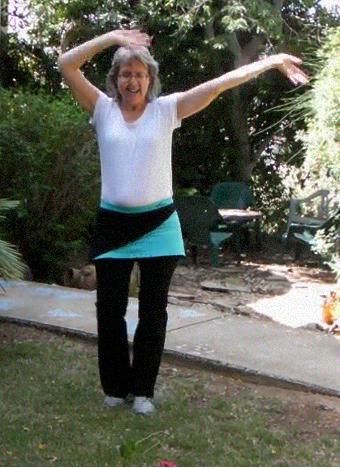
Following the advice I received from Spiritual Presence to do the Huff n’ puff exercise, I did the exercise today. I had been resisting doing the exercise regularly, but today I was determined to get outside and do it.

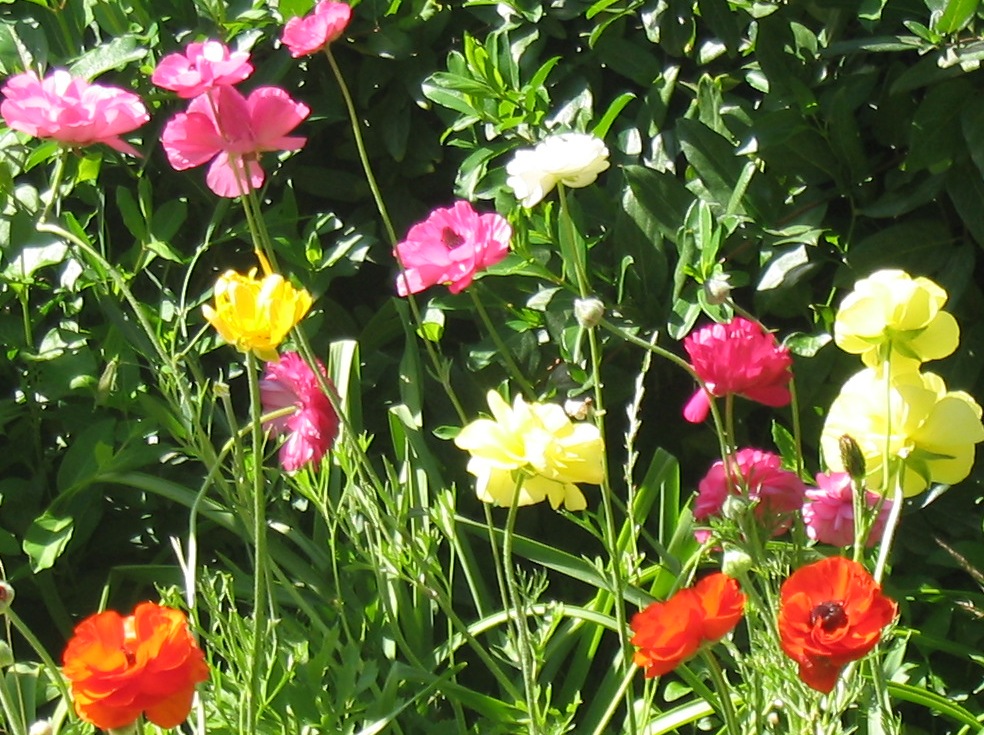
While doing the exercise outside in my backyard, I looked at a flowering hibiscus tree, at basil growing in my little vegetable garden, at the lemons growing on the lemon tree, at my neighbor’s young olive tree, at my dog (not the dog in the video), at birds walking around on the ground, at butterflies, and at other vegetation.

I did the exercise for 15 minutes. I waved my hands above my head (feeling the stretch in my upper body). I added other arm motions besides the waving and marching arms. I did the movements while turning in a slow circle (Jill-don’t try that 🙂 ). I kept my pace lively. I thought about the gift of living in such a lovely place and felt very grateful. I smiled when I remembered to smile, and the smiling brightened my mood.

The Huff n’ puff exercise is a cardio exercise that is meant to exercise the body, mind, emotions, and spirit. When done with bounce in the step and a smile on the lips, this exercise can help in ways that can’t be counted.

Give it a try! Here’s the video:

Beyond

beyond--awaiting light

Beyond what we know and beyond what we see, cycle Spiritual Presence energy. This energy oversees all aspects of life. Beyond life contains more than we can understand; however, some of beyond life is opened to us in the book Awaiting Light—Understanding the Development of the Soul.

Here is some of the information I have received from Spiritual Presence about the soul’s journey before life:

 “When a soul-palisade is needed to form a soul, a moment is reserved for the soul-palisade to open to the union that is about to form. The opening is for Spiritual Presence to infuse the union with spiritual energy. As the union forms—at the moment of fusion—the spiritual energy is surrounding and completely filling the now soul-color attributes as they are bestowed upon the newborn infant at the moment of first inhalation.”

“…What remains is the essence of the person, which becomes a circle of invisible light that floats diagonally, cycling towards where the soul goes. The essence opens and the soul is released to the person’s six guardian angels who come together to greet the soul, and then the guardian angels are released.”

“… Some people feel direct guidance, some people feel whispered hinting, some people feel sparks of wisdom, and some people feel admonishments. Some people are aware of beyond guidance and assume it is from Spiritual Presence or from deceased parents, but it is not. The beyond guidance that people feel comes from the when-needed guardian angels that show up to guide, encourage, and inform. The when-needed guardian angels are replaced as people change direction, face different life issues, and require revised assistance.”

The soul has forms that depend on its stage: at birth, during life, and after death. Each of these stages is detailed in Awaiting Light. It is available for purchase at http://www.amazon.com/Awaiting-Light-Understanding-Development-Existence-Me/dp/1500504084/ref=sr_1_1?ie=UTF8&qid=1406661869&sr=8-1&keywords=awaiting+light


Soul-color

Soul color

I am about to release the fifth book in the Existence-Me Elevated Living book series. It is called Awaiting Light—Understanding the Development of the Soul. Here are excerpts from the book:

“Soul-color forms the personality of the soul.  The soul has four attributes that combine to individualize each soul. The four soul-color attributes are shade, hue, contrast, and coloration.”

“The soul has color that determines personality characteristics, likes, dislikes, temperament, etc.  The soul-color comes from a collection of intangible attributes that can be likened to shade, hue, contrast, and coloration. Each soul-color attribute contributes to the color that defines each person’s soul.”

“The soul-color attribute is hue, and it is responsible for a person’s strong sense of liking or not liking something, tangible or intangible. The attachments focus a person because no one person can be interested in everything.”

“The soul instills personality traits that determine the passion that is felt when life is experienced and the conviction that rises up when opinions and thoughts are formulated. The soul-color attribute for personality range and depth is contrast.”

I am very excited to share this information!

Perfection and certainty

No Certainty-Perfection

People want certainty in their lives, but certainty is unattainable because life is too fluid. People also want perfection, but that too is unattainable because life is too elastic. Certainty and perfection are elements of the universe, and even so, certainty is not always certain.

Certainty

“We all want certainty. And sometimes we get it. When we prepare for things, we often get the desired outcome. When we measure and work in an exacting manner, our cakes taste right, they look beautiful, they make the eaters happy. When we wash our hands, they are clean. When we allow enough time, we (usually) arrive at our destination on time. When we set our alarm clock, we wake up on time—usually. When we build buildings with strong foundations, they keep us secure—except in times of war or destructive natural disasters.” …from “The Gift of Intuitive, Dedicated Comfort”

Perfection

“Wanting perfection, and settling for nothing but, is mistaken behavior. Aiming for doing one’s best, working hard, giving it your all—these goals are worthwhile and worth pursuing. Great performance is admirable as long as the performer is pleased as well and not saying “Oh I should have done better.” Of course one can strive to improve, but disparaging a good job! well done! is fruitless waste of energy.” …from “Oneself—Living”

Perfection and certainty

Perfection and certainty reduce achievement. These words cause expectations and disappointment and injured relationships.

These words are troublemakers. Let them go!

Letting time dribble away

Post 97-wild flowers

Here is my typical workday these days: sit down at the computer and read emails, look at my blog statistics, check my Facebook page, read the news main topics, open the file for the book I’m working on and go to where I left off, add a sentence or two, check the news again (things are unstable so the news changes quickly), see if anyone has commented on Facebook, get up to get a drink, vow to only work on my book, peek to see if there are any new emails and news, go to my book and try to focus, get frustrated so do some administrative work for my husband, take another quick look at blog statistics, and so on. Not much getting written, but lots of valuable time dribbling away.

I know that I am meant to bring much wisdom to the world and yet I procrastinate. Sometimes I struggle with the questions I need to ask in order to receive the wisdom. Sometimes I struggle with the individual words. Sometimes I struggle with the graphics. And sometimes I struggle with the immensity of my purpose.

I’m about to receive wisdom to guide me during this time of distraction, and I’m sharing it on my blog in hopes that it will help others who are time wasters like me. Here goes:

Renee—you have been shown what you represent. You bring about understanding of connection to beyond when you focus your time and effort. To focus: do the huff’ n’ puff exercise each morning for at least 5 minutes, do one of the exercises for connecting to spiritual support once a week, and only open your document on the computer. Strive!

I give messages to people I work with, and they choose to make the changes that can bring them balance and understanding—or not. They have free choice to change. The messages I receive require acceptance by me. The gift comes with expectations.

Time is deceptive. Life is multi-textured. The time spent creating a life that is reaching and grounded is time that is used wisely. Strive!

Investing for a rainy day, the good and bad news

(taken from my article “Good News, Bad News: Investing for a Rainy Day” on HealingAnswers.com)

rain

This blog post is not about investing money. It is about investing in what’s around you—in friendships, in committed relationships, in neighborly relations, in family, and in the community. Investing in these important relationships is investing for a rainy day at its best!

Good News: Investing in family, friends and community builds a safety net

“Investing in friendships and giving and taking from friends is nourishing. Investing in relationships is natural and is needed to live a balanced life. Investing in family—children, children’s children, siblings, cousins, and so on builds a network of support that is reliable. Investing in communal activities builds a network of support that nourishes and strengthens the individual community members and the collective group.”… from “Oneself—Living”.

Investing time is necessary in order to build a safety net for when life becomes difficult or too hard to bear alone. Often, people put work obligations before obligations to family, friends, and community. This behavior has become acceptable in society, but it is short-sighted. The more a person gives to the relationships that truly matter, the more protection from the surprises that occur in life. Of course, a person must perform work obligations with an enthusiastic spirit and with focus, but work obligations should be one section of life, not all of life.

 Good News: Investing in family, friends and community supports good health

The more people invest in their relationships and community, the more balanced their health. Time spent with people who are meaningful creates memories that enrich beyond the moments in which they occurred. Positive memories are better, but even negative memories create experiences that build and nurture if the negative experiences are within the realm of realistic disagreeable treatment. In other words, interactions with family members, friends, and community acquaintances do not always have to be positive for the investment to be worthwhile. Learning to negotiate the varying needs of the various people is balancing.

Tip:

Choose a community betterment activity that excites you so you’ll want to participate. If you enjoy the arts, volunteer at a museum or in an enhancing-the-neighborhood project. If you prefer working on your own, volunteer with community building or cleaning projects. There are enough volunteer opportunities to suit all personalities.

 Bad News: Not investing is unwise

“Non-investment in relationships with others leads to loneliness, sadness, aloofness, insensitivity, and unsureness. Non-investment in friendship—foolish. Non-investment in marriage—incorrect behavior. Non-investment in intrafamilial connections—mistake. Non-investment in neighborly relations—short-sighted. Non-investment in societal obligations—selfish thinking.”… from “Oneself—Living”.

The less people invest in their relationships and community, the less balanced their health. Simple as that.

Conclusion

Investing for a rainy day means being prepared for whatever may come. Rain is not negative, but it can cause a change in plans. The same is true for changes in health, family structure (through births, deaths, divorce, etc.), and societal balance. Being prepared means planning ahead—making sure to invest in the connections that truly matter.

Disposable enticement

Disposables

So enticing to trade needs-washing with just-throw-it-away. Disposables, especially those made from plastic, are wasteful and should be used in limited quantities. People have an obligation to maintain the environment. Here’s what to do:

  1. If you are planning an event, aim to use real rather than disposable.
  2. Never use Styrofoam cups, bowls, and plates.
  3. If you attend a regular function where disposables are used, bring your own cup, utensils, etc. so that you are contributing less to the waste.
  4. If you buy ready-made foods and drinks, pay attention to the wrapping and avoid foods and drinks that were packaged too much.
  5. Favor environmentally friendly products over plastic products.
  6. (Fill in another idea…)
  7. (Fill in another idea…)
  8. (Fill in another idea…)
  9. (Fill in another idea…)
  10. (Fill in another idea…)
  11. (Fill in another idea…)
  12. (Fill in another idea…)

Stuttering

Stuttering

Social deficits cause uneven positions, jagged edges, and repetitive angles. They (social deficits) wallflower complete. Ellos displace.   (a stuttered paragraph)

Expectations or fear or pressure or hardness and other things as well can uneven jag uncomplete displace. Let’s repeat that sentence in a socially understandable way.

Many pressures such as unrealistic expectations, fear, hardness, or other oppressive treatment can cause off-balanced behavior in children that leaves them feeling unsure, unsteady, and undone so that they do not feel complete in their true selves. Each person is born with a temperament, likes, dislikes, and more, and sometimes the caregivers are unable to handle the child’s way of being. Even caregivers who truly care.

As a child navigates the life that is presented to him or her by caregivers and other people, patterns are acquired. Patterns of movement, of speech, of viewing, and of hold-approach develop that are specific to the child. Some patterns are idiosyncratic and some are socially reasonable. The socially reasonable behavior provides easier access to others. Idiosyncratic behavior confounds. The more a child behaves in socially confounding ways, the more the child self-torments and self-deplores because of the reactions of others to the idiosyncratic ways.

Stuttering is one example of idiosyncratic behavior.

Fixable?

Throughout the stages of life, there is possibility of stopping idiosyncratic behavior. The age is not important, but the desire is. There are many proposed therapies for the phenomenon of stuttering. The therapies that include relaxation, breathing guidance, self-acceptance, and singing are the therapies that are most successful.