A Balanced Approach to Wellness!

blogLately my blog posts are about lessons that I am supposed to learn (I know that they are not actually just for me because the information I receive is meant to be shared). The information is presented to me when I need it to help me understand how to proceed.

So I’m opening up now to Spiritual Presence and letting the words flow. What is my lesson today?

Energy. Energy that exists among people. Energy that is emitted when people interact. Energy that is emitted when people don’t. Energy that circulates perpendicularly when people allow themselves to be alone. Aloneness breeds skewed energy. Energy that circulates spiraling when people are deceitful. Deceit breeds skewed energy. Energy that circulates disjointedly when people are miserly or judgmental. Energy that circulates disjointedly when people are angry, selfish, or covetous. Energy that circulates in a circular pattern when people are striving for understanding.

Energy is present at all times and links people to one another. Negative energy is not transmitted far. Its range is limited by one’s eyesight (but it can do harm within this bounded territory). Positive energy transcends distance. One’s kind thoughts about another are received without awareness by either party–but it does occur (it’s part of our design). Kind thoughts,well wishes, and sincere feelings of support are sent circling to their intended recipient. These uplifting thoughts can contribute to healing and to achievement.

Energy is available to those who are open to unseen possibilities. Available to all, available equally.

Well, this title seems to be redundant. It’s the title I have received, so let’s see where it takes me.

Post 14-environment

Yesterday I spent walking around Santa Monica, CA with a dear friend. My friend is a close friend from college. We see each other every couple of years, and our visits are warm and loving and filled with all the feelings that accompany deep and lengthy friendships.

We walked and talked, and the entire time I was aware of the interesting scenery around me. The sea, the trees, the bird-of-paradise plants  all around, interesting structures, artwork. But also people who seemed lost. These people affected the view making it less bright, less special. Because no matter how beautiful a place, if there are people living in it who have no abode or no support system, the place is really not so beautiful.

Taking care of others should be the priority of people who are able, but it is much easier to build nice sidewalks. Engage with concrete, but not with emotions. Nice sidewalks with lovely lighting fixtures and landscaping. Focus on friends but not on needy people. Averting the eyes when the needy people come into focus. Wishing them away rather than considering their needs.

Finding balance in society is a constant struggle, which is actually easier than we realize. We must remember to leave time in our busy schedules to consider the ones who get overlooked.

Post 12 Screen beans mom and kids

I’m feeling less than. I caught a virus so I’ve had to slow down to let my body rev up.

This post is about illness and I’m very curious to learn what Spiritual Presence has to teach me.

Illness, and its cousin depression, occur when we allow ourselves to deteriorate. Deterioration in sleep, healthy food intake, or other important ingredient in each person’s life. In other words, each person has a point of deterioration at which good health is not viable. Some people can manage with too little sleep, but will then fall ill if they don’t have enough social interaction.

Illness is simply a call to pause. Pause to examine previous lifestyle or changes in lifestyle. Illness is not a reason to solicit sympathy. Everyone gets sick at some point, therefore there is no need to overdo the sympathy or the misery. You’re sick? OK, take care of yourself and try not to share your virus/bacteria/fungus. Put on a happy face, because most likely you will be well within a few days. (not discussing serious illness in this post)

Feeling less than causes us to remember our mortality. Feeling less than should cause us to appreciate our just-fine days.

Hesitation

Post 11-Buttons     Screen beans-perception

Hesitation: wanting, but preventing action or decision because of fear, lack of information, or worry.

When a person hesitates about an action that must be performed immediately, precious time can be lost. When a person hesitates about an action that is not required, the results can be very different depending on whether the action would lead to betterment or negative results.  When a person hesitates because of fear, the same results can occur–different depending on whether the action would lead to betterment or negative results. Same goes for hesitation due to lack of information or worry–results that may be good or bad depending on the actions taken.

Hesitation is not necessarily a bad thing. If one’s intuition intuits that the action or decision will lead to negative results, best to follow that feeling. Intuition is the key ingredient when a sense of hesitation  is felt. On the other hand, people who consistently hesitate have most likely lost the ability to feel intuitive sensations and are simply performing habitual behavior.

To do

When you feel hesitant to take an action or make a decision, notice three things:

  • Does the action or decision make you feel fearful, worried, or unqualified to act/decide?
  • Does the action or decision cause your intuition to signal a strong response–positive or negative?
  • Does the action or decision require you to be more active than you normally would? If so, are you hesitating out of laziness or inertia?

Once these questions are addressed, a decision should be easier to make and an action should be easier to take. Rather than hesitate, be willing to involve, help, and join. But always be aware of side effects that could occur. Each decision and action has myriad side effects that can influence other decisions and actions.

Go!

Guidance

I’ve recently been working with a woman who has let herself lose her way. We are using Energy Guidance Complete to help her see her choices–choices that will bring her satisfaction and purpose.

Post 11-Buttons

Her choices are her choices–she doesn’t absolve herself of making the choices. EGC helps her see the wisdom of each choice, but does not make the choices for her.

EGC is not like a psychotherapy session. It is a presentation of the truth for each and every person who is open to its wisdom. EGC is guidance that comes through me from Spiritual Presence. Might sound unbelievable,  but it is not. It is simple truth presented in a very direct way.

Each person’s journey is his or her own, and the journey can be illuminated through Energy Guidance Complete.

Post 14-environment

Let’s take one more look at this topic.

First impressions are important, but should not be the deciding vote. Think of people who were offensive or dull to you when you first met them that turned out to be amazing and devoted friends–or even partners!

Another quote from Book #3:

“Openness to otherness is a necessary and indispensable requirement in today’s global society. Interactions between so-different! people requires it. Openness and patience and desire for contact lead to understanding and peaceful coexistence. Easy to say, but hard to implement because people tend to be closed off, hurried, and inwardly focused, not only with strangers but with their own family. Harder yet to implement is understanding and patience for oneself.

If one’s impression-opinion-sense of himself/herself is low, how can he or she develop true impressions and opinions about others? If one is less than, how can he or she offer the world something special?  Implementing openness and patience and understanding towards oneself provide the way for balancing personal opinion. Being open to one’s own abilities and gifts. Being patient when learning new skills. Being patient when trying new endeavors. Understanding that perfection is the realm of Spirit only and that the created perfection of the world flows from very imperfect segments. Perfection and perfectionism should be banned words! Unattainable, time wasters, alienating.”

Formulating impressions requires patience, optimism, and caring. Some effort and desire lead to interesting and fulfilling interactions.

Post 20The previous post presented information from Book #3 about not making snap judgements about others. Here are more first-impression directions:

“First impressions of places can also influence in a negative way. Expecting one thing and seeing another can create a negative—or positive—first impression that might actually be incorrect. Same too for events and activities. Time is needed to make a judgment. Influences such as age can skew judgment. Attitude affects the way in which an impression is made. Bad attitude usually produces a bad impression; good attitude usually produces a more balanced impression. Being overly optimistic is not necessarily productive when making judgment calls. Balance, as with most things in life, is key. Balanced judgment, time passing, facts and reasons understood, emotions kept in constraint. These efforts + time enable sound impression building of events and of people, of places and of intangible realms.

People constantly formulate impressions of others while the others constantly formulate back. Constant impression making/impression slumping…Rather, accept as is, as are, as could be. As is: accept each person as he or she is, with different thought processing and different ideas.  As are: accept each group of people as they are, with different needs and different goals. As could be: accept oneself and others as reliable, compelling people who can better the world with each action, with each interaction, with each reaction.”

More to come!

Post 20

Excerpt from Book #3:

“First impressions are touted as being one’s only chance—no second chance. When it comes to people, some people actually judge and deliver judgment based on what the other person presents at the first meeting.

But people are more complex than a 7-second judgment can render. People have moods and illness and things on their minds. Impossible to truly judge another within a few moments of meeting. Yes, superficial judgment can be made, and sometimes that is enough. When one is in a precarious situation, snap judgments might be necessary, but in general day-to-day situations, snap judgments weaken the judger by 25%.  A quarter of the judging person’s reasoning is occupied by first impression activity. Impossible to truly judge another within a few moments of meeting. People require more information than a short, focused time period can provide.”

More to come!

Post 12 Screen beans mom and kids

Soon, I will be attending several family gatherings. In honor of these special occasions, here is an essay—well, part of an essay—from book #2:

“A wedding. A funeral. A baby naming. Coming of age ceremonies. Important anniversaries. Unimportant occasions. Unimportant? All occasions that bring people together are important. Gathering together forges ties and friendships, support and community. Whether the occasion is happy or sad or tension filled or relaxed, gathering together leads to emotional release, emotional awareness, or emotional expression, even if the emotions are repressed or explosive. The importance of gathering in small groups or in larger arrangements is often overlooked.

People are meant to gather. People are meant to intertwine. People are meant to do for one another, support one another, receive from one another. People have the ability to enrich and entertain and inform one another. Gathering and intertwining, supporting and participating, empathizing and sympathizing are natural aspects of humankind. People who shun human contact, gatherings, or other human interactions have been damaged; they are not the natural beings they were born to be. Their natural inclinations should be to join in, not opt out. Ill treatment by others usually causes these deviations. Some see self-sufficiency and the creation of imaginary barriers to keep people out as positive things. They are wrong. People are meant to connect.

Attending an event is not enough. Being there physically is not enough. Mouthing nice words without meaning them is not enough. Criticism is best left at home. Envy, too. But, heartfelt joy can stay! As can supportive thoughts! And feelings of comfort or pride or respect—depending on the occasion and the circumstances. Focusing on the people, whether we are tired or busy or have attended “too many” events. Enjoying each one for its own merits, its own purpose, its own celebration.”

Best of luck

Post 30 luck

Does luck exist?

Answer:  “Luck does not exist. Luck is used to explain good or bad fortune, to ward off the evil eye or other such spirits, to water down achievement. Rather than attribute life happenings to the true causes, people often attribute them to luck. As if it’s not in our hands. True, things happen that are not in our hands. Natural disasters are not in our hands. The behavior of the environment, of animals, of the weather, of fire, are often beyond our control. Then timing comes to the fore. Being where the disaster occurs, not being where the disaster occurs—timing matters.”

—from “Luck! What Luck?” in Book #2.

 Does luck truly govern our existence?

Answer:  “When something bad happens to a person, it is easier to say “I have bad luck” than to say “I wasn’t prepared” or “I was responsible”. Much easier to be happened to than to be happened because of. Much easier to let go of the resulting havoc than to accept personal involvement.  Much easier to assign to something outside, something amorphous, than to acknowledge, admit, embrace one’s own involvement in the lackluster performance, mistake, or mess. Luck is the recipient of ownership when the real owner is unable, too modest, or too embarrassed to claim title.”

—from “Luck! What Luck?” in Book #2.

What is luck really?

Answer:  “Attitude. Timing. Cause and effect.”

—from “Luck! What Luck?” in Book #2.

Each of these influences, together, create the reality that is our life.

Post 29-pen drawing

When we strive to achieve a goal, we often set the aim too high >> to perfection. Mistaken selection.

Perfection and perfect delivery are beyond human ability. A tree is perfect; a horse is perfect; a human baby is perfect; even a person with severe disabilities is perfect in his or her compensation. Human accomplishments cannot be perfect. Therefore, we should strive for “close to”.

“Close to is close enough. Close to is better than 100%. Close to is the goal.
When we reach close to, we must be grateful and we must let go of unrealistic expectations. We must reach our goal (of close to) and then move on to our next goal. Creating a home life that is mostly satisfying is worthy of gratitude. Finding a partner who generally fills expectations is worthy of investment. Finding friends who usually are dependable are worth keeping. Living up to one’s expectations of oneself, more or less, is worthy of acceptance and satisfaction.”
–from “Certainty Relatively” in The Gift of Intuitive, Dedicated Comfort.

Gratitude and acceptance provide the means to a balanced and elevated life.

Go!

Post 28 Personal endeavors

My last two posts have been about striving. Now let’s look at why people strive to accomplish pursuits that are difficult for them.

“People pursue difficult and challenging activities for many reasons: as a way to achieve recognition, as a way to escape unwanted experiences, as a way to experience the suspension of time, to force oneself to aid societal mores, and sometimes, because of pressure.” –from “Personal Endeavors” in The Gift of Intuitive, Dedicated Comfort.

Sometimes, challenges lead to accomplishment and sometimes, to mediocrity. How a person sees a challenge depends on upbringing, timing, and sense of purpose. Each of these factors contributes to attitude and approach.

Time invested in challenging endeavors is time spent. Possibly spent wisely, possibly not. Some challenges are not worth the investment. Knowing when to invest and when to look elsewhere determine how an achievement is selected. Achievements for the sake of achieving do not lead to purposeful living unless an unknown reason has led to the desire for pursuing the particular goal. The more one is aware of one’s motivation, the greater the likelihood of achievements that lead to elevated and purposeful living.

Post 27-striving

Yesterday I wrote about the importance of striving for goals. Today I was proofing the text of The Gift of Intuitive, Dedicated Comfort for the printed version, and I read the following text:

“Striving is a natural human condition. To strive gives purpose; to strive gives focus. Striving for elevated purposes increases the value one places on oneself. It gives heightened purpose and heightened focus. The definition of an elevated purpose is a purpose that betters the natural world and at the same time betters the creatures (human and not) who inhabit the area being affected.”

Purpose in life is the force that enables overcoming obstacles and other difficulties. Finding purpose is a must for experiencing satisfaction in one’s comings and goings. Purpose brings ACTION!

Striving

Post 26 archer

  • Striving to improve
  • Striving to move
  • Striving to win
  • Striving to begin

So many things to strive for. People tend to strive for things that are either just out of their reach or for things that come too easily.

When a goal is reached with little effort, it may have been a goal that should have been expanded. Striving is important. It keeps people interested, working, and committed. Striving usually involves physical, emotional and intellectual efforts, and sometimes spiritual effort as well. Too easy can dull the capacity to reason and opine.

Striving for just beyond is generally the better effort. Working towards, moving, struggling. These actions build character and personality. And sometimes strength and resilience.

When a goal is reached, it should be recognized and appreciated. It should not be ignored nor made light of. On the other hand, it should not become one’s existence. As it says in Book #2:

“The moment—it’s here and then it’s gone.  However uplifting and fortifying memories may be, they are in the past and can be used in support of future efforts, but must not be one’s current existence. In other words, future actions should be based on current evaluation of the moment, giving minor notice to past achievements but remembering to continue to grow.”

Post 26 Renee-MisgavBrochure

Here I am four years ago, starting out on my journey as a Libra Method therapist and striving to develop my clinic for helping people with back trouble. Trying this way and that to gain recognition for the healing work I was doing. The path has been both rewarding and disheartening. A goal just beyond reach.

Today I am once again at a point of goal just beyond, writing and working with Energy Guidance Complete. Exhilarating work that is incredibly rewarding but frustrating as I strive to make it known. Patiently—no, actually chomping at the bit—working to bring it all to light.

Post 25 Logo

I haven’t yet written about the Energy Guidance Complete sessions that I hold for people.  The work is fascinating! I receive the information that individual people need to overcome illness, make decisions, plan for the future (but I don’t predict things in the future), balance, and find their purpose(s) in life. Along the way people can lose weight, gain energy, and even connect to Spiritual Presence! Very cool! I feel honored to do this work. And I love what it has done for me.

One more thing, I really like my logo. (Thanks, Ava.) The “dance” in Guidance brings out the movement in the word.

Post 24 Existemce-Me

Here is the history of my writing.

After I realized my connection to Spiritual Presence, I wrote a set of handbooks for healing. I will write about them another time.

When the handbooks were completed, I had a break of about two weeks and then I began to feel that more writing was needed. The first topic I wrote was “Connection of the Four Components of Health”. I didn’t know what this information would be for, but I wrote down what I received. After that, information for the topic “Luck! What Luck?” came to me, then “How to Connect with Spiritual Presence”. By this third topic, I understood that I was writing a book. These topics were the beginning for The Gift of Intuitive, Dedicated Comfort.

As I neared the end of The Gift…, I started to receive information for another book. That’s when I began to understand I would be writing a series. It took me awhile to work out the name of the series, and when I did, it didn’t quite speak to me. But it is the title I received and so I used it.

As I completed the third book, I received the meaning of the book series name. So here it is:

Existence-Me: me, myself and all the grandeur that is available for me to embrace!

Elevated living: living with the knowledge that my actions can raise not only myself but also those around me and those to come!”

This post is in honor of Yonatan, a young boy I’m currently working with to improve his concentration in school. Yonatan is a very bright 10-year old who is struggling to concentrate so that he won’t have to return to Ritalin. We use Energy Guidance Complete to understand what he–and his parents—need to do to help him naturally overcome his perceived problem.

Here is an arrangement that Yonatan created during our last session:Post 23-concentration

He used shells, stones, beads, curtain hooks, and plastic dogs. His work is creative, buoyant, and balanced. His concentration was visible and normal. Obviously this small project cannot be compared to sitting in a classroom where the teacher is explaining grammatical rules. Nonetheless, it is clear that when Yonatan is interested, he is engaged and focused.

(Anat—if you are reading this post to Yonatan, here is where you should stop. 🙂 )

I have come to understand the problem with attention deficit disorders (through Energy Guidance Complete). The problem is that the modern structure of society demands behavior of humans that is simply unnatural. In the third book of my series, attention “deficit” is explained:

“Modern living requires focus on activities that can be dull, rote, repetitive, and constraining. Modern schools, work places, institutions, and organizations require participation in dull, rote, repetitive, and constraining tasks and situations. People were designed for tasks and situations that are ever-changing. Tasks that demand constant focus and lengthy concentration tax the natural nature of humans. Distractions, tempest, whirl, and hurly-burly—those are the situations people respond to…

People—are—designed—for—doing some of this, doing some of that, moving here, then moving there, short bouts of focus, studied execution of required tasks and chosen pursuits—and then sleep to recharge, repair, and function. People cannot hear and digest information delivered perfunctorily nor handle verbal assault nor accept displays of unimaginative and unmeant praise nor decipher dull and sterilized writing nor participate in uninspired presentations nor stay still for too long nor perform religious requirements without proper guidance and inspiration. Doing these things result in attention distraction, anger or enhanced criticism, dulled emotions and responses, and opposition against more than the cause of the opposition…

The creation of societies that reward unnatural behaviors and occupations and punish normal human behavior punish themselves. People force and repress and mold themselves to function within the constraints of the modern societies. They think they are superior when they manage to overcome their natural inclinations for movement and physical expression. People do manage to adjust to their polygonal existences, but their bodies and spirits bear the brunt of the altered requirements…

Assuming that a person has a deficit because he or she cannot stay still or cannot focus on a dull and uninspiring topic reflects badly on society. There are people born with deficits or who acquire deficits through accident or illness, but perceived deficits of people who are unable to force themselves to live within uncompromising regulations are not deficits—they are expressions of frustration or unreleased energy or laziness or despair.”

Attention to details. Attention to completion of work. Attention to people, other creatures, and to nature. Attention is important. Attention is vital. Within reason and within perspective.

Post 22-meetrings

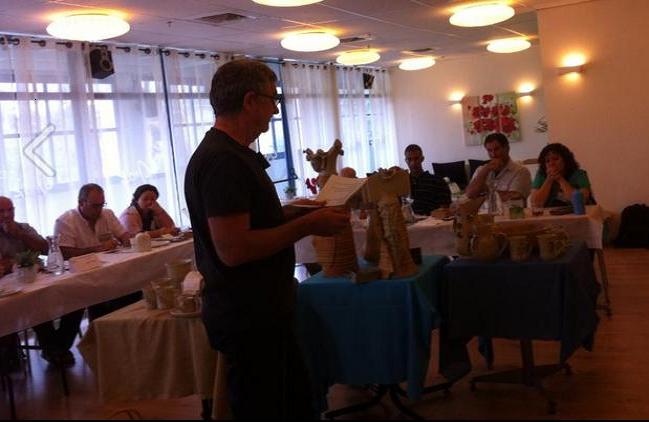
The purpose of meetings

To coordinate, to forge agreement or competition, to mix personalities with expectations, to drive opportunity, to discourage chaos, to air opinions, to foster relationships, to control, to quash creativity, to encourage creativity, to educate, and to validate. To meet (visual and verbal exchanges).

Meetings have purpose and less so. Positive and negative energy. Positive and negative outcomes. Positive and negative feelings. Positive and negative interactions. Dual presentation depending on each participant’s motivation and position.

To meet

Many meanings, many interpretations. The main purpose of meetings is to bring together in order to change current reality. Sometimes for betterment of society and sometimes not. Each meeting is an opportunity for this or that.

Possibilities.

Post 20

Energy Guidance Complete is not just about the writing. It’s about changing my own eating habits and strengthening my body. It’s about understanding the importance of self-care and other-care. It’s about listening to my intuition and understanding its importance. It’s about opening to the reality of spirituality. It’s about opening to the wisdom of beyond. It’s about sharing these discoveries with others.

All this, and more!

…and each potential bring opportunity for elevation.”

Leaves--Journey

In The Gift for Intuitive, Dedicated Comfort, the journey of life is explored.

“The path one chooses is actually many paths; each path leading into a wider and longer path. The ability to try is the key to creating a valuable life. Valuable here means creatively challenged, joyful, balanced in terms of self vs. community, and accepting of the vagrancies of nature and life events. So many tributaries feed into the river that forms and sculpts our lives. Each chance meeting; each struggle to learn something new, to hone existing skills, to push beyond; each encounter with nature; each encounter with nature’s creatures; each exchange—verbal, physical, or with divine understanding; each decision, non-decision, decision result. All these parts combine, repel, stack, and group to shape, mold, and create the people that we are.”

“…each encounter with nature, each encounter with nature’s creatures…”  Many of us tend to trivialize the importance of our encounters with the environment and with other living creatures.  “The connection to flora and fauna significantly 1) broadens and heightens understanding of cycles and fluctuations; 2) develops appreciative and inquisitive capabilities; and 3) causes people to examine and work with vegetation that aid human life and animals that enhance human existence.” from Book #3.

The photo above is my attempt at nature art. As the wind blew my collected leaves around, I thought about the need to relax expectations (I had collected 1000 leaves). The leaves were interesting to work with: varying colors, sizes, and shapes; easy to work with until the wind whipped them up; and versatile in their ability to form lines, corners, and curves.

The more we encounter nature, the more we understand ourselves.