A Balanced Approach to Wellness!

Posts tagged ‘Health’

The Head Signals: Migraines

headache

Migraines are the body’s way of signaling for help. They are front-line announcers of distress. A person who ignores other bodily signals will usually get migraines.

Migraines are not genetically transmitted, but they can be learned. A child whose parent experiences migraines on a regular basis learns migraine behavior. That doesn’t mean the child will suffer with migraines, but the child feels the effects in a subtle—or not so subtle—way which transmits migraine behavior as a coping mechanism.

Migraines signal that shutting down is necessary for the body to recoup its equilibrium. The shutting down is a response to lack of sleep or lack of water or too much visual stimulation or too little self-care or irritation by overhead lighting or lighting on the computer or emotional confusion. Improper food intake can contribute to migraines as can seasonal changes. Each person experiences life in a unique-to-me way; therefore, the causes and contributors to migraines are different for each person. There are many more reasons for migraines to occur and my partial list is to give a sense of migraine triggers.

Migraines require care. Dulling them is not care, it is foolhardy. Yes, feeling less pain is better, but it is temporary relief until the next one and the next one and the next one and the next one. Migraines require examination of lifestyle and life choices. Migraines require changing routines and changing lights (if lighting is a cause).

Relief from migraines is worth the investment in removing the migraine causes and contributors. Not only will migraines lessen, but other aspects of health will improve.

Body talk and the meaning, part 2

PeopleA pain in one part of the body is often related to that part of the body, but not always.  The body is a complete entity, and what happens in one part can have an effect on many other parts. Illness and afflictions have causes, causes that are often not easy to understand.

An example is fibromyalgia. Fibromyalgia syndrome is not understood because it acts differently in each body. There are many hypotheses as to the cause and some of the hypotheses are accurate for some people. But not for all, which make it a confusion. Each person with fibromyalgic symptoms has reasons for the symptoms, the reasons are body talk unheeded.  Each person with fibromyalgia syndrome suffers from body talk unheeded that multiplied because of ignored messages. When the body is trying to communicate and the person doesn’t listen the body will shut down, overreact, or take over. Fibromyalgia syndrome is an example of the body doing all three.

Whether the cause of illness or afflicitons is a physical cause or an emotional cause, the body will speak to you.  If you listen and work out the cause, your body will reward you with well-being and reliability. If you ignore the whispers and the shouts, your body may lose its ability to communicate which can lead to many ill effects.

The next time your body calls, aim to listen carefully. You will be grateful in the future.

More about body talk: Body talk and the meaning

Body talk and the meaning

painA rumble in the tummy? Body talk for hunger, fright, or contentment.

Pain in the lower abdomen? Body talk for “you ate something that wasn’t good for you”,  “you did a movement that you weren’t ready for”, or “you contracted a stomach bug—get to the toilet!” (among other possibilities).

Lightness in the head? Body talk for lack of sleep, lack of water, lack of nourishing food.

Pain the toes? Body talk for “your shoes don’t fit”, “there’s a splinter” or “you have an inflammation in your nose (or mouth or somewhere other than your toes)”.

A pain in one part of the body is often related to that part of the body, but not always.  If the pain in the toes is caused by an inflammation somewhere else in the body, no amount of focus on the toes is going to help until the inflammation is handled. The body is a complete entity, and what happens in one part can have an effect on many other parts.

Whether the cause of pain or irritation is a physical cause or an emotional cause, the body will speak to you.  If you listen and work out the cause, your body will reward you with well-being and reliability. If you ignore the whispers and the shouts, your body may lose its ability to communicate which can lead to many ill effects.

The next time your body calls, aim to listen carefully. You will be grateful in the future.

More about body talk: Body talk and the meaning, part 2

Important tests for health

Post 80-Attention

For optimal health, the following health maintainers should be monitored:

  1. Consumption of nutritious and satisfying foods. (Focusing on foods that are bereft of nutritional value or are lacking in the aspects that naturally gratify [for example, fat-free foods] undermine physical, emotional, and intellectual health.)
  2. Interactions with other people. (Too little interaction undermines emotional and spiritual health.)
  3. Participation in physical activities that bring joy and challenge. (Participation in physical activities that are not enjoyed undermines emotional and spiritual health.) Daily physical activity is necessary to keep the bones, muscles, and flows working properly.
  4. Rhythmic breathing that is varied and appropriate for the body’s activities.
  5. Sensitivity to environmental concerns. (Disregard for plant life, water sources, and conditions for animal rearing undermines the grounding of the world and damages physical and intellectual health.)
  6. Appreciation for life’s gifts.
  7. Attention to self-needs. (Ignoring one’s needs damages all the aspects of balanced health. This area does not mean self-centeredness. It means self-support.)
  8. Sufficient and satisfying sleep.

Each of these health maintainers is vital for well-being and balance. Focusing on a few of them is not enough.

“A good life is one in which a person knows that he or she has affected, uplifted, and connected.” from the book “Vitality!”.

http://amzn.com/1499599196

Prevention of poor health–>Stop the causes!

Forty

The following list was presented in two earlier blog posts. I am presenting it again because it is really important. Please look at each contributor to poor health and consider it. Each one won’t apply to you, but it may apply to someone you love.

Notice that sleep deprivation is the second major contributor of poor health. This one is really not that hard to fix. Notice the third contributor. Letting the body heal itself when possible can lessen the grasp of this contributor. Notice number five. then get up and dance around or walk in place.

Each contributor can be lessened.

——–

In modern societies, there are 40 reasons that a person becomes deceased too early or suffers too much. Here are the reasons in the order in which they contribute (accidents and disasters are not included):

  1. Overconsumption of alcoholic beverages
  2.  Sleep deprivation
  3.  Misuse of legal drugs
  4.  Depression
  5.  Insufficient regular movement of the body
  6.  Overuse of cigarettes
  7.  Insufficient protection from the elements (cold, heat, etc.)
  8.  Chronic insufficient consumption of water
  9.  Overconsumption of food
  10.  Insufficient exposure to the environment (nature)
  11.  Worry, fear, and anguish
  12.  Suppression of negative emotions (worry, fear, and anguish)
  13.  Hurt feelings
  14.  Blood pressure pressures
  15.  Isolation
  16.  Genetics
  17.  Misjudgment of self-boundaries (When relating to other people, not understanding how to bond. When relating to tangible items, not understanding limits and excess.)
  18.  Insufficient intake of vitamin-rich foods
  19.  Memory loss
  20.  Insufficient intake of mineral-rich foods
  21.  Digestive disturbances
  22.  Elimination issues, such as constipation
  23.  Too much dependence on approval from others
  24.  Inadvertent consumption of foods that cause allergic reactions
  25.  Overexposure to toxins
  26.  Sense of unworthiness
  27.  Misuse of illegal drugs
  28.  Purposelessness
  29.  Sadness
  30.  Misjudgments in sexual relations
  31.  Lack of trust in one’s intuition
  32.  Chronic under-usage of the thinking capabilities
  33.  Overemphasis on physicality
  34.  Anger
  35.  Jealousy
  36.  Eating too little
  37.  Indifference
  38.  Overusing the body physically
  39.  Feelings of devaluing others
  40.  Choice inundation

 You may have noticed that shallow breathing and other breathing issues are not on the list. Improper breathing results from many of these issues so that breathing, or rather, incorrect breathing, is often part of the causes.

The magic pill

Post 106 personal resistance

I have been guiding people towards balance through Energy Guidance Complete. This work involves people making changes in their habits and in their choices. This approach requires a positive spirit and willingness to change.

When people apply the wisdom of Energy Guidance Complete, their symptoms abate and their goals become reachable.

Here’s the amazing aspect of my work–and by amazing I mean that I am shaking my head with disbelief–when presented with healing that requires a willing spirit and desire for health, too many choose to remain afflicted and floundering. Too many want me to say a magic sentence and all will be right for them. Too many want me to tell them a secret cure to fix all ails. Too many want to be well without changing a thing. Too many want to be svelte without putting down the fork and stuffing their mouths with worthless and damaging edible things that masquerade as food. Too many prefer to give their kids a pill rather than make them eat breakfast every morning. Too many want ease.

Promises of an easy life come from marketing blurbs and diet supplements. Real life requires investment in proper nutrition, adequate sleep, and daily exercise. And community service and time for friends.

The magic pill is loving oneself and living a life that exudes this love. This magic pill comes with the following instructions:

  1. Keep a positive attitude and complain less.
  2. Breathe more deeply and stand straighter.
  3. Acknowledge ability to be well and pursue wellness.

Energy Guidance Complete is spiritually guided healing that requires each person to invest in themselves. With spiritual guidance amazing changes can happen, but taking part by the individual causes the amazing changes to become reality.

To complain or not to complain

pain

There is a woman I know who complains whenever she gets the chance. Nothing and no one is off limits from her fault finding. There is another woman I know who suffers from debilitating pain and who has experienced much more suffering than the woman who always complains, yet she never complains.

“…life is amazing and large, and should be embraced.”

“People are constantly forced to make choices throughout their day.”

“Much depends on our attitude and on our desire to be well.”

To complain or not to complain?

Complaining is easier than accepting responsibility or accepting things that didn’t go the way we wanted. Complaining leads to less awareness of others and to over-focus on oneself. The more a person complains, the less he or she lives peacefully.

Living peacefully

Living as though the events that befall can be handled with neutrality and insightfulness. Understanding that there are ebbs that test our strength and simple joys that overwhelm. Raising concern when injustice occurs and when unwellness or health require care. Remaining faithful when circumstances test faith.

Ways to curb complaining

  1. When you catch yourself about to complain, breathe deeply then breathe more deeply until the desire to complain passes.
  2. Fix what can be fixed.
  3. Help a cause or an organization that helps people with handicaps, helps animal welfare, or helps sustain the environment.

“The feeling of life in one’s body is an extraordinary feeling. Noticing the feeling of being alive, of being awake, of being vital. Amazing!”

The quotes in this blog post are from Vitality! How to Create a Life That Is Healthy.

Listening to creativity

treble_staff

A few nights ago, I went to a music event at a small venue in Houston called McGonigel’s Mucky Duck. The music was provided by a woman and her band from Austin. The place is small and intimate and the waitresses are friendly. Comraderie radiated from the walls of the building as it has been the recipient of years of people connection and music making.

I was with a party of six celebrating the birthday of one of us. Most of my group was tired, because we met at the end of a work day. We ate, talked, and looked around as people usually do when they are out eating. It was nice to be together, but the tiredness remained.

Then the music started! Suddenly everyone in the pub became part of a collective witnessing of rhythm and creativity. The music, live and enlivening, filled our ears and our bodies. The tiredness seeped out and was replaced by inner rhythm and energy. For over an hour, worries were forgotten and music was absorbed. We clapped our hands and moved to the rhythm. We participated in a group experience of connection and creativity. Our participation contributed to the singer’s performance and her performance contributed to our participation. A cycling of people influencing people through the power of music!

The power of music is beyond understanding. It touches our hearts and our minds, our emotions and our intellect. Music provides a map towards self-understanding and others-connecting. The rhythm is in our bodies and in the amazement that is life.

“Life can be so enjoyable; one simply has to agree to be ready and to be amenable to receive the good….”

from The Gift of Intuitive, Dedicated Comfort

http://www.amazon.com/Gift-Intuitive-Dedicated-Comfort-Understanding/dp/149366770X/ref=tmm_pap_title_0?ie=UTF8&qid=1424449854&sr=8-1

Rebalance

balance

Once upon a time, we were balanced. That moment occurred when we were born, and it continued to occur when our caretakers cared for us in loving and attentive ways. Balance continued when our caregivers saw our individual nature and nourished our individuality. Balance continued to occur when we grew and people in our community accepted us for who we are. We developed our skills and our talents and we each found our way to develop our influence in the community. We built relationships that were loving and giving and we followed our path until the path stopped. Our influence on the people around us was large, because we were balanced and accepting of ourselves and all around us. We were balanced and stayed balanced throughout our lifetime.

A fairy tale? Balance throughout our lifetime?

Staying balanced is key to living a life that is fulfilling and vibrant. Even if our childhoods were not balanced and even if we did not develop our skills and talents to their potential, we can return to a balanced state by focusing on positive aspects of ourselves and caring for ourselves in a loving and attentive way. Rebalance is possible when we truly want it.

Rebalance occurs when we care for our bodies properly with adequate sleep, proper nutrition, consistent care for the eyes (not too much screen time), and enough exercise. Physical care is not enough for rebalance to occur. We must also balance our emotions through releasing negativity (see https://energy-guidance-complete.com/2014/09/30/enough-drawers/) and connecting to others (see https://energy-guidance-complete.com/2013/10/08/connections-are-the-means/).

Rebalance requires deep and relaxing breathing. Rebalance requires regular connection to nature. Rebalance requires seeing oneself through kind and accepting eyes.

Rebalance is possible. It is not a fairy tale.

Los Angeles—a city for walkers, part 2

walking

Walking in LA is strengthening. It strengthens the body and the mind. There are so many interesting sights and people.

I have just finished a three-hour walk. In the process I visited a museum, window shopped, and celebrated with a cup of vegan frozen dessert (feel bad about using a disposable cup).

My body feels worked and invigorated. My mind feels used. My emotions are relaxed. My spirit feels uplifted.

Walking in LA is an opportunity to connect with how people live, and when open, an opportunity to connect with people along the way.


Los Angeles—a city for walkers

walking

I have been in LA for two weeks, and I continue to walk all over the city. I have walked from Hollywood to many destinations in all directions. The neighborhoods are inviting and charming. The large streets present so many different businesses with interesting names, appealing merchandise, and yummy looking food. Seeing tour buses and tourists adds to the walking appeal.

Each day I walk 1 – 2 hours. Occasionally I walk more. Sometimes I walk just to walk, and sometimes I walk with a destination in mind. I grocery shop on foot and only catch public transportation when my load is too heavy or my feet are too tired.

People in LA say that LA is a city for driving, but I know they are wrong. LA is a city to be explored while moving 2 mph (which is how fast many of them drive on the overly congested highways). When I tell people here how much I’ve been walking, they are surprised. I hope my zest for walking LA moves them to walk and see their city at a slower speed.

Not all cities are walking-friendly, but the ones that are can provide endless hours of entertainment and opportunities for discovery and connection. All it takes are comfortable shoes, water, and openness.

Farmers’ market balance

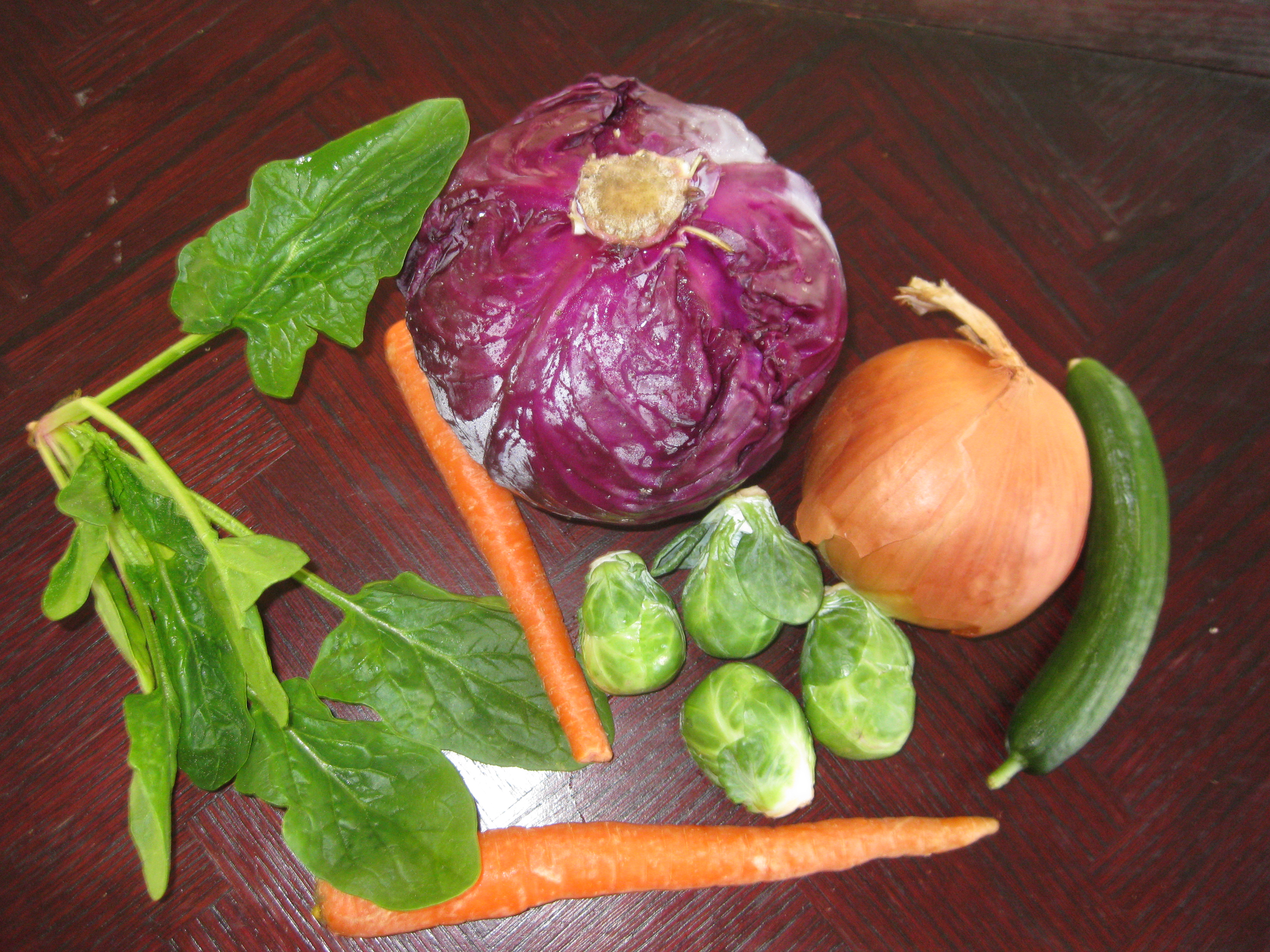
Post 104-veggies.jpg

Farmers markets are opportunities to buy freshest-­of­-fresh fruits and vegetables and items prepared by farmers and other stall owners. Farmers markets are opportunities to be close to the produce without having gone to the farm to pick them. Farmers markets are different from grocery stores in that opportunity is provided for connecting with people who are connected to the gifts that come from the earth.

The fruits and vegetables that are displayed at farmers markets are usually local produce. They contain remembrance of the land that is nearby. At a spiritual level, eating produce that came from nearby land is nourishing beyond spiritual sustenance that occurs from eating produce that came from afar. The body won’t feel the difference, but the spirit will. Eating produce from other countries or from great distances inside one country is less spiritually sustaining. The spiritual sustenance occurs through the intangible thread that ties the earth in which the produce grew to the person eating. The farther the distance, the less ability of the thread to connect. Local produce supply the connection.

Intangible connection to the foods that nourish our physical bodies is one more step towards balance. The more we eat the spiritually balancing gifts from the earth, the more easily we can connect to our soulful selves.

Note: Growing one’s own fruits and vegetables is even more spiritually balancing.

Note: In small countries where the produce does not travel far to reach the grocery stores, the produce in the grocery stores still has the intact intangible thread to the earth, but the handling of the produce affects access to the earth-giving spiritual connection.

Illness and its consequences

illness

Illness is end result of improper or incorrect care. Illness reflects prior actions and illnesses. Emotional responses and imbalance can also trigger illness.

The main contributors to ill health are discussed in an earlier post: https://energy-guidance-complete.com/2014/06/05/the-forty-contributors-to-ill-health-and-to-possible/ These contributors also contribute to the various illnesses that strike. For example, sleep deprivation and dehydration can lead to general ill health and to succumbing to a virus.

The body has defenses to protect against invading germs, but if these defenses are troubled by internal weaknesses or disruptions, then the germs can overcome the defenses. Balanced health is required to keep the germs at bay.

When the body is chronically weak and disrupted, illness can cause life-changing consequences, as happened to an acquaintance. He is now in a facility that handles people who are well enough to not be in a hospital, but are too far gone to be at home. He was an active and innovative community member who overlooked his own physical needs. He slept too little. He ate too little, and when he ate, he often ate foods that did not nourish. He forgot to drink water regularly and he forgot to wear warm clothing when it was cold. He was emotionally inundated with other people’s problems and he would forget to address his own emotional hurts. He was spiritually searching, but not spiritually open to personal spiritual connection. His health was overlooked, and illness was seen as a nuisance. He became ill a few years ago, ignored the illness, became ill a few more times, took various medications (but not better care of himself), and  his body eventually “turned” on him. His decline was all-encompassing affecting his physical, emotional, and intellectual health. Doctors were consulted; medications were administered (with some success, but with too many side effects); workload was lessened; people were avoided. His chronically ill-cared-for body could not overcome the onslaught of germs, worry, medications, more worry, and more germs.

This post is a reminder to take care of yourself and to treasure the body that houses your soul.

The importance of delight

(taken from my article of the same name on Healing.Answers.com  )

OLYMPUS DIGITAL CAMERA

Delighting in simple pleasures has become a lost art. Very young children do it; they can’t help themselves. They haven’t yet been conditioned to expect more.

Being told to delight in simple pleasures is a rather broad commandment.  First of all, what is a simple pleasure? Second of all, what exactly does it mean to delight in something? And third, why is it so important?

What is a simple pleasure?

A simple pleasure is a thing, a connection, or an event that causes a person to feel a smile within the body. In general, large and elaborate things or events that, while positive, create different reactions within the body.

Simple pleasures rarely change in life. What delights a child should delight an adult, unless the adult has been too tarnished or damaged. There are infinite simple pleasures and each person feels perhaps 3,000 in his or her lifetime. The more open a person is to the amazement of life on Earth, the more simple pleasures he or she can feel.

Examples of simple pleasures are:

  • Seeing a beautiful flower, smelling it, touching its petals
  • Approaching a large tree, looking up into its leaves so high above, touching the bark
  • Walking barefoot on sand and feeling it between the toes
  • Standing outside during a mild rain shower with face uplifted to the sky, feeling the drops on the face
  • Being held by someone who loves you
  • Being rocked by someone who loves you
  • Holding a pet in your arms, stroking the fur, seeing the pet’s reactions
  • Feeling strength in your hands, their versatility, their capability

What does it mean to delight in something?

To delight in something means to roll in its hold on you. Not to really roll, rather to let it take you over in childlike amazement. As if you are a small child witnessing wonder.

Many people lose the wonder of things as they age and experience experiences over and over again. To see a tree for the millionth time is less amazing than seeing a tree for the first time, and yet, the millionth tree is really as amazing as that first one. Finding delight in each and every experience that is pleasurable is a goal worth pursuing. Avoiding becoming jaded, avoiding becoming apathetic.

Why is it important to delight in delight?

The more we let ourselves be moved by the joyous moments in life, the more balanced we are. Our bodies and souls require HAPPY for proper functioning. Even when life is difficult and challenging, finding delight in simple pleasures can affect the way in which we handle the challenges and low tides. Finding moments of un-joylessness, un-annoyance, and un-restlessness lead to balance and to meaningful existence.

Tip

A simple way to recall the joyousness of childhood is to be outside near a plant that has a scent you find pleasing.  Sit down next to the plant and let yourself be absorbed by its scent and its fullness of life. (Be sure to protect your clothes before you sit; otherwise, you’ll be upset when you see your dirty clothes and forget the joyous moment!)

Conclusion

“The importance of delight” is the title of this post. It is also a directive from Spiritual Presence about our lives. Life is not meant to be easy, but it is meant to be interesting. The more we find pleasure in the world, the more we can contribute and receive.

Connecting to Guidance

This article is reprinted from Healing.Answers.com in the Personal Growth category: http://healing.answers.com/personal-growth/connecting-to-guidance

Post 92-spiritual connection

Have you ever felt a helping hand when you needed assistance? Have you ever sensed guidance during times of uncertainty? There are beyond-life companions that bind to us, and we can access their help and their hope if we are open.

How to Become Aware of Guidance

Awareness of guidance is different for each person. Someone will feel a “kick in the pants”.  Someone else will feel a “tug at the heart”. Guidance can feel like vibrations throughout the body or gentle touches on the skin or flashes of inspiration. Feeling a sense of security or a gut feeling or opening in the throat or a knock on the head are sensations of guidance. Hearing a soundless voice or tasting a sense of a known substance are other forms of felt guidance. Many other types of awareness occur, and each person can experience one of more of these forms of communication.

How to Learn from Guides

Guidance from beyond is available to all, but because of movement away from nature and away from openness to beyond-human-interactions, many people cannot access guidance.  Guidance from beyond transfers wisdom from those who came before. The wisdom assists with decision-making and action-taking.

Each person learns differently, but there are general guidelines. Awareness of how guidance is transferred is the first step, and each person must ascertain the communication forms for himself/herself. The next step is to determine if you want this help. After that, decide how and when you want to use this communication.

How to Develop Patterns that Increase the Guidance

In general, the more a person is connected to nature, the more easily the connection to beyond happens. By observing nature through the senses, connection to beyond usually increases. Although the connection to nature is not necessary for communication with guides, the connection does assist in developing awareness of guidance.  Increased guidance happens when connection to possibilities is cultivated.

What does it mean to cultivate connection to possibilities? Being attentive to the guidance indicators (kick in the pants, tug at the heart, etc.) cultivates connection to possibilities. Being open to receiving the communications and then using the assistance when it is received builds connection to possibilities. Being accepting of oneself is also a way to increase the guidance.

There are no definitive steps for communicating with beyond-life companions, because each person has a pull towards/push away from such communications that is influential in creating or denying the ability to connect. Openness is the key to possibilities.

When sadness hits (reposting)

Post 78-Sadness

Sometimes terrible things happen to people. Sometimes young people have serious illnesses that disfigure or damage them. Or weaken them so they die too young. Sometimes natural disasters befall people and they are left homeless, hurt, or confused.  Or orphaned. Sometimes people hurt other people—intentionally or not—so that trauma or death results. Sometimes people damage themselves—intentionally or not.

In all these cases, the survivors and caregivers are required to continue on and live. Not an easy task. Caregivers suffer daily, both physically and emotionally. Survivors suffer too, although differently and in varying degrees of despair, guilt, and shock. Both are in need of support, kindness, and openness to their pain. In other words, a survivor or caregiver needs a quiet  audience (meaning the listeners are quiet) for them to bare their sadness. If the audience is not quiet, the sadness might not dissipate. Quiet and constancy are the qualities of people who are helpful to those who need to give way to the effects of their sadness.

When sadness hits because of the natural order of life (a parent dies in old age), the survivors also require the same quiet and constancy. Sadness is sadness no matter the cause, although extra understanding should be given to the survivors of tragedies.

The person who has suffered the trauma (but not death) needs even more constancy and support. This person must eventually release the hold of the trauma. As described in the book Oneself-Living :

“Negative remembrances require determination and desire to purge them. Negative remembrances that are traumatic are often too difficult to release with-out continuous and relegate-to-a-less-prominent-place focus. Although traumatic events damage the connection to self and the sense of security, a person can remove the vicious side of a trauma so that a normal life can be led. Leading a normal life means focusing on the tasks that are done each day to sustain life: intake of food and water, sleep, interaction with others, and appreciation of the natural environment. Holding on to the tainted memory(ies), or holding back because of self-manufactured fear, prevents purging of the trauma of the event. The trauma must be released.”

Sometimes, terrible things happen to people. Terrible things also happen to the animals that inhabit the Earth. Terrible things happen. Can something be done? Towards the animals, much can be done. Towards people, less can be done. Towards animals, much painful treatment are day-to-day practices that people do to animals for food, clothing, and decorative items. Becoming aware of what is done to animals is the right thing to do. In general, people have less control over the tragedies that happen to people. Nonetheless, awareness of wrongful treatment of people should bring action from people who can affect change.

Sadness is sadness, no matter the cause. Releasing sadness can be done—with patience, with kindness, and with readiness.

Causes of expiring too soon


Expiration date

Recently, a person died who I didn’t personally know, but many people I know knew him. He was only 48-years-old and he died of a heart attack. This event has prompted me to revisit the post “The forty contributors to ill health and to possible…” https://energy-guidance-complete.com/2014/06/05/the-forty-contributors-to-ill-health-and-to-possible/

Sleep deprivation is number 2 on the list. Number 2! Sleeping too little is fatal! Sleeping too little clouds judgment, exaggerates emotional reactions, and causes accidents. Sleeping too little deprives the body of the time it needs to rejuvenate and repair. Sleeping too little, when combined with other factors, negates healthy aspects of living (proper diet and exercise). Sleep deprivation needn’t be, because each person can know his or her sleep needs by paying attention to the body.

Insufficient regular movement of the body is number 5 on the list. Number 5! A bit of exercise here and there is not enough. Our bodies were designed to move—often.

Chronic insufficient consumption of water is number 8 on the list. Lack of regular hydration taxes the body and increases illness possibility.

Suppression of negative emotions (worry, fear, and anguish) is number 12 on the list. Having any of these negative emotions is number 11 on the list, but suppressing these emotions is almost as bad. Feeling negative emotions is normal, but when they are constant companions they tax the body and increase illness possibility.

Feelings of devaluing others: number 39 on the list. Thirty-nine might not seem high, but when combined with other factors, can lead to an expiration date that is too soon. Negative feelings about others boomerang and cause lowered resistance to illness and disease.

Too soon is preventable, but it is more than eating certain foods and not eating “bad” foods. To understand the way to live a long and healthy life, look at the list of 40 and live oppositely to all 40. It is never too soon to change direction!

Closeting

Closet

Secrets. Thoughts. Emotions. Worries.
Hiding away in the crevices of our minds. Jumping out of their hiding places when we purposely retrieve them or accidently let them surface. Reminding us of desires or events or suspicions or fears that we prefer to hide or forget or ignore or overcome.

Thoughts.
Thoughts distinguish each person. We all think about matters that enter our lives, and our thinking is individualized, like a fingerprint. Each person with fascinating thoughts about life, living, and edge-existence (edge-existence is awareness of oneself as a part of larger-than-self [nature] and of oneself connected to beyond-self [the spiritual realm]). Thoughts that seem too unusual are kept closeted unless the person has a secure sense of rightness.

Secrets.
Hidden away are the actions and thoughts that cause embarrassment, excitement, and anguish. They influence behavior even though they are meant to be buried. Each person has secrets that simmer. The simmering lessens or boils over depending upon availability of nonjudgmental support, the urgency to unload sequestered information, and the closeness of death.

Emotions.
All people experience life emotionally. Emotions are extensions of awareness. Awareness of one’s environment and one’s physical state elicit emotional responses. People whose emotions are nonexistent or are uncontrollable have suffered a trauma—through genetics or through injury. People whose emotions are denied by themselves often suffer from chronic illnesses that cannot be explained. Emotions reflect dynamism, and hiding them impact intellectual and physical health.

Worries.
Accidents can happen and misfortune can befall, but constant worrying about these things causes stunted development. Pretending not to worry, while secretly worrying, causes stunted development and inability to reach potential. Worrying is a result of fearful upbringing. Closeted worries require determination to release them.

The opening for repressed baggage is acknowledgement.

Uneven breathing—the balancing breath

Breathe

–    Inhale, exhale. Inhale, exhale.
The rhythm of breathing.
–    Inhale, exhale. Inhale, exhale.
The motivator of healing.

Releasing with the exhale.
Circulating with the inhale.
–    Body well.
–     Health urged.

Rhythmic breathing is natural. Inhalations and exhalations of equal length are usual when the body is at rest. When the body is in motion, the rhythm changes, but the lengths of the inhalations and exhalations remain relatively equal.

Rhythmic breathing of unequal lengths can be used for developing greater breathing capacity and healing. In general, when the exhalations are longer than the inhalations, healing is encouraged, if this rhythmic breathing is for an extended period of time. For example, inhalations to a count of six and exhalations to a count of eight, when rhythmically done for at least 15 minutes, start various balancing mechanisms.

Each person has a capacity for uneven rhythmic breathing depending on physical condition, age, breathing habits, and current sleep situation (slept enough or sleep deprived).

Daily uneven rhythmic breathing can be a tool for balance and well-being.

–    Inhale: 6, exhale: 8. Inhale: 6, exhale: 8.
The rhythm of uneven breathing.
–    Inhale: 7, exhale: 9. Inhale: 7, exhale: 9.
The path towards healing.

Releasing with the exhale.
Circulating with the inhale.
–    Body well.
–    Health urged.

Balancing the balancing—the intertwined design of life

balance

(taken from my article of the same name on Healing.Answers.com )

“The design of the body is just exact and nearly as beautiful as the most beautiful object. Being brilliantly designed and executed, the body accompanies its inhabitant throughout the body’s existence. Beautiful in motion, in repose, in its beginning and in its ending, ….”  from the chapter “Connection of the Four Components of Health” in Pond a Connected Existence.

“Being brilliantly designed and executed” is the description of the human body. This description refers not only to the physical component of the body, but also to the nonphysical components—the emotional, intellectual, and spiritual components. The body is a complex interconnected creation that demands balance of all the components to be truly itself. Balance is the key to life as designed.

What does it mean to live in balance?

Achieving balance is important to living well. Living well does not mean being prosperous or famous. Living well means living with purpose and with vitality, with awareness of the rhythms of the world, and with connections. Connections to other people, to the environment, to other creatures, to spiritual presence, and to oneself.

Knowing how to live within the constraints of the human body while enabling it to thrive permits the growth and development of a balanced being. Knowing how to give and take love, kindness, and support permits the widening of the emotions and the strengthening of the body. Knowing how to take interest in the world around and in its inhabitants permits the development of the intellect, the development of the emotions, and the versatility of the body. Knowing how to open to spiritual presence enables the relaxing of the spirit, which then relaxes the intellect, emotions, and body. Spirit—mind—emotions—body; all connected, all the time.

What is the first step towards balance?

The first step to bringing balance to the whole composition that is a person is to accept the intertwined design of life. It is important to understand that each decision, each movement, and each interaction affects the connected body in each of the components. By living as a connected human being—connected to oneself and to one’s interconnected composition and connected to all that is around (the environment, other people, the many creatures), a person can thrive and shine in a life well lived.

What is the second step towards balance?

The second step to bringing balance is to create realistic goals that achieve purposeful living. Here are three examples of steps to purposeful living:

  1. Creating warm and lasting relationships with family members and chosen friends balance all four components of health. This balancing goal can be achieved by scheduling time for visits with, calls to, and fun adventures with family and friends.
  2. Avoiding intentional damage to the environment balances the components of health. Thinking of ways to individually create less havoc in the world—less use of disposables, less reliance on animal products, etc.—balances the intellectual and emotional components of health. Following through and doing these things balances all four components of health.
  3. Avoiding intentional damage to our own selves balances the components of health. This step is not easy, but is necessary for balancing. Examining one’s lifestyle, choices, and activities balances the intellectual and emotional components of health. Following through and making changes balances all four components of health.

A simple way to bring balance

One way to balance yourself is to feel the weather. Rather than rush out of the rain, walk in it and feel the raindrops. Rather than avoid the cold weather, dress appropriately but let yourself shiver and notice your body’s shivering. During the hot months, let your body feel the heat and let it sweat.

Conclusion

By taking steps to connect with ourselves and with our situation (our surroundings, our society, and our ability to bring change), we can create meaningful and well-lived lives!