A Balanced Approach to Wellness!

Archive for the ‘People’ Category

Animal Awareness: Recognition and Conflict in People

Oblio-post3Dogs recognize dogs that are from their lineage. They recognize them through scent and corresponding stimulation of taste sensors. Dogs from the same lineage will form packs if they are allowed freedom. The pack will provide protection and sustenance to its members. The pack will fight dogs from other lineages and animals that threaten the pack. The pack is “family”.

buffalo

Buffaloes group by blood ties. They recognize connection through scent and corresponding stimulation of nerve receptors in the nasal cavity. A herd of buffaloes will contain grandparents, parents, and children, if they are allowed to live in freedom. The herd will link to other buffalo herds to search for food together, but they huddle in their family groups when natural disasters prevent escape.

friendships

People differ from other animals because their brains allow them to defy natural inclination to protect and group within the biological family. Like buffaloes, people naturally group by blood ties. Like dogs, people recognize lineage. Unlike buffaloes and dogs, people can adapt to live with very different people.

People can overlook the natural tendency to choose sameness and can choose “other” instead. The ability to adapt to general human behaviors enables adaptation to different cultures, traditions, and views. The ability to adapt to other people’s customs and ideas should enable understanding and acceptance of all people, rather than racism and fear.

The desire for ownership is the cause of human conflict. Wanting someone else’s land or possessions or abilities leads to arguments and ruthlessness and wars. Wanting someone else’s partner leads to manipulation and to regrets. Wanting someone else’s reality leads to wrong choices and conflicts.

The desire for ownership will be explored in the seventh book in the Existence-Me Elevated Living book series: Descending into War, Descending into Contempt.

The Friendship Drift

clouds

Clouds float in the sky, each with its course and oscillation. The clouds float on their own courses, but join and separate when their courses intersect or diverge. The joining can be fleeting or it can last until the clouds are no more. The separating can be complete, with each cloud retaining its original form and content, or it can be wrenching, with one or both of the clouds pulling at the other’s shape and taking part away with it. Clouds can join in groups, staying together until they are no more, or separating singly or in groups, with each separation having retention or taking away. Clouds have purpose, and as they float they perform their individual tasks. When joined, they sometimes perform together or change their purposes. Clouds have interesting aspects.

Friendship has interesting aspects. Friends each have their path and equivocation. They build their lives along their own paths, but join and separate when circumstances bring them together or separate them. The joining can be short-lived or can last a lifetime. Separation can be final, with each person staying on his or her path, or the movement away from one another can bring pain or remembrances of joy. Friendships can be between two or among many, existing until circumstances bring separation, with some friendships remaining and some dissolving. Each person in a friendship has purpose, and the friends maintain their individual purposes as they experience life together.  Their togetherness has mutual influence, and the friends sometimes change their purposes from influence of a friend. Yes, friendship has interesting aspects.

Friends made during childhood can last a lifetime, but holding on to childhood friendships when they no longer bring comfort is disheartening and senseless. Friendships developed through work or proximity are worth developing for the comfort they bring at the time. Building new friendships throughout one’s life is wisdom performed. The joining of people into groups of friends is wise as well.

Clouds and friends, drifting along in joined companionship.

Mother’s Contribution through Antibody Gifting (Breastfeeding)

infant

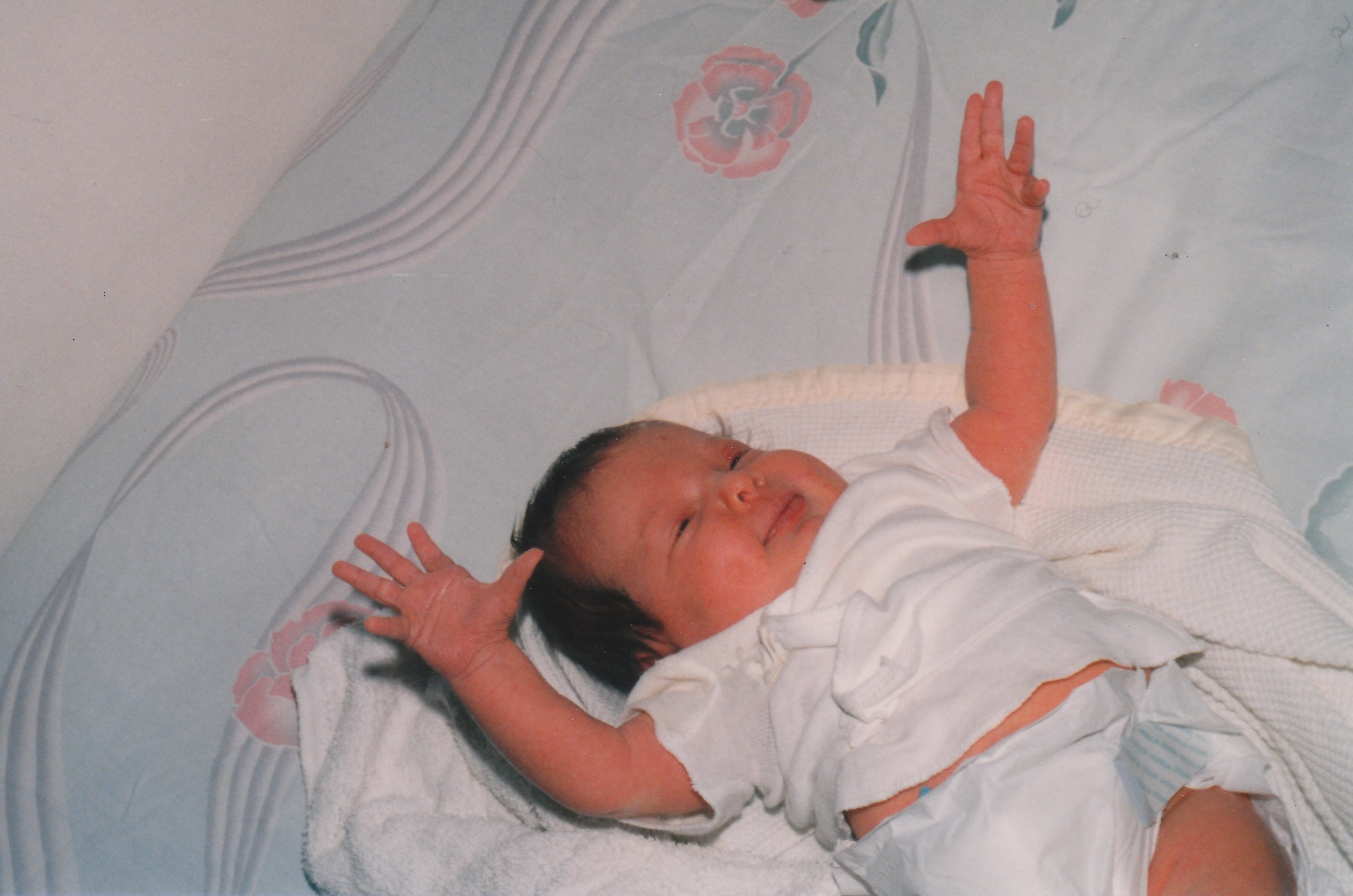
Feeding a baby, nourishing his or her tiny being, filling the body with enzymes and protein and carbohydrates and more.  And antibodies. Antibodies to protect from the usual invaders and from the unexpected infiltrators. Antibodies to strengthen and to stabilize.

Mother’s milk nourishes the baby, adds protection to the baby, and binds the baby to the mother. Breastfeeding is all-in-one caregiving—food, warmth, and love all combined and all so easily delivered.

The newly born human body is designed to obtain first nourishment from the mother’s milk. The human body is designed to respond to cuddling with the mother as she breastfeeds her helpless infant. The human desire to protect and nurture burst out of the mother as she cradles her infant and satisfies the infant’s hunger. The two feel one another and are enclosed in an intangible circle of caring. The father, or other partner, can sit close and touch each of them to be a part of this intangible bonding.

The mother is designed to nourish and protect her baby, and no artificial “mother’s milk” can replace the mother—no matter what manufacturers and pushers of formula say. Pushers of “no need to nurse” are ill informed or want money. Mother’s milk is superior in all ways and cannot be supplanted.

In a very few cases, a mother is unable to nurse her baby, but those cases are very few. Even an infant who is born prematurely and is sustained in neonatal intensive care units should be nourished with mother’s milk and then moved to the breast when developed enough to be nursed.

Advertising that causes a mother to doubt her ability to nurse her infant should be discontinued. Unfortunately, many people are employed to encourage women and their support groups to think of breastfeeding as a like-to-have but not as a must. Even though the best is what has come naturally, the best is downplayed in order to sell not-even-second-best.

Feeding a baby, nourishing his or her tiny being, filling the body with enzymes and protein and carbohydrates and more.  And antibodies. Antibodies to protect from the usual invaders and from the unexpected infiltrators. Antibodies to strengthen and to stabilize.

Mother’s milk nourishes the baby, adds protection to the baby, and binds the baby to the mother. Breastfeeding is all-in-one caregiving—food, warmth, and love all combined and all so easily delivered!!

Note: The information presented here is spiritually received and not scientifically determined, although many studies have proven the importance of breast milk for infants.

Beyond the Reflection—Masks of Physical Beauty

Physical beauty

Physical beauty.
Physical beauty has advantages. The physically beautiful receive attention, better treatment, and proposals. Beauty attracts admirers, opportunities, and jealousy. Beauty offers shortcuts and overlooked faults. Beauty even hides inner turmoil and inner conceit.

Inner beauty.
Inner beauty has advantages. Beautiful inside means embracing talents, humility, and differentness. Beautiful inside is knowing when to step in and when to step back. Inner beauty bestows kindness and awareness.

Inner beauty affects outer appearance through facial expressions and through spoken awareness of others. Inner beauty does not improve looks nor alter unwanted body construction.

Inner beauty can influence physical appearance by affecting the way others see the person. There is an intangible quality that surrounds inner beauty which is received by those who can feel it. To feel the loveliness of inner beauty observers look beyond features and they sense support.

Physical beauty is an outer feature. It is affected by genetics, current fashions, and body care. Physical beauty acts as a mask when inside lies self-absorption, conceit, and indifference. Physical beauty acts as a mask when inside lies self-doubt, impatience, and fear. Physical beauty acts as a mask for inner beauty as well.

Seeing beyond the reflection in the mirror requires desire to see beyond the apparent, to see beyond the masks.

People to watch

(a re-view of the post “Sometimes the Least Boisterous Person is the True Star—The Dos & Dont’s of Notice”)

Attention

True attention deservers are the ones that take part, help out, and bring hope.
The others deserve less notice…

In a gathering, there usually are the people who stand out. They generate more buzz, they attract attention. There are the people who mill around the buzz-makers and there are the people who make the buzz in the background.

The background buzz-makers are the real ones to follow, but they often don’t make the fuss that generates the action. These people do acts of kindness, make others comfortable, fulfill the role of support provider, and consider the needs of society. These people understand that they are obligated: obligated to care for their families and their community and obligated to remember the needs of the environment and of the creatures that inhabit the Earth.

There are stand-out individuals who not only generate buzz in the limelight, but also fulfill their obligations in much-larger-than-self ways. They, and the less visible obligation-fulfillers, receive notice in the spiritual realm where one’s actions really matter.

This blog post provides the Dos and Dont’s of getting noticed for behavior deserving of notice.

DO:  Fill your time with sustaining activities

Here are a few examples of sustaining activities from Pond a Connected Existence:

“Spending time with loved ones! Playing with babies! Teaching children in the customs and traditions of one’s forebears! Singing! Dancing! Singing well! Singing flat! Artistic expression! Preparing healthful meals! Picnics!  Family gatherings! Gatherings of friends! Gatherings of people for life events—sad ones and happy ones!… Working with gusto! Working with integrity! Working in unison and working alone! Group activities that have a higher purpose! Group activities that bring enjoyment! Walking! Running! Jumping! Riding a bike! Riding a wave! Swimming! Moving for fun and moving for health! …”

DO: Take care of the environment

Taking care of the environment includes planting plants, trees, and flowers. It also includes not littering and not being wasteful with the Earth’s resources.

DO: Take part in activities that bring betterment to the community and to the less fortunate

No matter how busy you think you are, you are not too busy to help out with a volunteer organization in your area (unless you are attending to a terminally ill family member which is consuming all of your time).

DO: Smile, even when smiling feels forced

A smile lifts the spirits of those who see the smile and the one who wears the smile. As an experiment, sing a song while not smiling and then sing the song again while smiling. Smiling simply changes one’s mood and one’s influence on others.

DON’T: Smile at a person if you are thinking bad thoughts about them

A fake smile cannot necessarily be detected by others, but it is recorded in the spiritual realm. Pretending to be happy when someone makes you unhappy is the incorrect approach. If someone really affects you in a negative way, either try to limit exposure to this person or try to change the dynamic.

DON’T: Fill your time with non-sustaining activities

“Non-sustaining activities include small things like watching too much TV, playing too many computer games, eating junk food, complaining about inconveniences. Larger non-sustaining activities include things like participating in aggressive behavior towards other people, other creatures, or the environment; eating too much food; focusing on the lives of people who have no true relevance in one’s life (for instance, following the movements of a celebrity or keeping tabs on old love interests); pretending to like one’s job or partner or pastimes or this or that, when one is unhappy…” – “Pond a Connected Existence”.

DON’T: Say no when asked to help just because you want more free time

“Obligation to one’s community is much larger than many people think. Taking part in elections, taking part in cleaning up, taking part in communal rituals—these are the basic obligations on all. Beyond those acts, one should participate in bettering the community. ” – “Pond a Connected Existence”

Saying no when help is needed does not earn notice where it matters. If you are feeling too tired, rather than lessening your sustaining activities, examine your less sustaining activities and consider lessening them.

DON’T: Be wasteful

Appreciate what you have. Don’t be greedy with your desires. In general, people want more than they need so try to be reasonable in your usage of resources that are not easily replenishable.

Conclusion

The notice being discussed here is not notice by the people seeking excitement. It is notice in the spiritual realm that considers the actions of people and provides spiritual connection or not.

The more a person strives to bring balance to himself or herself and to the family, community, and neighboring environment, the more possibility of spiritual connection and guidance. Balance within and with all lead to life lived purposefully and with spiritual connection.

Two-ness, a different look

photo083YU4RG

There is an accepted idea that a man and a woman become “one” when they marry. This “oneness” occurs through the sexual union and through the societal belief that oneness is the product of marriage. In reality, oneness never occurs. Moving in parallel can occur. Clinging to one another can occur. Adapting to one another can occur.

People cannot become one. Each person is a distinct entity with a body designed to prevent intrusion. The partner can come close, but can never enter. The idea of oneness sells fantasy, not reality. The idea of oneness fuels failure, disappointment, and impossible-to-reach expectations. The reality of oneness is “2-ness”. Each person is whole; each person is part of the equation.

Rather than expect to conjoin, people must learn to merge. Merge can mean to combine but that meaning leads back to oneness. Merge also means to meet and join. Like merging traffic. Like sea and sand. They come together but stay in their own form. Merging means finding a way to be together without creating chaos. Merging means giving way or staying firm as needed. Merging means keeping intact while accepting differentness. 2-ness, two-ness, too-ness.

from Pond a Connected Existence:

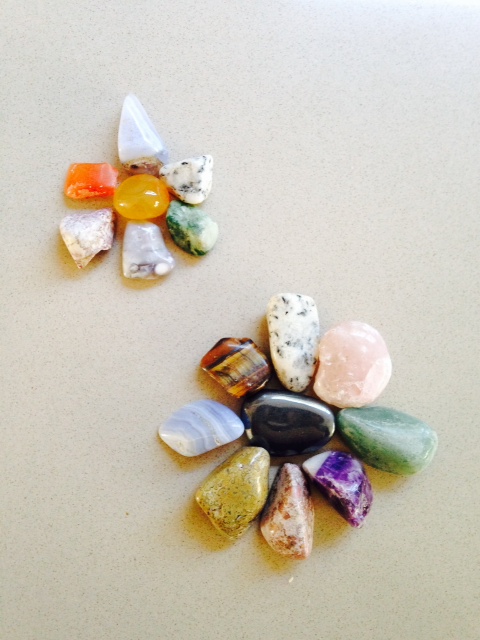
Thank you to Karen Kozek for photo and arrangement.

Two-ness

photo083YU4RG

The union of two individuals
Union of differences
Distinct preferences
Attractions separate
Yet joined.

Two
Too
Together

The union of two individuals
Direction for life chosen
Focus on similar aim
Movement coordinated
Yet individual.

Two
Too
Together

The union of two individuals
The merging of separate souls
The rhythm of mankind retained.

from the upcoming book of poetry entitled Unfolding

Thank you to Karen Kozek for photo and arrangement.

The folks that lived before us

Gray

I was privileged to attend a gathering of the older generation, the ones who experienced life during the Second World War. They moved slowly, and they performed their actions slowly as well. Some of them spoke uncertainly and some spoke unhesitatingly. Their appearance was elderly, elderly bodies with elderly behavior.

The words they spoke were not encumbered by age. Their ideas were thought through. Their awareness of world events and current problems was consistent with people who are much younger. They expressed concerns and ideas without expecting censorship. The past and the present intertwined, not because of mental problems, but because they can take from the past and apply it to the present. Their mixing of past and present was enlightening.

Society forgets the contributions of the folks that lived active and involved lives in the previous decades. These people might look dismissive, but that view is incorrect. The elderly among us, those whose minds are sharp and whose abilities to contribute are intact, are the people who should be revered. We should be sitting at their feet, looking up into the faces of wisdom and experience.

Waiting

(This post is for Debbie, who is waiting with her beloved mother.)

Life causes us to wait—impatiently sometimes, agonizingly sometimes.

When a loved one is struggling to overcome illness or pain, the waiting is impatient for the sufferer and for the loving observer.

When a loved one is moving towards death, the waiting loosens. The sufferer who is prepared to leave life releases expectations and waits expectantly. The person who loves the sufferer waits with unrealistic expectations for not-finality, with hope for not-finality, even with desire for continuous suffering, just not finality.  Sometimes this person is able to understand that the sufferer is ready to move on, and so the waiting lengthens into fluctuating time: fluctuating between time that passes agonizingly so and time that passes hurriedly bringing death on.

Throughout life there are moments of anticipation and of dread, moments of stillness and of movement, and moments of acting and of waiting.

Waiting is eased when it is shared with others who care.

The importance of friendships

(taken from my article of the same name on Relationship.Answers.com  )

Friendship

A woman I know recently celebrated her birthday unhappily. Her personal celebration was doing nothing except watching reruns of TV shows and eating cookies—alone. Her Facebook page had numerous birthday wishes, which made her feel remembered—sort of. Her family is scattered, so her family celebration was minor.

Birthday celebrations are not the topic. The point about this woman’s birthday is that she has not built friendships that sustain her, so when her birthday rolls around, she doesn’t have friends to join her celebration. Other times in the year, she also feels the lack of camaraderie.

This post explores facets of friend-investment.

Family togetherness

Friends and family can be one and the same. People who are close to their family members usually rely on them for celebrations, assistance, and friendship. A family that has nurtured caring communication is the support ensuring consistent company and connection. Distance does not sever the bonds formed between loving family members, and today’s modes of communication enrich and enable support from afar.

Friends from convenience

School, work, shared-interest groups, shared distressing incidents or traumas. These places and events provide opportunities to meet friends for life or to experience the moments in unison for a defined period of time. Friends for life are possible when both parties invest relatively equally in the relationship. Short-term friends also require investment, but they lack the ingredient of heartfelt fondness that long-term friendship requires. Enjoying people for the short term is worth the effort, and should not be avoided.

Trusted friends

People need friends to help them live. Living is not possible without companionship. Even people who eschew human contact require friends in some form, be it an animal or a plant.

The need for friends is a design issue. People were designed to desire company. People were designed to share experiences, thoughts, and emotions.  People were designed to bond and to care. Ill treatment by caregivers or other trusted community members can damage bonding and caring, but the design is the design.

Sharing thoughts and emotions requires feelings of security and trust. A friend who is trustworthy is friendship real. Trustworthiness is not uncommon; most people can be trustworthy. What is required is finding friends who value each other. Valuing one another leads to long-term relationships and to support that is dependable.

Partner as friend

Friendship does not require cohabitation or feelings of desire. Pairing with another does require living together and desiring each other. Being in a relationship with another person is similar to friendship, but differs because of sexual attraction and expectations. A partner who fulfills the requirements of a friend is valuable. Being a partner and a friend is sometimes contradictory although not impossible. The requirement for this relationship is motivation: motivation to support, appreciate, accommodate, and accept.

Having a partner who is friend-worthy does not reduce the need for other friends. A friend-worthy partner is fortunate, but the twists and turns of life can undo the partnership, and friends outside the partnership are necessary for long-term support.

Summary

“Investing in friendships and giving and taking from friends is nourishing. Investing in relationships is natural and is needed to live a balanced life. Investing in family—children, children’s children, siblings, cousins, and so on builds a network of support that is reliable.” …from Oneself–Living.

The basic tests for maintaining health, Test #2


treble_staff

The post “Monitoring Health” (https://energy-guidance-complete.com/2014/08/24/monitoring-health/) brings awareness of the tests that should be performed in order to evaluate health.

Here is Test #2.

Test #2: Interactions with other people

“People were never meant to live alone. The idea that life is elevated by depending on no other person is incorrect. People are meant to depend on one another. They are designed to work in groups: to build together, to create communities, to help one another in times of difficulty, to find common purpose, and to help those entering and exiting life.” -from The Gift of Intuitive, Dedicated Comfort.

Connection to other people is the given. Avoidance of other people is the deviation.

For this test, use the following descriptive words to describe how you feel about the people presented in the list:

*kindness    *unkindness     *hurt     *admiration     *I don’t think about them

  1. spouse/current partner
  2. close friends, cousins, aunts and uncles
  3. children, grandchildren, step-relatives
  4. inhabitants in my city, inhabitants in my county/state
  5. people driving in cars or in other modes of transportation
  6. coworkers, shopkeepers, casual acquaintances, clients
  7. parents, siblings

There are other words to describe how you feel about these people; however, the words given are a measure of connection and caring.

Being connected to others is good for your health!

Post 69-People

Life is struggle: meeting with people unknown


Post 111 Life is struggle

Unwanted, unacknowledged, untended, underfed, unappreciated, unloved, unnoticed, undervalued, undone. The life of the drunk man who sneaked on the bus today and sat by me.

Wanted, acknowledged, tended, fed, appreciated, loved, noticed, valued, empowered. My life.

I was riding on an L.A. Metro bus waiting for my soon-to-arrive stop, when the bus stopped to let people off and he sneaked in from the back door and sat next to me. His breath reeked of alcohol, he was dirty, and he was hoping to avoid the notice of the bus driver. He was hopeful that I would not make a fuss, because his day had been one more difficult day in the accumulating number of difficult days that are his life. He didn’t really choose me; I was simply sitting in a convenient place for him to slide in.

I told him that I was about to get off so he shouldn’t sit there, but he ignored me. He spoke somewhat incoherently and I didn’t understand what he said. I told him he hadn’t paid and he started to panic and began talking about how he lives in the Hollywood Hills and is very rich, and the alcohol smell was strong. I felt very uncomfortable and decided to change the subject because he seemed agitated and was moving closer. I talked about the unseasonable rain in L.A. that morning and he was distracted. He realized I wasn’t going to say anything to the bus driver so he became chatty. But then he asked me my name, gave me his, tried to take my hand, really reeked of alcohol.

I was unsure what to do but then we reached my stop, and I told him to press the button for me because we had arrived at my stop. He moved and I pressed the button and asked him to let me out. I was unsure—afraid he might get off and follow me, unsure whether to just go out the back door or go to the front and notify the bus driver, unprepared for this situation. He turned slightly in his seat barely giving me room to get by. I grabbed my things close, forgot my scarf, and exited the bus from the back. He didn’t follow. I felt relieved, noticed my forgotten scarf, walked the wrong way and then corrected my direction.

And what about him? He felt gratitude towards me that I had remained silent, sat quietly for the rest of the trip, got off at his stop to continue his usual existence.

Two hearts beating a little too fast. Two lives being lived—one with acceptance, the other with rejection. Both equal.

Compassion

Blog 66-CompassionSome people say that people are not compassionate by nature. That is not true. People are compassionate; compassion is part of the design. Women and men, in varying degrees depending on their hormonal make-up, are compassionate.

Compassion can be displayed in the ways in which people interact with one another, with animals, with inanimate objects (such as knick knacks and clothing), and with gems. In general, compassion should be shown towards living and breathing creatures; the compassion towards the nonliving items is compassion misplaced.

When a person confuses the recipient of compassion—the nonliving item in place of the living creature—something has occurred in that person’s life that upset the natural order for compassion. People are meant to feel compassion for other people, and not feeling compassion is the incorrect response. No! Compassion is kindness presented internally which stimulates warm and caring feelings for the people, animals, and nature in one’s surroundings.

To truly feel compassion for another person, one simply has to live the design.

Witnessing motivation

Post 65-Witnessing motivation

I attended a gathering of seekers, and was able to witness a motivator. His manner was straight-forward and his presentation was subtle. This man was sure and grounded, and he slowly fulfilled the expectations of the gathered motivation-needers.

These needy and hungry attendees waited for the magic to work. His approach was slow-going, but they waited patiently, patiently. They were familiar with his approach and knew that magic would come. They came prepared knowing his thinking, so he didn’t need to convince because the convincing had already been done.

The people taught me that having a leader makes life easier, even if he has little to say. Once a leader has convinced, he can focus on his interests and on his development. The people want what he wants too because it is easier to want a guided goal.

The leader taught me that building a foundation is the step to creating a following. The fulfillment of individual desires for amazement create the magic that may or may not exist.

When a young person dies

Post 62-death

Yesterday, I learned that the unthinkable happened. A young woman on a hiking/adventure holiday died. She and one of my sons were in high school together, and I know her and her mother. The funeral will take place when her body arrives back home.

I have written about death a few times in my books, and I turn to them and to Spiritual Presence to find understanding and comfort.

From the Gift of Intuitive, Dedicated Comfort:

“Each day brings an opportunity to move up or down, to build or waste, and to affect or be affected.”

The message: this young woman was a person who involved herself in life. Not only in her travels, but in her relationships and in her community.

From Pond a Connected Existence:

“The moments accumulate and produce the picture that is one’s life.”

The message: She spent her moments in uplifting and sustaining activities. The picture that is her life is one filled with vibrant colors and multiple dimensions. (See my earlier post “Finding one’s way” that explains life pictures.)

“An event occurs that requires action. The timing of the event influences possible actions. The action(s) taken are influenced by capabilities, preparation, presence of resources, and decisions. Overall attitude pervades the process. Many parts for an outcome.”

The message: Whatever happened, happened because of her capabilities, preparation, presence of resources, decisions, and attitude. And timing. “Many parts for an outcome.”

From the chapter “Concrete Living” in Oneself-Living:

“Natural death is painful for the survivors, but because it is “natural” is easier to accept. Deaths through accidents, disasters (natural or not), struggles such as wars and territorial conflicts, or other human-handed causes are harder to digest. These deaths cause more lingering effects…

Movement is always linear, from start to finish… The body is born, lives, and dies…

Concrete living: living with gusto and with verve, with awareness of an ending and with awareness of possibility, with thankfulness and with generosity. “

The message: Those left behind, the ones who remember and despair, must be comforted and supported. They must be allowed to mourn and feel overwhelming sadness. The comforters must be patient and open to the mourners’ grief. Slowly, as time passes, the mourners will be pulled back into the world of living, because that is the natural flow of life. Death is the natural ending to life. It can be the end and it can be the catalyst for living with gusto and verve, opportunity and hope, and purpose and determination.

Christmas doings

Post 49-Christmas‘Tis the season to be thinking about family and friends and gathering and connecting. It is not the season for envy and anger and distance and overtime.

The holiday season can be filled with so much anxiety that the holiday loses its glow. The glow is the important aspect of the holiday. The glowing faces of children seeing a Christmas tree, the glowing faces of strangers experiencing holiday lights together, the glowing expressions as people wish one another happy holidays.

Taking the time to remember to experience the holiday is key. Be sure to schedule time to experience the beauty and rhythm of this very special time.

Wishing all a happy and glowing Christmas!

Renee

Conflict among unacquainted dwellers

Post 47-conflict

conflict, n. competitive action of incompatible people

among, prep. in.

unacquainted , adj. unfamiliar.

dwellers, n. inhabitants.

Conflict among unacquainted dwellers is the source of most discord in the world. The key word is unacquainted because when an acquaintance is made there is usually less conflict. Especially when the dwellers live in close surroundings. Neighbors not knowing their neighbors can lead to a sense of separateness and uncaring. Cousins who are not in contact with one another because of familial disagreements have a diminished sense of belonging. Siblings who lose connection because of distance or disinterest have a lessened sense of completion. City A residents have little care for City B residents. and so it goes…

conflict, n. competitive action between characters in a work of fiction that drives the action of the plot.

among, prep. by the joint action of.

unacquainted , adj. not knowledgeable.

dwellers, n. those who exist in a given setting.

Conflict among unacquainted dwellers. In a novel, conflict brings interest and  momentum and plot. The characters are dwellers in a realm that is unknown to them except as the author sees fit to join them. The characters do not really choose their actions, the author does. The characters do not really inhabit a location; they simply float in the chosen locale.

The key difference between living people and created characters is the ability to choose actions, reactions, and position (not a location, but a point of view). Choosing to stay unfamiliar with others, choosing to distance from because it’s too hard to make an effort, choosing not to contact or assist or be truthful with. The choice is the main component in conflict—choosing to see the other as unworthy or unbearable or unsatisfactory. Choice is the wonderful thing about being human and our failing.  Because choosing to be kind, caring, and supportive should be the right choices all the time.

Among dwellers who have no unacquainted fellow inhabitants, there is little conflict. Obviously no single person can know every other person. The goal is to approach each person as a potential self. People are so different and yet so similar. Very hard to see this connectedness because of societal differences, but it is there nonetheless. The choice is to be open and not discount. Each person has a soul that should be cherished. Each person has a need for survival and nurturing. All the same, not so different.

Manmade sidewalks

Well, this title seems to be redundant. It’s the title I have received, so let’s see where it takes me.

Post 14-environment

Yesterday I spent walking around Santa Monica, CA with a dear friend. My friend is a close friend from college. We see each other every couple of years, and our visits are warm and loving and filled with all the feelings that accompany deep and lengthy friendships.

We walked and talked, and the entire time I was aware of the interesting scenery around me. The sea, the trees, the bird-of-paradise plants  all around, interesting structures, artwork. But also people who seemed lost. These people affected the view making it less bright, less special. Because no matter how beautiful a place, if there are people living in it who have no abode or no support system, the place is really not so beautiful.

Taking care of others should be the priority of people who are able, but it is much easier to build nice sidewalks. Engage with concrete, but not with emotions. Nice sidewalks with lovely lighting fixtures and landscaping. Focus on friends but not on needy people. Averting the eyes when the needy people come into focus. Wishing them away rather than considering their needs.

Finding balance in society is a constant struggle, which is actually easier than we realize. We must remember to leave time in our busy schedules to consider the ones who get overlooked.

First impressions, one more time

Post 14-environment

Let’s take one more look at this topic.

First impressions are important, but should not be the deciding vote. Think of people who were offensive or dull to you when you first met them that turned out to be amazing and devoted friends–or even partners!

Another quote from Book #3:

“Openness to otherness is a necessary and indispensable requirement in today’s global society. Interactions between so-different! people requires it. Openness and patience and desire for contact lead to understanding and peaceful coexistence. Easy to say, but hard to implement because people tend to be closed off, hurried, and inwardly focused, not only with strangers but with their own family. Harder yet to implement is understanding and patience for oneself.

If one’s impression-opinion-sense of himself/herself is low, how can he or she develop true impressions and opinions about others? If one is less than, how can he or she offer the world something special?  Implementing openness and patience and understanding towards oneself provide the way for balancing personal opinion. Being open to one’s own abilities and gifts. Being patient when learning new skills. Being patient when trying new endeavors. Understanding that perfection is the realm of Spirit only and that the created perfection of the world flows from very imperfect segments. Perfection and perfectionism should be banned words! Unattainable, time wasters, alienating.”

Formulating impressions requires patience, optimism, and caring. Some effort and desire lead to interesting and fulfilling interactions.

A second look at first impressions

Post 20The previous post presented information from Book #3 about not making snap judgements about others. Here are more first-impression directions:

“First impressions of places can also influence in a negative way. Expecting one thing and seeing another can create a negative—or positive—first impression that might actually be incorrect. Same too for events and activities. Time is needed to make a judgment. Influences such as age can skew judgment. Attitude affects the way in which an impression is made. Bad attitude usually produces a bad impression; good attitude usually produces a more balanced impression. Being overly optimistic is not necessarily productive when making judgment calls. Balance, as with most things in life, is key. Balanced judgment, time passing, facts and reasons understood, emotions kept in constraint. These efforts + time enable sound impression building of events and of people, of places and of intangible realms.

People constantly formulate impressions of others while the others constantly formulate back. Constant impression making/impression slumping…Rather, accept as is, as are, as could be. As is: accept each person as he or she is, with different thought processing and different ideas.  As are: accept each group of people as they are, with different needs and different goals. As could be: accept oneself and others as reliable, compelling people who can better the world with each action, with each interaction, with each reaction.”

More to come!