A Balanced Approach to Wellness!

Posts tagged ‘Health’

Binging on sweets—effects and repercussions

Since accepting the guidance of food intake through Energy Guidance Complete, I have maintained a healthful diet that has enabled me to lose weight healthfully, achieve stable energy throughout the day, and strengthen my body.

Today, for the first time in over two years, I binged on sweets. Not like I would have in the past—my body simply couldn’t handle that—but a binge nonetheless. Before my change in diet, I binged on sweets off and on. My body has always been kind, and I rarely suffered stomachaches or other noticeable pains.

After today’s binge, I feel fine, even though my body no longer is regularly pounded with sweets. I was curious about the effects on my body, and so I’m asking Spiritual Presence what the effects and repercussions are from eating so many sweets. Here is the information I have received about binging on sweets:

  • Each person suffers.
  • The effects vary depending on age, sleep deprivation, and hydration.
  • The repercussions vary depending on physical and emotional states at the time of the binge.
  • The gall bladder works harder.
  • The sense of smell weakens.
  • The muscles tighten.
  • The small intestine functions more sluggishly.
  • The outlook of the emotions is shifted negatively.
  • The kidneys work overtime.
  • The head intangibly shrinks.
  • The sense of touch is affected (differently depending on amount eaten and current health status).
  • The digestive tract functions differently than when non-sweet foods are eaten.
  • There are other effects as well, but they are dependent upon each person’s health.

sweet too much

Less is better when eating sweet foods. In general, natural sweeteners are better than processed sweeteners. Chemical sweeteners—NO!!! No one should eat them! Fruit sweetness is nourishing in moderation. Moderation is best for all foods, but especially with sweet ones. The body is sweetened best with love and kindness to oneself and others!

Enough drawers


Drawers

Drawers are useful for organizing life. They can hold cherished memories and long-forgotten mementos. They can hold jewelry and other valuable possessions. They can hide away secret items and reveal longed-for desires. They group, separate, and categorize. Drawers are versatile!

Intangible drawers

Intangible drawers are also useful for organizing life. Intangible drawers are available to all, but are known to few. They can be accessed by understanding that life can be compartmentalized, manipulated, and organized. People who are aware of drawer-availability are prepared ebb-and-flow-wise.

Drawer-strategy is a useful tool for people who have experienced events that were fear-inducing, sad, or overpowering (positively or negatively). By placing the events in separate drawers, a person can move their impact to less so. The events are not removed from memory, because a drawer can be opened and its contents examined. By placing the events in separate drawers, a person can choose to lessen the impact of events that trouble.

Each person who uses intangible drawers has an individualized method for opening and closing them. Here are several ideas for working with intangible drawers:

  • When an unpleasant event occurs—large or small—consciously decide that it will not overwhelm you and create an intangible drawer for it. Place the event in the drawer, and then shut it. If you find yourself thinking about this event, remind yourself that you put it away and can only think about it if you open the drawer.
  • During a restful time, think about an actual structure that can contain facets of your life. The structure can be any shape that works for your life. When you go through your regular routines, picture them being organized in your structure. When events occur that overwhelm, let them into your organizational structure.
  • If visualization is difficult, think of a cave that is not scary. Unpleasant events can be thrown into the cave and pleasant events can stay towards the front. When the need arises to think about a past event, let the cave send the memory out.

Drawer-strategy can calm emotions and can expand to encompass whatever happens that causes emotional imbalance. There are enough drawers to help through any situation.

Fullness

Fullness

What is fullness? I thought I feel it almost every time I eat, but Spiritual Presence informs me that I don’t feel it enough.

What fullness am I learning about?

The fullness one feels when seeing a dear, loved one. The fullness one feels when looking back upon one’s actions and being satisfied. The fullness one feels when letting the awesomeness of nature completely overwhelm. The fullness one feels when working with others to improve everyone’s surroundings. The fullness one feels when the amazingness of weather is experienced. The fullness one feels when welcoming a new life into one’s home or community.

Fullness is a sense of comfort, of appreciation, and of understanding. Fullness is satisfaction. Opening to self-contentedness is fullness.

The fullness we feel when we eat a sustaining, nutritious meal is this type of fullness.

Connection!

High heel fascination


Shoes

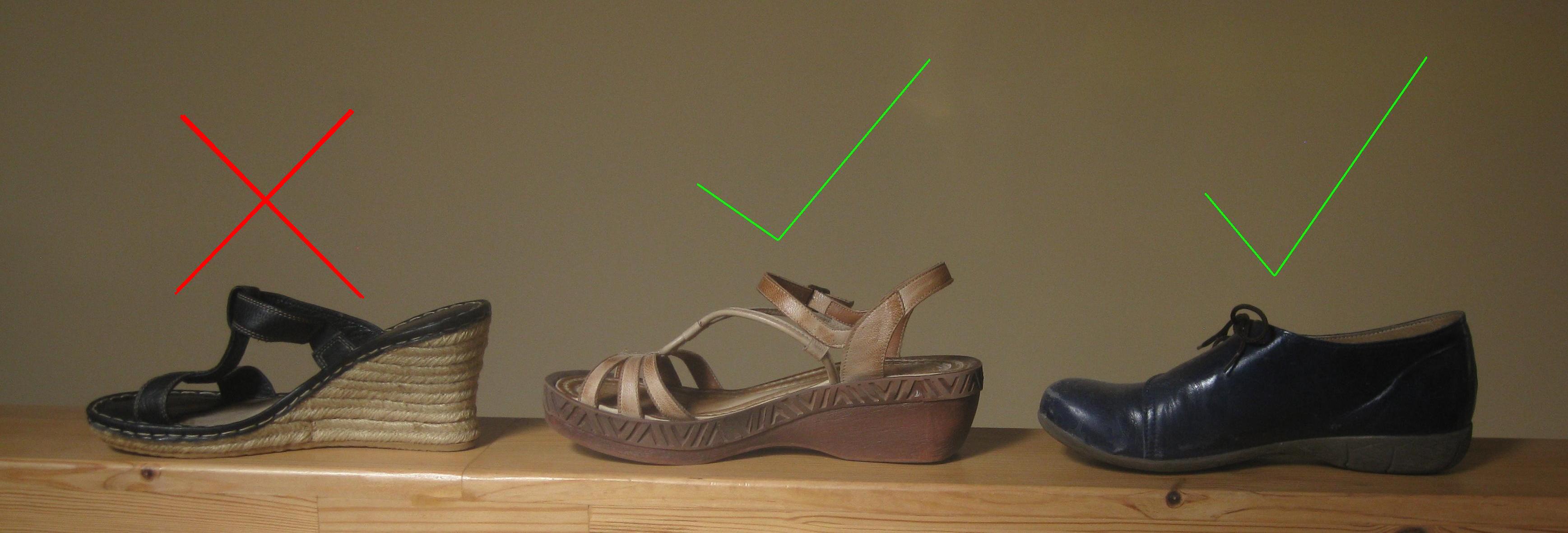
High heels were a part of my shoeware when I was in high school and university. I liked them and liked how they made me look, but I didn’t like how they made me feel. I wore them until I saw an exposé about the women’s shoe industry by Ralph Nader. From that moment, I chucked my high heels and learned to be satisfied with less fascinating shoes.

Recently my daughter swore off heels and she offered me a pair that I bought her a few years ago. They aren’t spike-heeled, but they do have a generous slope. I tried them on, and even took my dog for a walk wearing them to see how I could manage in them. I felt discomfort, and decided to ask Spiritual Presence about them. (Yes I know this is a trivial topic, but high heels are part of our reality so I can ask.)

Here is the information I received:

High heels are destructive to the body. They hurt the feet, they affect the L4 and L5 vertebras of the lower back, they affect the lungs and breathing, they interfere with the functioning of the large intestine, and they skew perception of the body. Slow changes occur when high heels are worn constantly.

People can handle different shoe heights, but here are general rules. If the back of the shoe is 6 cm (2.36”) higher than the front of the shoe, damage will be caused to the body. Even if the shoe is worn for an hour! If the back of the shoe is 5 cm (2”) higher than the front of the shoe, damage will be less but will still occur. Even a 4 cm (1.58”) difference can cause damage, but only if the height difference is continuous; in other words, shoes with this height difference are worn day after day. Under 4 cm can cause problems, but less often. If the heels on shoes with a less-than 4 cm (1.58”) difference are too spiky or are ergonomically ill-placed, then damage to the body can occur.

High heels need to be rethought. More appreciation for the natural shape of the feet and legs and less desire for unnatural presentation.

Review of the tests for maintaining health

Health

The last seven posts presented the tests that should be performed regularly to improve and sustain health. These tests require thought and desire to live purposefully. These tests monitor all aspects of health: physical health and sustenance of the body, emotional health, intellectual input, and connectedness to the world beyond our personal territory. These tests prevent a life lived partially, if we are careful to live with the understanding of our impact on the world.

“Knowing what to do to keep healthy is basic required knowledge. Knowing what to eat or how much to drink to stay hydrated are the most obvious keys to good health. Understanding the need and frequency of sleep is required as well. Health is not the villain to be battled or feared; health is the means to meaningful living and ultimate satisfaction with one’s life.” …from Pond a Connected Existence

The better the health, the more we can focus on life outside ourselves. Letting go of overemphasis on food or self or possessions or appearance can free us to be focused on real issues. Eating too much or too little or improperly are wasteful endeavors. Trying to do everything alone or holding back from taking part in society are against our design. Coveting or buying too many possessions hurt us emotionally and hurt the environment. Caring more for how we look than how we treat others is simply mistaken behavior.

If you haven’t yet looked at the tests, take a look now and consider the questions thoughtfully. Each of us impacts our society and beyond our society so much more than we realize. And our impact comes back around and affects our health—for better or worse.

Wishing you amazing test results!

Renee

treble_staff

The basic tests for maintaining health, Test #7

treble_staff

The post “Monitoring Health” (https://energy-guidance-complete.com/2014/08/24/monitoring-health/) brings awareness of the seven tests that should be performed in order to evaluate health.

Look at your “I deserve it”s and your excuses and your complaints and your excesses, and consider how they prevent a life lived fully. A life lived fully is thankfulness & gratitude and appreciation & hope and kindness & patience and focus & striving and gusto & vitality.

Here is Test #7.

Test #7: Full engagement in life

This test reveals the fullness of your life—if you are attentive to the possibilities and gifts that are within your grasp.

For this test, there are colors and circumstances that can be used to “color” the possibilities:

*blue    *life     *raspberry     *green     *brown     *purple     *shadow    

Consider which color(s) or circumstance(s) match your attitude. More than one color can be used on a line.

  • my place in the world
  • contemplation about my death
  • body-soul connection
  • my hidden skills
  • my choices that I didn’t make (someone else made them and I went along)

After you have selected the colors/circumstances, think about why you selected them and what they mean.

Living with awareness of your gifts and the possibilities to use them is good for your health!

Post 132-breathe-in unison


The basic tests for maintaining health, Test #6

treble_staff

The post “Monitoring Health” (https://energy-guidance-complete.com/2014/08/24/monitoring-health/) brings awareness of the seven tests that should be performed in order to evaluate health.

Focusing on foods that are bereft of nutritional value or are lacking in the aspects that naturally gratify (for example, fat-free foods) undermine physical, emotional, and intellectual health. Choosing to eat based on criteria not related to sustenance of the body has evolved. As stated in Vitality!— How to Create a Life That Is Healthy:

“Eating for the sake of keeping the body alive is not a part of life for most people living in modern society. Eating for the sake of the enjoyment of the food is modern society’s take on food. The enjoyment, not the life-giving aspect, is the focus.”

Here is Test #6.

Test #6: Consumption of nutritious and satisfying foods

Here are questions for the basic test:

  1. Potato vs. french fries
    The potato, baked or mashed (not from instant mashed potatoes and not with an overabundance of butter and milk), is the healthier choice.
    Which one do you choose more often? Which one is better for your body?
    (This question does not apply to people who have a medical allergy to potatoes.)
  2. Seasonal fruit platter vs. fruit cocktail dessert
    Seasonal applies to fruits that are in season in your location. Fruit cocktail applies to fruit in a can. Seasonal also applies to fresh fruit, preferably not waxed.
    Which one do you choose more often? Which one is better for your body?
  3. Roasted chicken vs. chicken smothered in a creamy sauce
    The non-meat version: pasta with a vegetable-rich sauce vs. macaroni and cheese
    Which one do you choose more often? Which one is better for your body?
  4. Tilapia vs. salmon
    Tilapia is an abundant fish; salmon is over-eaten and is endangered in some areas. In general, seafood such as tilapia, catfish, herring, oysters, sole, shrimp, and trout can be eaten up to three times a week total. Seafood that should be eaten less are salmon, Chilean sea bass, clams, cod, crab, crayfish, flounder, haddock, halibut, lobster, mackerel, mullet, mussels, octopus, perch, prawns, sea urchin, skate, snapper, squid, and tuna. Sardines aren’t in either grouping and can be eaten up to twice a week (in place of another fish serving). These groupings are based on environmental issues. At this point in time, consumption of mahi-mahi and whale should be limited to almost none. The debate over farmed or wild salmon is discussed here: https://energy-guidance-complete.com/2014/03/06/to-eat-farmed-salmon-or-not/
    Which fish do you choose more often? Can you do with less? Can you consider the environment when making choices about nourishing your body?
  5. Carbonated beverages, decaffeinated beverages, beverages that are referred to as energy drinks
    These beverages have been presented to us as better than water for quenching our thirst and giving us energy and vitality. Do you believe that is true?
    Which would you rather have to drink—a drink that fits into one of these three categories or water? Which drink do you think your body would rather have?

    There are many more questions; however, these five are a good beginning. Consider your answers and then consider the significance of each question.

    Eating wisely is good for your health!

Post 100-foods


The basic tests for maintaining health, Test #5

treble_staff

The post “Monitoring Health” (https://energy-guidance-complete.com/2014/08/24/monitoring-health/) brings awareness of the seven tests that should be performed in order to evaluate health.

“People—are—designed—for—doing some of this, doing some of that, moving here, then moving there,…” from Oneself—Living.

Sitting still for extended periods of time was not part of the design. Nor was letting inanimate objects do the work for us. Life has greatly changed for people, but the basic design has not. Rather than ditch the vacuum cleaner and return to the tree-branch broom, people must add movement into their lives that is nourishing, that exercises the body, and that is challenging.

Here is Test #5.

Test #5: Physicality

  1.  If you sit for longer than 50 minutes, do you change position or do a different activity?
    (Sitting for longer than 50 minutes without standing or stretching while sitting is taxing for the body.)
  2. Do you stretch your body when you wake up from sleeping? Even after short naps?
    (The body requires movement after sleep—the entire body!)
  3. When you visualize yourself, do you picture a person who is inconsistent about exercising, is good about exercising with a group but negligent when at home, is in need of someone to make you exercise, is physically fit, or is too focused on physical appearance?
  4. What is your attitude about movement off the ground (biking, skating, surfing, skiing, etc.) What is your attitude about movements on the ground (yoga, sit-ups, push-ups, etc.)? What is your attitude about swimming and walking? What is your attitude about dancing and kicking/hitting a ball?

Allowing your body to move frequently is good for your health!

Huff n puff exercise


The basic tests for maintaining health, Test #4

treble_staff

The post “Monitoring Health” (https://energy-guidance-complete.com/2014/08/24/monitoring-health/) brings awareness of the seven tests that should be performed in order to evaluate health.

Here is Test #4.

Test #4: Rhythmic breathing

“The more varied the breathing, the less chance for illness to set in..” -from the post “Aging is manageable when done properly” (https://energy-guidance-complete.com/2014/05/12/aging-is-manageable-when-done-properly/).

The importance of breathing cannot be overstated. Not only does breathing sustain us in life, but it sustains us in good health. Breathing that is appropriate for the activities we do is necessary for the body to refresh itself.

For this test, use the following descriptive words to describe how you breathe during the activities presented in the list:

*tight    *quick     *neutral     *deep

1 working/concentrating at the computer or smartphone

2 singing/playing an instrument/talking

3 reading/cooking

4 moving briskly through exercise, sport, rhythmic movement, work, or walking

5 laughing/talking with friends/playing with grandchildren, children, young siblings, or young children in one’s charge

For each of the activities that you do, pay attention to your breathing.

  • In general, tight breathing is reserved for tense emotions. If your breathing feels tight at other times, you should consciously relax more often.
  • In general, quick breathing occurs during brisk movements. Out-of-breath during brisk movements can be a sign of too little water in the body, too much movement at the current time, or illness.
  • Neutral breathing is appropriate for most activities. It is not the right rhythm for brisk movements or moments of deep focus.
  • Deep breathing requires conscious effort until it becomes habitual. Deep breathing is the most cleansing and strengthening of all the types of breathing, but is not necessary during brisk movements. Deep breathing strengthens the organs, flows, and spirit.

Allowing your body to breathe deeply and variedly is good for your health!

Sequoia2

The basic tests for maintaining health, Test #3

treble_staff

The post “Monitoring Health” (https://energy-guidance-complete.com/2014/08/24/monitoring-health/) brings awareness of the tests that should be performed in order to evaluate health.

Here is Test #3.

Test #3: Attention to self-needs

Ignoring one’s needs damages all the aspects of balanced health (physical, emotional, intellectual, and spiritual). This area does not mean self-centeredness. It means self-support.

When we fly, we are told to put on our oxygen mask before we put the mask on any dependent that is traveling with us. First we take care of ourselves so that we can help others. The same applies to our well-being. We must take care of ourselves so that we can help others.

Here are the questions for the basic test:

  1. Sleep: I schedule the appropriate amount of time for sleep each day. Yes/No
    (for people with young children, this can mean sleeping when they are napping)
  2. Relationships: I schedule time to be with people who are special to me. Yes/No
  3. Nutrition: I eat foods that satisfy my hunger for nutrition (eating to satisfy emotional issues is a No) Yes/No
  4. Movement: I schedule time for moving my body—exercise, dancing, walking, swimming, biking, team sport, etc. Yes/No

There are additional questions; however, these four are a good beginning. Consider your answers and then consider the meaning of each question.

Being sensitive to your needs is good for your health!

Hearts


Awe-tism

autism

Note: The source of the information provided here is divine inspiration. The information has not been scientifically verified.

Those who study the phenomenon of autism are confused and unsure. Those who live with people that present autistic characteristics are determined, overwhelmed, searching, and/or sad. Those who have the autistic presentations are diSTraCteD, kaleidoshcopic, d r i v e n, sensitive, and companionship-aware.

The causes of autism are partially in utero and partially after birth. In utero causes are smoking tobacco, nutrition that decreases estrogen (for example, too little phytoestrogens during pregnancy or too much calcium lactate before and during pregnancy), injury to the cervix after the fourth month, and contracting a certain virus during pregnancy (not a cold or flu virus).

An infant can display autistic presentation soon after birth if one or more causes of the autism occurred in utero. Each cause does not affect every infant. If that were the case, all mothers who smoke during pregnancy would have an autistic child. No, there is something else, something beyond physicality that determines autistic presentation. It is related to the mother’s emotional well-being and to her feelings of security and acceptance. Without these emotional safeguards, the mother cannot protect her fetus from the onslaught of autism instigators. The mother does not have to be happy at all times during her pregnancy to protect her fetus, but if she is emotionally fragile at the moment the autism cause occurs (or in the case of smoking and decreased estrogen, at the moment that the amount reaches the too-much or too-little point), autistic presentation will most likely develop.

Post-birth, an infant who has not experienced any of the in utero causes can still develop autistic tendencies because of allergies to formula or other supplemental nutrition (supplemental to breast milk) and respiratory malfunctioning. These causes depend upon the health of the infant and his or her own emotional well-being. If the infant has autistic presentation from in utero causes, post-birth causes can deepen the autistic presentation.

Autism is new: new name, new causes, new awareness. Autism existed before the official diagnosis, but it was less widespread, less afflicting. The new causes did not exist then. They have developed with technology. They have developed with changes in society.

To protect against autism, a mother must not smoke during her pregnancy. She must eat foods containing phytoestrogens (in moderation) to supplement her body’s need for increased estrogen. She must not use products containing calcium lactate during and a year before her pregnancy. She must strive to stay healthy by eating properly, exercising wisely, and surrounding herself with supportive people. After the baby is born, breastmilk should be the food of choice rather than formula.

Autism won’t occur when all these safeguards are in place. Other afflictions can happen, but not autism.

The next post about autism will be about lessening autistic presentation.

———

The reality of autism is discussed in this post: https://energy-guidance-complete.com/2015/09/12/awe-tism-reality/. Caregivers are discussed in this post: https://energy-guidance-complete.com/2015/09/16/awe-tism-to-caregivers/

The basic tests for maintaining health, Test #2


treble_staff

The post “Monitoring Health” (https://energy-guidance-complete.com/2014/08/24/monitoring-health/) brings awareness of the tests that should be performed in order to evaluate health.

Here is Test #2.

Test #2: Interactions with other people

“People were never meant to live alone. The idea that life is elevated by depending on no other person is incorrect. People are meant to depend on one another. They are designed to work in groups: to build together, to create communities, to help one another in times of difficulty, to find common purpose, and to help those entering and exiting life.” -from The Gift of Intuitive, Dedicated Comfort.

Connection to other people is the given. Avoidance of other people is the deviation.

For this test, use the following descriptive words to describe how you feel about the people presented in the list:

*kindness    *unkindness     *hurt     *admiration     *I don’t think about them

  1. spouse/current partner
  2. close friends, cousins, aunts and uncles
  3. children, grandchildren, step-relatives
  4. inhabitants in my city, inhabitants in my county/state
  5. people driving in cars or in other modes of transportation
  6. coworkers, shopkeepers, casual acquaintances, clients
  7. parents, siblings

There are other words to describe how you feel about these people; however, the words given are a measure of connection and caring.

Being connected to others is good for your health!

Post 69-People

Clarifications about the basic tests for maintaining health, Test #1


treble_staff.extended

I was asked for more information about the test questions that were presented in the previous post.  I am reposting with more information.

Test #1: Sensitivity to environmental concerns

The state of the environment directly affects the health of people. People who live in a highly polluted and vegetation-free environment are subjected to damage that can cause physical ailments, but also can cause damage to the soul. People who live in a vegetation-rich area, but are careless in their relationship to their environment, can suffer from damage to their physical and soulful selves too.

Disregard for plant life, water sources, and conditions for animal rearing undermines the grounding of the world and damages physical and intellectual health. Knowingly contributing to abuse of fauna and flora damages people—body and soul.

Here are the questions for the basic test:

  1. Recycle? Yes/No/Partially
  2. Use water judiciously? Yes/No/Sometimes
  3. Use chemical agents for cleaning or insect infestations? Yes/No/Only for insect infestations/Only for cleaning
  4. Support conservation efforts and interested in well-being of trees and plants? Yes/No
    (explanation: being aware of and actively participating in maintenance of local and distant environments. For example, contributing money to and/or volunteering with organizations that maintain and protect the environment [local arboretums, global or national environmental organizations, picking up trash in a littered part of the city, local environmental advocacy groups])
  5. Care about animal welfare? Yes, including the animals that I eat/Yes, I care about my pet/Yes, except for animals who disturb my garden/No/Sometimes
    (explanation: animal welfare is broad and can be overwhelming. It includes awareness about conditions at places that raise animals for food [industrial meat, egg, and dairy industries], raise animals for our enjoyment [puppy mills, fur farms], zoos [humane or not], importation of endangered animals and birds.)

There are additional questions; however, these five are a good beginning. Consider your answers and then consider the meaning of each question.

Being sensitive to the environment is good for your health!

Post 94-nature

The basic tests for maintaining health, Test #1

treble_staff

The previous post “Monitoring Health” (https://energy-guidance-complete.com/2014/08/24/monitoring-health/) brings awareness of the tests that should be performed in order to evaluate health.

Here is Test #1.

Test #1: Sensitivity to environmental concerns

The state of the environment directly affects the health of people. People who live in a highly polluted and vegetation-free environment are subjected to damage that can cause physical ailments, but also can cause damage to the soul. People who live in a vegetation-rich area, but are careless in their relationship to their environment, can suffer from damage to their physical and soulful selves too.

Disregard for plant life, water sources, and conditions for animal rearing undermines the grounding of the world and damages physical and intellectual health. Knowingly contributing to abuse of fauna and flora damages people—body and soul.

Here are the questions for the basic test:

  1. Recycle? Yes/No/Partially
  2. Use water judiciously? Yes/No/Sometimes
  3. Use chemical agents for cleaning or insect infestations? Yes/No/Only for insect infestations/Only for cleaning
  4. Support conservation efforts and interested in well-being of trees and plants? Yes/No
  5. Care about animal welfare? Yes, including the animals that I eat/Yes, I care about my pet/Yes, except for animals who disturb my garden/No/Sometimes

There are additional questions; however, these five are a good beginning. Consider your answers and then consider the meaning of each question.

Being sensitive to the environment is good for your health!

Post 94-nature

Monitoring health

treble_staff

People monitor their cholesterol levels, their blood pressure, their iron level, their blood sugar level, and their BMI. They monitor other physical issues based on family history, age, sex, race, and individual health concerns.

People are focusing on the wrong health issues. Here are the areas that people should monitor for optimal health (the order is not important):

  • Interactions with other people. (Too little interaction undermines emotional and spiritual health.)
  • Rhythmic breathing that is varied and appropriate for the body’s activities.
  • Consumption of nutritious and satisfying foods. (Focusing on foods that are bereft of nutritional value or are lacking in the aspects that naturally gratify [for example, fat-free foods] undermine physical, emotional, and intellectual health.)
  • Participation in physical activities that bring joy and challenge. (Participation in physical activities that are not enjoyed undermines emotional and spiritual health.)
  • Attention to self-needs. (Ignoring one’s needs damages all the aspects of balanced health. This area does not mean self-centeredness. It means self-support.)
  • Sensitivity to environmental concerns. (Disregard for plant life, water sources, and conditions for animal rearing undermines the grounding of the world and damages physical and intellectual health.)
  • Full engagement in life—filling life with attention to the possibilities and gifts available to grasp.

The tests and chases after physical symptoms are easier to do, but are not the real issues that should be followed. The real issues that should be monitored and cared for are the focuses of true living.

Insights into health and life

Exist

In the book Pond a Connected Existence, there is wisdom that calls out for action:

  • From the chapter “Behavior & Release”:

“The state of extended over-tiredness can lead to general overall unwellness, affected decision-making, and overestimation of abilities. Sleep is essential.”

  • From the chapter “Pliable and Different”:

“Many people think they can’t change; that is false thinking. By design, people are made to adapt, adopt, and be adept.”

  • From the chapter “Luck! What Luck?:

“The importance of preparation cannot be overemphasized. Without it, opportunities are squandered, missed, lost.”

How are these morsels of wisdom connected?

  • With adequate sleep, a person can think more clearly and take the actions necessary to be prepared.
  • Adaptability contributes to preparation for the future. Adaptability is available to those who are willing to examine their decision-making and change when a decision no longer brings clarity.
  • One can never be prepared for all events, no matter how prepared, because life is so unknown. Sleep prepares for handling life’s uncertainty and refocuses perspective about one’s ability to change and receive the future.

Energy Guidance Complete is gifted awareness from beyond.

Open your eyes and see the connection!

Open your heart and feel the call!

Open your arms and receive the guidance!

Post 25 Logo

The sense of self—the sixth sense

sense of self

While writing Awaiting Light—Understanding the Development of the Soul, I learned that there is a sixth sense:  “The senses develop in staggered pairings (taste and touch, sight and smell, hearing and the sense of self [one’s boundaries])…”.

The sense of self is awareness of oneself separate from others, awareness of boundaries, and awareness of one’s body. An infant normally develops these awarenesses unless interference has occurred. Interference can be natural (such as complications during the birthing process or genetic causes) or unnatural (such as complications during the birthing process that are not related to natural birth, accident, or abuse).

The sense of self is connected to all the other senses: tasting one’s skin, touching oneself, seeing one’s body, smelling one’s body odor, and hearing one’s voice and the sounds emitted from one’s body and from using the body. An infant experiences these sense sensations and through the awareness of them and through maturation of the thinking process, comes to understand that there is a physical container for all these developments. The physical container is the baby’s body, and a baby delights in his or her development.

The sense of self has impact on future development. A baby who receives encouragement develops with strong sense of self. A baby who receives negativity often develops with skewed sense of self. The sense of self accompanies a person into adulthood and influences actions and decisions.

Here is an example of a person I have worked with: a woman in her 30s is battling excess weight. The struggle began when she was very young because she was a pudgy baby whose mother had weight issues. The mother related to her daughter’s size negatively, which affected the daughter and her sense of self.

The sense of self has physical and nonphysical elements. The physical elements are the sense organs that continuously feed information to the brain about the body and its boundaries, actions, and hurts (wounds, aches, pain). The nonphysical element is the emotional component of health: the feelings for the body, its actions, and its hurts. The feelings about bodily functioning include acceptance or disregard for normal bodily functioning, admiration or impatience for the body’s actions and abilities, and reasonable or overzealous focus on hurts.

The sense of self and the other senses create the feedback that people require to live and grow.

“Smells and sounds and textures and visual cues and taste bud activity provide interest to human life. And provide warnings. And provide information for storage. And notice for information retrieval. And input for reactions. And input for instigation of creativity. And awareness of outside interesting sensations and varieties. And wonders.” –from Pond a Connected Existence.

The soul-color attribute Shade and its Moral Boundaries setting

Shade-moral boundaries setting

The previous blog post explains the color attributes of the soul, one of which is Shade. Shade has several actions that determine the comfort a person feels in his or her surroundings. One of these actions is the sense of morality, the ability to naturally know right and wrong. Each person has a morality setting that guides. Here is an excerpt from Awaiting Light—Understanding the Development of the Soul:

“The society in which one lives pushes against the natural moral-balance boundaries setting, especially when the society imposes a moral scale different from the person’s own.  The same for different settings in a family. The person with the most influence in a family usually sets the moral boundaries, and the other family members adjust or rebel.

When a society is repressive, the moral-balance boundaries settings for all who live in the society are affected. Even for those who support the repressive ways. People are forced to ignore their natural sense of moral conduct when the society is morally selfish, and they must themselves repress their knowingness about proper and moral behavior.

When a society is tolerant of nuances, moral-balance boundaries settings are also affected; and so, the boundaries are much more available for making personal decisions and for formulating opinions and actions. Societal morés do come into play, but they can be weighed with relatively equal weight to one’s own sense of right and wrong.

Sometimes people with repressive tendencies gain influence in a tolerant society. When a repressive energy takes hold, it affects the populace in three main ways: (1) for those who support the repression, it causes them to ignore their own sense of right and wrong; (2) for those who are unwilling or unable to oppose, it causes them to modify their sense of right and wrong; and (3) for those whose personal sense of right and wrong is strong, it causes them to oppose the repression.

A society that is tolerant is a society that has connection. Connection to its inhabitants. Connection to people-boundaries of moral balance.  Connection to soul.

The moral-balance boundaries setting has effects on the body: on digestion, on breathing, on circulation, and on thinking. When people are able to live by their morality boundaries, they are able to live in balance with themselves. They can evaluate and act based on personal judgment.”

The color of your soul

(taken from my article “What Color Is Your Soul?” on Healing.Answers.com)

parachute


Each person has individualized likes and dislikes, personality traits, reactions, and habits. These individualized self-definitions are influenced by genetics, family influence, societal influence, and the times in which the person lives. Beyond these influences is the influence of the soul.

When a person is born, he or she is the recipient of a soul and this soul brings color—soul-color. The color of the soul is the starting point for a person’s individual character and personality.

What Are the Personality Characteristics of the Soul?

According to Awaiting Light—Understanding the Development of the Soul, soul-color is a combination of four attributes: shade, hue, contrast, and coloration. Each of these attributes determines a part of a person’s personality, likes, dislikes, temperament, and family connections. When a baby receives the soul, all these attributes are given, and they are the person’s direction for life. As the baby grows and depending on outside influences, the soul-color shines or is smudged.

What Is the Soul-Color Attribute Hue?

Hue is the attribute that sets attractions—attractions to certain activities, colors, shapes, knowledge, sounds, scents, textures, foods, etc.

“From the moment a person is born, distinct preferences are evident. A baby reacts to various stimuli in positive or negative ways, but adults are unaware that issues other than hunger, wetness, or discomfort are at play. As the baby ages and is able to communicate through movements and sounds, adults slowly grasp the interests and triggers that pull or repel the infant.” from the chapter “Soul-Color Attributes” in Awaiting Light.

>> Knowing which interests are innately fixed is a step towards knowing your soul-color attribute hue.

What Is the Soul-Color Attribute Contrast?

Contrast is the attribute that sets opposite-sided emotional reactions. Examples are joy-sorrow, warmth-indifference, and excitement-insensitivity. Contrast determines the passion that is felt as life is experienced and the conviction that is felt when opinions and thoughts are formulated. Some people feel their emotions in a large way, some feel their emotions in a reserved way, and some feel their emotions differently depending on circumstances. All of these ways are normal and are soul-endowed.

>> Recognizing depth of emotion innately felt is a step towards knowing your soul-color attribute contrast.

What Is the Soul-Color Attribute Shade?

Shade is the attribute that affects pace, temperature tolerance, circadian calibration (natural affinity for certain times in a day), and acceptance of boundaries. Pace determines the speed at which a person naturally lives, ranging from living without rush to living at an exuberant speed. Temperature tolerance is the coolness-warmth range that is determined by the location to which a person is born. Circadian calibration determines the time of day that is most comfortable to a person. Acceptance of boundaries refers to a person’s natural moral compass of knowing right and wrong.

>> Sensing your natural rhythm of movement, temperature, day or nighttime preference, and sense of right and wrong is a step towards knowing your soul-color attribute shade.

What Is the Soul-Color Attribute Coloration?

Coloration is the attribute that determines the soul-groupings for souls of similar colors. Coloration provides the possibility of group connections. It causes the feeling that you’ve known some people forever, when you’ve just met them.

>> Coloration is a group attribute. Being able to recognize group traits in your family and friends is a step towards knowing your soul-color attribute coloration.

Conclusion

Each soul is combination of soul-color attributes that are spiritually linked to one another. Each soul is unique, like a person’s fingerprints.

The more you can know and understand yourself, the more you can see your soul’s color and the more authentically you can live.

Huff’d n’ puff’d today

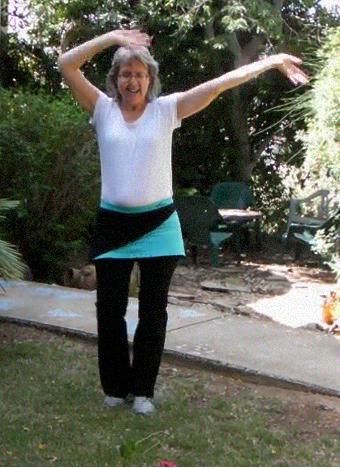
Following the advice I received from Spiritual Presence to do the Huff n’ puff exercise, I did the exercise today. I had been resisting doing the exercise regularly, but today I was determined to get outside and do it.

While doing the exercise outside in my backyard, I looked at a flowering hibiscus tree, at basil growing in my little vegetable garden, at the lemons growing on the lemon tree, at my neighbor’s young olive tree, at my dog (not the dog in the video), at birds walking around on the ground, at butterflies, and at other vegetation.

I did the exercise for 15 minutes. I waved my hands above my head (feeling the stretch in my upper body). I added other arm motions besides the waving and marching arms. I did the movements while turning in a slow circle (Jill-don’t try that 🙂 ). I kept my pace lively. I thought about the gift of living in such a lovely place and felt very grateful. I smiled when I remembered to smile, and the smiling brightened my mood.

The Huff n’ puff exercise is a cardio exercise that is meant to exercise the body, mind, emotions, and spirit. When done with bounce in the step and a smile on the lips, this exercise can help in ways that can’t be counted.

Give it a try! Here’s the video: