A Balanced Approach to Wellness!

Posts tagged ‘self-help’

The basic tests for maintaining health, Test #5

treble_staff

The post “Monitoring Health” (https://energy-guidance-complete.com/2014/08/24/monitoring-health/) brings awareness of the seven tests that should be performed in order to evaluate health.

“People—are—designed—for—doing some of this, doing some of that, moving here, then moving there,…” from Oneself—Living.

Sitting still for extended periods of time was not part of the design. Nor was letting inanimate objects do the work for us. Life has greatly changed for people, but the basic design has not. Rather than ditch the vacuum cleaner and return to the tree-branch broom, people must add movement into their lives that is nourishing, that exercises the body, and that is challenging.

Here is Test #5.

Test #5: Physicality

  1.  If you sit for longer than 50 minutes, do you change position or do a different activity?
    (Sitting for longer than 50 minutes without standing or stretching while sitting is taxing for the body.)
  2. Do you stretch your body when you wake up from sleeping? Even after short naps?
    (The body requires movement after sleep—the entire body!)
  3. When you visualize yourself, do you picture a person who is inconsistent about exercising, is good about exercising with a group but negligent when at home, is in need of someone to make you exercise, is physically fit, or is too focused on physical appearance?
  4. What is your attitude about movement off the ground (biking, skating, surfing, skiing, etc.) What is your attitude about movements on the ground (yoga, sit-ups, push-ups, etc.)? What is your attitude about swimming and walking? What is your attitude about dancing and kicking/hitting a ball?

Allowing your body to move frequently is good for your health!
Huff n puff exercise


The basic tests for maintaining health, Test #4

treble_staff

The post “Monitoring Health” (https://energy-guidance-complete.com/2014/08/24/monitoring-health/) brings awareness of the seven tests that should be performed in order to evaluate health.

Here is Test #4.

Test #4: Rhythmic breathing

“The more varied the breathing, the less chance for illness to set in..” -from the post “Aging is manageable when done properly” (https://energy-guidance-complete.com/2014/05/12/aging-is-manageable-when-done-properly/).

The importance of breathing cannot be overstated. Not only does breathing sustain us in life, but it sustains us in good health. Breathing that is appropriate for the activities we do is necessary for the body to refresh itself.

For this test, use the following descriptive words to describe how you breathe during the activities presented in the list:

*tight    *quick     *neutral     *deep

1 working/concentrating at the computer or smartphone

2 singing/playing an instrument/talking

3 reading/cooking

4 moving briskly through exercise, sport, rhythmic movement, work, or walking

5 laughing/talking with friends/playing with grandchildren, children, young siblings, or young children in one’s charge

For each of the activities that you do, pay attention to your breathing.

  • In general, tight breathing is reserved for tense emotions. If your breathing feels tight at other times, you should consciously relax more often.
  • In general, quick breathing occurs during brisk movements. Out-of-breath during brisk movements can be a sign of too little water in the body, too much movement at the current time, or illness.
  • Neutral breathing is appropriate for most activities. It is not the right rhythm for brisk movements or moments of deep focus.
  • Deep breathing requires conscious effort until it becomes habitual. Deep breathing is the most cleansing and strengthening of all the types of breathing, but is not necessary during brisk movements. Deep breathing strengthens the organs, flows, and spirit.

Allowing your body to breathe deeply and variedly is good for your health!

Sequoia2

The basic tests for maintaining health, Test #3

treble_staff

The post “Monitoring Health” (https://energy-guidance-complete.com/2014/08/24/monitoring-health/) brings awareness of the tests that should be performed in order to evaluate health.

Here is Test #3.

Test #3: Attention to self-needs

Ignoring one’s needs damages all the aspects of balanced health (physical, emotional, intellectual, and spiritual). This area does not mean self-centeredness. It means self-support.

When we fly, we are told to put on our oxygen mask before we put the mask on any dependent that is traveling with us. First we take care of ourselves so that we can help others. The same applies to our well-being. We must take care of ourselves so that we can help others.

Here are the questions for the basic test:

  1. Sleep: I schedule the appropriate amount of time for sleep each day. Yes/No
    (for people with young children, this can mean sleeping when they are napping)
  2. Relationships: I schedule time to be with people who are special to me. Yes/No
  3. Nutrition: I eat foods that satisfy my hunger for nutrition (eating to satisfy emotional issues is a No) Yes/No
  4. Movement: I schedule time for moving my body—exercise, dancing, walking, swimming, biking, team sport, etc. Yes/No

There are additional questions; however, these four are a good beginning. Consider your answers and then consider the meaning of each question.

Being sensitive to your needs is good for your health!

Hearts


The basic tests for maintaining health, Test #2


treble_staff

The post “Monitoring Health” (https://energy-guidance-complete.com/2014/08/24/monitoring-health/) brings awareness of the tests that should be performed in order to evaluate health.

Here is Test #2.

Test #2: Interactions with other people

“People were never meant to live alone. The idea that life is elevated by depending on no other person is incorrect. People are meant to depend on one another. They are designed to work in groups: to build together, to create communities, to help one another in times of difficulty, to find common purpose, and to help those entering and exiting life.” -from The Gift of Intuitive, Dedicated Comfort.

Connection to other people is the given. Avoidance of other people is the deviation.

For this test, use the following descriptive words to describe how you feel about the people presented in the list:

*kindness    *unkindness     *hurt     *admiration     *I don’t think about them

  1. spouse/current partner
  2. close friends, cousins, aunts and uncles
  3. children, grandchildren, step-relatives
  4. inhabitants in my city, inhabitants in my county/state
  5. people driving in cars or in other modes of transportation
  6. coworkers, shopkeepers, casual acquaintances, clients
  7. parents, siblings

There are other words to describe how you feel about these people; however, the words given are a measure of connection and caring.

Being connected to others is good for your health!

Post 69-People

Monitoring health

treble_staff

People monitor their cholesterol levels, their blood pressure, their iron level, their blood sugar level, and their BMI. They monitor other physical issues based on family history, age, sex, race, and individual health concerns.

People are focusing on the wrong health issues. Here are the areas that people should monitor for optimal health (the order is not important):

  • Interactions with other people. (Too little interaction undermines emotional and spiritual health.)
  • Rhythmic breathing that is varied and appropriate for the body’s activities.
  • Consumption of nutritious and satisfying foods. (Focusing on foods that are bereft of nutritional value or are lacking in the aspects that naturally gratify [for example, fat-free foods] undermine physical, emotional, and intellectual health.)
  • Participation in physical activities that bring joy and challenge. (Participation in physical activities that are not enjoyed undermines emotional and spiritual health.)
  • Attention to self-needs. (Ignoring one’s needs damages all the aspects of balanced health. This area does not mean self-centeredness. It means self-support.)
  • Sensitivity to environmental concerns. (Disregard for plant life, water sources, and conditions for animal rearing undermines the grounding of the world and damages physical and intellectual health.)
  • Full engagement in life—filling life with attention to the possibilities and gifts available to grasp.

The tests and chases after physical symptoms are easier to do, but are not the real issues that should be followed. The real issues that should be monitored and cared for are the focuses of true living.

Insights into health and life

Exist

In the book Pond a Connected Existence, there is wisdom that calls out for action:

  • From the chapter “Behavior & Release”:

“The state of extended over-tiredness can lead to general overall unwellness, affected decision-making, and overestimation of abilities. Sleep is essential.”

  • From the chapter “Pliable and Different”:

“Many people think they can’t change; that is false thinking. By design, people are made to adapt, adopt, and be adept.”

  • From the chapter “Luck! What Luck?:

“The importance of preparation cannot be overemphasized. Without it, opportunities are squandered, missed, lost.”

How are these morsels of wisdom connected?

  • With adequate sleep, a person can think more clearly and take the actions necessary to be prepared.
  • Adaptability contributes to preparation for the future. Adaptability is available to those who are willing to examine their decision-making and change when a decision no longer brings clarity.
  • One can never be prepared for all events, no matter how prepared, because life is so unknown. Sleep prepares for handling life’s uncertainty and refocuses perspective about one’s ability to change and receive the future.

Energy Guidance Complete is gifted awareness from beyond.

Open your eyes and see the connection!

Open your heart and feel the call!

Open your arms and receive the guidance!

Post 25 Logo

Giving up is not the best option

Graphic-giving up article

Sometimes it is easier to give up than to fight for, aim for or live for. Giving up is one way to determine, but it is also a way to destroy. Both results can occur when a person gives up—be it fighting for a cause or fighting for continued life. Giving up determines that efforts will stop and that future possibilities are destroyed.

Yes, people need to know when a struggle is not possible, but not before they attempt and attempt again and try anew. Acknowledging defeat causes lowered balance in the body, lowered resistance, lowered opinion of oneself, lowered attempts at other things, lowered connections to other people, lowered connections to spiritual support, lowered enjoyment of pleasures, lowered sharing of experiences, lowered interest in oneself (less love for oneself), and lowered performance.

In cases where many attempts have been made yet nothing changes, people must be realistic and acknowledge reality. Fighting a terminal disease is a fight or a task. When it is a fight, it is all-consuming. When it is a task, it is part of one’s life, but not the whole life.

Life is much bigger than the disease or the lost cause or the forsaken dream. Each of these “challenges” is part of the picture that is life. Part, not all—not even a large part, just a part. The real challenge is to live fully while experiencing the painful and exhausting segments of existence.

Living with vitality and with determination. Yes, these forces of a directed life can bring purposeful and sustaining living!

Perfection and certainty

No Certainty-Perfection

People want certainty in their lives, but certainty is unattainable because life is too fluid. People also want perfection, but that too is unattainable because life is too elastic. Certainty and perfection are elements of the universe, and even so, certainty is not always certain.

Certainty

“We all want certainty. And sometimes we get it. When we prepare for things, we often get the desired outcome. When we measure and work in an exacting manner, our cakes taste right, they look beautiful, they make the eaters happy. When we wash our hands, they are clean. When we allow enough time, we (usually) arrive at our destination on time. When we set our alarm clock, we wake up on time—usually. When we build buildings with strong foundations, they keep us secure—except in times of war or destructive natural disasters.” …from “The Gift of Intuitive, Dedicated Comfort”

Perfection

“Wanting perfection, and settling for nothing but, is mistaken behavior. Aiming for doing one’s best, working hard, giving it your all—these goals are worthwhile and worth pursuing. Great performance is admirable as long as the performer is pleased as well and not saying “Oh I should have done better.” Of course one can strive to improve, but disparaging a good job! well done! is fruitless waste of energy.” …from “Oneself—Living”

Perfection and certainty

Perfection and certainty reduce achievement. These words cause expectations and disappointment and injured relationships.

These words are troublemakers. Let them go!

Letting time dribble away

Post 97-wild flowers

Here is my typical workday these days: sit down at the computer and read emails, look at my blog statistics, check my Facebook page, read the news main topics, open the file for the book I’m working on and go to where I left off, add a sentence or two, check the news again (things are unstable so the news changes quickly), see if anyone has commented on Facebook, get up to get a drink, vow to only work on my book, peek to see if there are any new emails and news, go to my book and try to focus, get frustrated so do some administrative work for my husband, take another quick look at blog statistics, and so on. Not much getting written, but lots of valuable time dribbling away.

I know that I am meant to bring much wisdom to the world and yet I procrastinate. Sometimes I struggle with the questions I need to ask in order to receive the wisdom. Sometimes I struggle with the individual words. Sometimes I struggle with the graphics. And sometimes I struggle with the immensity of my purpose.

I’m about to receive wisdom to guide me during this time of distraction, and I’m sharing it on my blog in hopes that it will help others who are time wasters like me. Here goes:

Renee—you have been shown what you represent. You bring about understanding of connection to beyond when you focus your time and effort. To focus: do the huff’ n’ puff exercise each morning for at least 5 minutes, do one of the exercises for connecting to spiritual support once a week, and only open your document on the computer. Strive!

I give messages to people I work with, and they choose to make the changes that can bring them balance and understanding—or not. They have free choice to change. The messages I receive require acceptance by me. The gift comes with expectations.

Time is deceptive. Life is multi-textured. The time spent creating a life that is reaching and grounded is time that is used wisely. Strive!

Investing for a rainy day, the good and bad news

(taken from my article “Good News, Bad News: Investing for a Rainy Day” on HealingAnswers.com)

rain

This blog post is not about investing money. It is about investing in what’s around you—in friendships, in committed relationships, in neighborly relations, in family, and in the community. Investing in these important relationships is investing for a rainy day at its best!

Good News: Investing in family, friends and community builds a safety net

“Investing in friendships and giving and taking from friends is nourishing. Investing in relationships is natural and is needed to live a balanced life. Investing in family—children, children’s children, siblings, cousins, and so on builds a network of support that is reliable. Investing in communal activities builds a network of support that nourishes and strengthens the individual community members and the collective group.”… from “Oneself—Living”.

Investing time is necessary in order to build a safety net for when life becomes difficult or too hard to bear alone. Often, people put work obligations before obligations to family, friends, and community. This behavior has become acceptable in society, but it is short-sighted. The more a person gives to the relationships that truly matter, the more protection from the surprises that occur in life. Of course, a person must perform work obligations with an enthusiastic spirit and with focus, but work obligations should be one section of life, not all of life.

 Good News: Investing in family, friends and community supports good health

The more people invest in their relationships and community, the more balanced their health. Time spent with people who are meaningful creates memories that enrich beyond the moments in which they occurred. Positive memories are better, but even negative memories create experiences that build and nurture if the negative experiences are within the realm of realistic disagreeable treatment. In other words, interactions with family members, friends, and community acquaintances do not always have to be positive for the investment to be worthwhile. Learning to negotiate the varying needs of the various people is balancing.

Tip:

Choose a community betterment activity that excites you so you’ll want to participate. If you enjoy the arts, volunteer at a museum or in an enhancing-the-neighborhood project. If you prefer working on your own, volunteer with community building or cleaning projects. There are enough volunteer opportunities to suit all personalities.

 Bad News: Not investing is unwise

“Non-investment in relationships with others leads to loneliness, sadness, aloofness, insensitivity, and unsureness. Non-investment in friendship—foolish. Non-investment in marriage—incorrect behavior. Non-investment in intrafamilial connections—mistake. Non-investment in neighborly relations—short-sighted. Non-investment in societal obligations—selfish thinking.”… from “Oneself—Living”.

The less people invest in their relationships and community, the less balanced their health. Simple as that.

Conclusion

Investing for a rainy day means being prepared for whatever may come. Rain is not negative, but it can cause a change in plans. The same is true for changes in health, family structure (through births, deaths, divorce, etc.), and societal balance. Being prepared means planning ahead—making sure to invest in the connections that truly matter.

Living life with gratitude

ExpectationLiving life with expectation is positive when the expectation is shared. The word “shared” is tricky. It means that the expectation is natural and widespread. A shared expectation is that the sun will provide sunlight and the sunlight will provide daytime lighting.

Security

Living life with security is necessary for full development.  Security refers to feelings of protection and continued protection. Shelter from cold and heat and other environmental harshness, from bugs that sting and bite and from other types of bites and scares that come from animals, and from stings and hurts delivered by people through physical actions or harmful words.

Personal expression

Living life with personal expression is basic human desire. Pastels, bold colors, allegro, adagio, moving in lines, moving gracefully, loud, large, miniature, soft, C sharp, B flat, broad strokes, measured slow movements, wordy, concise, structured, improvisation, group dynamics, individual efforts, inspired.

Each person has desire for making a mark and the more the personal expression is allowed to flourish, the more the person is fulfilled.

Gratitude

Living life with gratitude can happen when expectations are reasonable, security is available, and personal expression occurs. Wanting to be grateful is a good first step towards feeling grateful; naturally occurring gratitude appears when living is satisfying.  Each person has a gratitude capability for seeing his or her life for its fulfillment of the need to be expressive, satisfied, and secure.

The way towards feeling gratitude is to see life with unexpectant and present eyes.

The Eating Recommendation

Eating structure

The Eating Recommendation is a more accurate presentation than the food pyramid for how people should eat. The non-food requirement in the center was explained in the previous blog post.

Today, we’ll look at some of the food groups. In Vitality!  How to Create a Life That Is Healthy, food groups are subdivided depending on their nutritional value and on environmental issues. As an example, the section about meat and fish is divided into three subgroups. Notice that from these three subgroups, a person is nourishing the body properly when a total of six portions of meat and/or fish are eaten a week:

  • Sardines and lamb.
    These foods can be eaten twice a week.
  • Catfish, chicken, goat, goose, herring, oysters, pork, salmon (not more than once a week) sole, shrimp, tilapia, turkey, trout.
    These foods can be eaten three times a week.
  • Anchovies, beef, carp, Chilean sea bass, clams, cod, crab, crayfish, duck, eel, flounder, haddock, halibut, lobster, mackerel, mullet, mussels, octopus, perch, prawns, rabbit, sea urchin, skate, snapper, squid, tuna, venison.
    These foods can be eaten once a week.

A portion size depends on age, gender, health, activity level, and physical build. These recommendations apply to people who regularly eat meat and not to non-meat eaters whose needs are considered elsewhere in the chapter.

Notice that nuts & seeds appear twice. The reason for this double appearance is to emphasize the importance of eating nuts and seeds. As stated in the book,

 “The more active a person is, the more nuts can be eaten. The less meat, fish, and dairy eaten, the more nuts can be eaten. In general, nuts and seeds are very nutritious and people should alter their diets to accommodate more nuts and seeds.”

The recommendation for water and liquids is added to the Eating Recommendation to emphasize their importance. As stated in the book,

“Water is necessary to sustain life. That’s a fact that must be accepted. Coffee is not necessary to sustain life, nor are carbonated beverages. Water, unless it is tainted, maintains life; carbonated beverages make life sluggish. Water quenches thirst; coffee creates thirst. Water is the only drink that the body truly desires. A body that is confused desires other drinks. Water helps the body perform its wondrous functioning. The other drinks make the body work harder….”

Just like with food, the amount of water needed depends on age, gender, health, activity level, and physical build, plus climate and location. The various liquids are divided into six subgroups.

More to come…

Rethink the food pyramid

Eating structure

The shape that appears here is not symmetrical like the food pyramid, but it is a more accurate presentation of how people should eat. This shape is useful for studied understanding of food consumption and connections.

In the center, a non-food requirement is presented. The ingestion of food is not the only requirement for nourishing the body; the eating environment and appreciation for the food contribute to optimal digestion and to nourishment of the body, emotions, and processing abilities (processing abilities refer to processing of thoughts, opinions, and creative reasoning).

When food is consumed on the go, in secret, or standing near the fridge, nourishment is lessened. When the food is appreciated and eaten with a sense of gratitude, nourishment is enhanced.

Not present in this structure is the requirement of choice. As stated in Vitality!  How to Create a Life That Is Healthy:

Eating for the sake of keeping the body alive is not a part of life for most people living in modern society. Eating for the sake of the enjoyment of the food is modern society’s take on food. The enjoyment, not the life-giving aspect, is the focus.

Choosing to eat foods that bring healthful existence, choosing to avoid foods that limit, and choosing to consider the needs of the Earth when making food choices are aspects of interactive and heightened living.

The categories in this interesting construction will be explored in the next blog post. They have subcategories according to nutritional impact and environmental impact. Detailed information is presented in Vitality! How to Create a Life That Is Healthy.

Notes: The picture is not beautifully drawn because I have not developed good drawing skills. I drew the shape and structure as I understand it to be from Spiritual Presence. The explanation for the repetition of nuts & seeds will appear in the next blog post.

Balanced thinking—a personal calibration

imbalanced thinkingPhysical, emotional, intellectual, and spiritual balance: the guarantee for balanced thinking.

When a person is out of kilter in any of the four components of health (physicality, emotions, intellect, and spiritual component), the imbalance can cause thinking that is faulty and narrow. Just one component being off is enough to skew thinking that is broad and wise.

What can cause imbalanced thinking?

The list is long:

Too little sleep, too much sugar, too little intellectual stimulation, too much distraction, too little striving for understanding, too much emphasis on superficiality, too little movement, too much expectation, too little awareness of oneself, too much distancing, too little deep breathing, too much indulgence, too little willpower, and too much procrastination, (The list is not complete, but it is enough.) Too much of some things and too little of others. Not enough balance.

Letting others decide for us is imbalanced living. Choosing the choices and path of someone else is imbalanced choosing. Watching others be hurt and not defending them is imbalanced behavior.

Screen bean-power

What can balance thinking?

  1. Caring for the body with nourishing foods, intellectual stimulation, movement, music, adequate sleep, and proper hydration.
  2. Caring for the feelings of emotional wellbeing: spending time with others, spending time in nature, spending time with animals, and spending time alone doing nourishing activities.
  3. Caring for the intellect through intellectual stimulation (notice that this requirement appears twice).
  4. Engaging in spiritually uplifting activities, alone and in a group.

A personal calibration

Post 7-bracelet

I, _______________________ (fill in name), am ready for balanced thinking. I recognize that life is not meant to be challenge-free and so I vow to bring balance to my life so that I can live broadly and wisely. I am ready to care for my body, my emotional wellbeing, my intellect, and my spiritual connection. I know that I can change the habits that prevent me from living as I should, which is my true self. I am realistic and know that I can make the changes necessary. I can balance!

_______________________________

(signature)

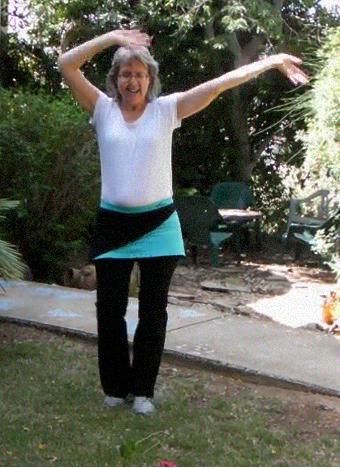
The huff ‘n’ puff balancing cardio exercise

Here is a video showing how to do the huff’n’puff, an exercise that strengthens and balances the four components of health—physical, emotional, intellectual, and spiritual. It was described in an earlier blog post: https://energy-guidance-complete.com/2014/05/15/aging-is-manageable-when-breathing-is-huffnpuff-post-4/

This video presents the basic steps of the huff’n’puff. You can modify it to suit your physical abilities and concentration. It is a cardio exercise. Be sure to be well hydrated before doing the huff’n’puff.


Strengthening all four components of health at once is a way to age wisely.

Happy huffin’n’puffin!

Health throughout aging, post #7

Post 131-huff'n'puff flowers

Many people want to age well without investing in wellness. Just doesn’t happen. Aging well involves lifelong commitment. The commitment? Awareness. Awareness of growth and awareness of decline. Both states exist simultaneously and they present us with daily treasures and possibilities.

There are three key steps to maintaining health throughout the aging process. The first step is proper breathing, When we breathe properly, we bring possibilities to our existence. We are aware of the next two steps, but perhaps we don’t realize their key-ness. They are love of oneself and connection to others.

Breathing properly

The last six blog posts have extolled the value of proper breathing.—breathing that is full and varied, breathing that is enlivened through movement and exercise, breathing that is contented, and breathing that is joined with others. The first step towards aging well is breathing well.

Caring for and loving oneself

There are several blog posts about self-love which you can find in the category titled “Self-love”. The more we care for our needs, the more we can give to others and to the world in which we live. Loving oneself is not a selfish thing; it is natural and necessary for maintaining good health throughout the aging process.

Connecting to others

There are several blog posts about connections which you can find in the category titled “Connections”. “Togetherness is vital for normal human development.” – from my upcoming book, Awaiting Light—Understanding the Development of the Soul. People are designed to connect to other people,  to nature, and to the other inhabitants of the world.

How to proceed

There are no magic bullets for aging well. There are no super foods or super exercises. There is simply living life with awareness—awareness of one’s surroundings and awareness of one’s place in them. Mistakes get made along the lifepath. If they are not too serious then their impact is not too seriously felt.

Here are the things to do:

  • Drink water when you’re thirsty (no other drinks)
  • Sleep the amount of time that keeps you functioning energetically (not easy for parents of infants, but somewhat doable even for them)
  • Eat foods that are satisfying to the body (see the blog posts in the category titled “Food”)
  • Move a lot—take breaks, walk, dance, skip, etc.
  • Pay attention to the activities that pull your attention so that you know the things that you naturally enjoy. Then make time to do them.
  • Spend time with family and friends. We need them when we are up and when we are down. And they need us too.
  • Spend time in nature!
  • Work with a smile on your face and gratitude in your heart!
  • Be satisfied!

These are the things that Spiritual Presence wants us to know. These things help lead us through life in a fulfilling way. These things bring awareness, possibilities, and vitality!

Post 130-breathe


An excerpt from Book #5: “Vitality! How to Create a Life that is Healthy”

Post 99-Book 5-VitalityI have finished the second draft of Book #5 and it is about to go to my editor.

I am interested in feedback from people who follow my blog. Would you please read the following excerpt from the Introduction and consider its tone:

 “This book is titled Vitality! because vitality is necessary to live a fulfilling and meaningful life. By living energetically, a person is living as designed. People are not meant to be sluggish-crawlers. They are meant to be vibrant creators and observers. Living energetically does not mean living at a frenetic pace all the time. It means living fully and filling life with moments of full attention and engagement. Being ready to attempt and to strive, being ready to attempt again and strive more.”

In the excerpt, you can see elements of my writing on this blog. My main question is this: do you think the term sluggish-crawlers is too derogatory? It is the word I received (from Spiritual Presence), but it feels a bit unkind. What do you think? Is its descriptiveness needed to wake people up?

Feel free to add a comment to this post or to write me privately at Renee4Libra@gmail.com.

Thanks for your input!

Renee

Traveling on airplanes—tips and explanations

Post 114 airplane travel

In my last post “Airplane interactions”, imbalance problems caused by airplane travel are presented. In today’s post, I am presenting tips for lessening the damage and issues to think about. Some of the tips should be familiar to you if you have previously researched this topic.

Preparations before a flight

Food

  • If you eat fried foods as part of your regular diet, be sure not to eat anything fried for the two days preceding the flight and don’t eat fried food on the day of the flight.
  • If you eat sugared foods at most of your meals and in your snacks (foods containing sugar or foods that you add sugar to) and you will be traveling for more than five hours (travel to the airport + processing and wait at the airport + flight + and travel to destination), on the day of your flight eat half the amount of sugared foods.
    If you eat sugared foods about twice a day and you will be traveling for more than nine hours, start limiting your sugar intake to once a day for two days before the flight. On the day of the flight, try not to eat any sugared foods.
  • If you eat well—balanced meals and controlled portions, but you sometimes binge or eat large portions of fried or sugared foods, take nutritious foods with you on the plane to help you resist snacking on the fare provided by the airline.

Hydration

  • If you drink more than two cups of coffee daily and you will be traveling for more than seven hours, start limiting your coffee intake to one cup a day for four days before the flight. If your flight departs early in the morning, wait to drink your cup of coffee on the plane. If your flight departs in the afternoon, drink your cup of coffee at the normal time you drink the first cup. If your flight departs at night, drink your cup of coffee 1 ½ hours before landing. The next day you can resume your regular coffee drinking habit unless you will be flying again within three days, in which case, you should limit to one cup of coffee a day until your next flight.
  • Drink water, and no other drinks, for 12 hours before the flight. This tip applies even to short flights. If you regularly drink coffee or caffeinated tea, limit them to one cup during the 12 hours before the flight.
  • Avoid carbonated beverages for 24 hours before your flight.

Information intake

  • Because of stress that usually accompanies flying, try to avoid reading or watching disturbing information for at least 24 hours before your flight.
  • Even if you have work to do on the flight, bring light reading or entertainment that you can turn to if you feel too stressed during the flight.

Preparations optional

These tips lead to well-being when flying.

  • The following supplements can be helpful if you already take them: Vitamin C, elderberry, and zinc. A small dose of these supplements six hours before a flight can boost your immune system.
  • Exercise before a flight is helpful as long as the exercise is not overdone.

Well-being on the flight

  • If your flight is longer than ½ hour and less than three hours, stand up and move a bit once every ½ hour.
  • If your flight is longer than three hours, your need for movement is much greater; however, if you sleep during the flight, then your need for movement is reduced. Aim to walk and stretch for several minutes between sleeps, movies, meals, etc. The more walking and stretching, the better.
  • Talk to the person sitting next to you, even if you have work to do. The connection on a plane is important for well-being.
  • Airplane food can be nutritious if you eat the nutritious offerings. Try to avoid the processed foods. Bring nutritious snacks with you.
  • If you drink only water on the flight, your body will be very appreciative. Avoid the carbonated beverages and sweetened juices. Limit alcoholic beverages to one.
  • Smile at the flight attendants and feel compassion for them. Their work is harder than it seems.

Layovers in airports

  • If your layover is longer than two hours, make sure to walk around to loosen your muscles and stretch your spine.
  • Avoid eating fried and sugared foods.

After the flight

  • Immediately after the flight, drink a cup of water.
  • Wait a day before resuming eating the foods discussed above, unless you have another flight within three days, in which case, wait until the day after the second flight.
  • Walk for at least 15 minutes to release tension in your body.

Clarification about the previous post: Unreleased energy leads to laziness

Post 110 clarification about 109-unreleased energy

A friend of mine read the previous post and took issue with how judgmental the tone was about people who are “lazy”.

My friend is one of the least lazy people I know, but sometimes she doesn’t have the energy to train for a 10k run that she thinks she should do. The reasons she doesn’t have the energy to train are far from laziness. She doesn’t train for three reasons: 1) Her life is so full with work, family, volunteering in her community, and volunteering outside her immediate community that she isn’t as focused on the run as she would like to be. 2) Her expectations of herself are too unrealistic. 3) She has more compassion for others than she does for herself.

The last post wasn’t about laziness; it was about unreleased energy. Laziness is a byproduct of unreleased energy. People need to release energy. Not releasing energy leads to many negative and unbalancing effects: physical pains, emotional turmoil, depression, turning inward, turning away from others, frustration, laziness, and self-dislike. Taking breaks from work and physical activity is normal rejuvenative activity. It is not laziness.

Releasing energy is an important way for achieving balance of body, mind, and spirit. Releasing energy is good for each individual and is good for society.

Releasing energy through physical, intellectual, and social pursuits is nourishing, balancing, and necessary.

Energize!

At the top of the stairs is Spiritual connection

OLYMPUS DIGITAL CAMERA

Yesterday’s blog was about Spiritual connection. Not sure if that was clear. It was not clear to me until I asked—so I guess I cheated :-). It’s nice to be connected to the Teacher.

From Pond a Connected Existence:

“In The Gift of Intuitive, Dedicated Comfort, steps are provided for connecting with spiritual presence. They are as follows:

‘…observing nature, the actions of babies, the movement of the seasons, the shenanigans of animals, the idiosyncrasies of the opposite sex, and the idiosyncrasies of one’s own sex’.

The passive observation of others and of nature cause analysis, cause consideration of seemingly incongruent and inconsequential subjects, and cause rumination on creation, on the wonder of life, and on how incredible the world’s creatures can be.

Spiritual presence exists in all aspects of nature….”

The list above is the way for people who are doubting to get connected. Doubting is in vogue in our generation, but it is not how people were in the past. When people were more connected to nature, they were simply more spiritual.

If you want to connect and feel you aren’t, start now. To quote again from Pond a Connected Existence:

“Each person has a connection. The awareness of this connection is influenced by societal beliefs and by individual faith and sense of relating to natural elements of life. The awareness is felt in many ways: intuition, gut feelings, sense of security or buttress or admonishment, hearing a voice or a whisper or a sense of a voice, vibrations throughout the body, flashes of knowing or of understanding, through slenderpointed dreams, constant feeling of clear direction, flash of inspiration or clarity, signals of peace, or awareness of future priorities caused by glimpses of Next.”

Wishing you an easier climb up the stairs.