A Balanced Approach to Wellness!

Posts tagged ‘inspiration’

Positive and negative positives-negatives

Post 7-bracelet

22 stones. One for each combination of positive-negative voices in our heads. Sort of like the good angel-bad angel depiction of our consciences. Sort of like how we feel when we are deciding between a sustaining activity that is a time investment and a non-sustaining activity that is a time distraction.

The list below is a partial list of positives-negatives.  Please feel free to add more.

1 good-bad
2 elevate-stay/descend
3 try-hold back
4 consider-discount
5 open-territorial
6 caring-disdain
7 charitable-judgmental
8 respect-disregard
9 prepare-neglect/ignore
10 retain-spread
11 me-others
12 others-me
13 accept-reject
14 act-accept
15 speak up-hold back
16 contribute-withhold
17 develop-abandon
18 patience-impatience
19 defend-withdraw
20 aid-hurt
21 support-sabotage
22 humility-vanity

Why we like prizes, freebies, and contests

Post 67-contests freebies prizes

Part of the human design is the pull towards the unknown. Working things out, discovering, learning. People are driven to explore and understand. And to master. People also tend to want new challenges after they have internalized previous challenges. Contests, freebies, and prizes are human ways of answering the need for the unknown and for the challenge.

Each person has a reason for entering a contest or vying for a prize or applying for a freebie. How does a freebie fit in? Because the wanting of a reachable-but-not-quite item or experience is a form of a challenge, albeit a minor one. The freebie-wanting is a way of working things out and mastering.

Also, people want entertainment. Another design feature! Contests, freebies, and prizes answer this need. Each in its own way entertains and interests.

The more one participates in contests and events that include prizes, the more one feels purpose, because the winning or placing or almost-winning or almost-placing satisfies a magnetic pull towards out-doing the unknown—changing the rules, creating a surprise ending.

Explore unknown (want ___ after ___ have )! Fill in the blanks and win a prize! Just kidding.

Witnessing motivation

Post 65-Witnessing motivation

I attended a gathering of seekers, and was able to witness a motivator. His manner was straight-forward and his presentation was subtle. This man was sure and grounded, and he slowly fulfilled the expectations of the gathered motivation-needers.

These needy and hungry attendees waited for the magic to work. His approach was slow-going, but they waited patiently, patiently. They were familiar with his approach and knew that magic would come. They came prepared knowing his thinking, so he didn’t need to convince because the convincing had already been done.

The people taught me that having a leader makes life easier, even if he has little to say. Once a leader has convinced, he can focus on his interests and on his development. The people want what he wants too because it is easier to want a guided goal.

The leader taught me that building a foundation is the step to creating a following. The fulfillment of individual desires for amazement create the magic that may or may not exist.

Thoughts about people

Hearts

When we think about others, our thinking is colored by what we think about them. In other words, how we feel about them and how we feel they affect us, affects how we assess them. Also, our thinking about ourselves affects our thinking about others.

If someone has been kind to us, our opinion of this person could be kind in turn, or not, depending on if we think we deserved the kindness. If our opinion is that we didn’t deserve the kindness (because we know that we were neglectful, distracted, or undeserving), then we may consider this person to be foolish or lacking in deservedness as well. Our opinion will be negative rather than positive, when positive would have been the balanced thinking. The more we are balanced in our thinking about ourselves, the more we can evaluate others clearly and with objectivity.

How we see ourselves is how we see others. We must aim to be self-kind and self-forgiving and self-loving.

More to come on this topic…

When a young person dies

Post 62-death

Yesterday, I learned that the unthinkable happened. A young woman on a hiking/adventure holiday died. She and one of my sons were in high school together, and I know her and her mother. The funeral will take place when her body arrives back home.

I have written about death a few times in my books, and I turn to them and to Spiritual Presence to find understanding and comfort.

From the Gift of Intuitive, Dedicated Comfort:

“Each day brings an opportunity to move up or down, to build or waste, and to affect or be affected.”

The message: this young woman was a person who involved herself in life. Not only in her travels, but in her relationships and in her community.

From Pond a Connected Existence:

“The moments accumulate and produce the picture that is one’s life.”

The message: She spent her moments in uplifting and sustaining activities. The picture that is her life is one filled with vibrant colors and multiple dimensions. (See my earlier post “Finding one’s way” that explains life pictures.)

“An event occurs that requires action. The timing of the event influences possible actions. The action(s) taken are influenced by capabilities, preparation, presence of resources, and decisions. Overall attitude pervades the process. Many parts for an outcome.”

The message: Whatever happened, happened because of her capabilities, preparation, presence of resources, decisions, and attitude. And timing. “Many parts for an outcome.”

From the chapter “Concrete Living” in Oneself-Living:

“Natural death is painful for the survivors, but because it is “natural” is easier to accept. Deaths through accidents, disasters (natural or not), struggles such as wars and territorial conflicts, or other human-handed causes are harder to digest. These deaths cause more lingering effects…

Movement is always linear, from start to finish… The body is born, lives, and dies…

Concrete living: living with gusto and with verve, with awareness of an ending and with awareness of possibility, with thankfulness and with generosity. “

The message: Those left behind, the ones who remember and despair, must be comforted and supported. They must be allowed to mourn and feel overwhelming sadness. The comforters must be patient and open to the mourners’ grief. Slowly, as time passes, the mourners will be pulled back into the world of living, because that is the natural flow of life. Death is the natural ending to life. It can be the end and it can be the catalyst for living with gusto and verve, opportunity and hope, and purpose and determination.

Living = valuable

Once upon a time, there was a man who had a rubber band that he used in his everyday life. Sometimes he used it to keep things together, sometimes he used it to separate things, and sometimes he used it when he was bored. He had one rubber band, and he took care of it because it was valuable to him.

One day, he was distracted and the rubber band fell. He searched and searched, but could not find it. His determination to find it lessened, and he gave up. He realized that the value of the rubber band was not only its usefulness, but also his attachment to it. He realized that the rubber band would no longer be in his life and he changed his outlook about it. The rubber band was once his to use, and now he had to move on.

The man found a new rubber band that was the same color, but not the same elasticity. He used it less, and found other implements to help him with separating and joining things. He used several different implements and became attached to none of them.

The daily doings for this man did not change. He simply changed his methods. The rubber band, the second rubber band, and the other implements were simply ways to help him.

The message: When one thing fulfills many needs, its importance is exaggerated. All things are limited in their usefulness and in their ability to satisfy requisites. When things are expected to fulfill more than their normal capabilities, people are expecting too much. Things are simply the tools/entertainment/aids to a life that is assisted. More than things, people require interaction with people, animals, and plants. Things are not equal to living entities, and things should never be valued higher than people or animals or even plants.

Finding one’s way

Post 60-finding ones way

Above you see the average life path. Below you see what the desired route should be:

Post 60-finding ones way2

Full of trials and successes and attempts and experiences.

And if the life is short, the route can be:

Post 60-finding ones way3

Short, but meaningful.

And what about a long life that is purposeful, balanced, and connected? This life’s picture would be:

Post 60-finding ones way4

“…Moment after moment after moment. The moments accumulate and produce the picture that is one’s life. Enriching moments are vibrantly colored; valueless moments are dull and unexceptional.

Fullness and not. Life can be full—or not. The picture that is one’s life has dimensions: smooth in places that are enriched, jagged in places that are unbecoming, two-dimensional in places where a choice was not made. The form of the picture can be SO large, one simply has to choose to be giving and engaged and willing to participate in a well-lived life. Life that is experienced through true living lights the way for others.”

…from the chapter “Moment” in Pond a Connected Existence.

Deadlines

Post 59-focus

When a deadline is looming, people respond in many, many ways. Each person has a way of coping or approaching or ignoring or using the deadline to achieve/fail. Some people aim for success; some people aim for failure. Yes, both are aims and both are normal reactions depending on each person’s attitude, history, and current bodily balance or imbalance.

This post is being presented to those who aim for success. (I bet you thought it would be the other aim.)

Aiming for success is usually a positive aspiration. Success in one’s endeavors is considered to be the goal that should be reached. Success. What is success? The dictionary says that success means the attainment of wealth, honors, position, etc. In society, wealth, the receipt of awards, CEOs, elected leaders, and celebrity are the coveted (eagerly wished for) ideals.

Let’s look at success in life. What are successful life goals?

  • Maintaining good family relationships—not always easy, but worth making a goal.
  • Maintaining community—very important and worth the investment.
  • Maintaining a healthy outlook about oneself—influences all the other goals and is vital for reaching the goals with health and self-esteem unharmed.
  • Maintaining work requirements—delivering (a performance or a report), showing up when expected, influencing others or work conditions,  performing duties properly and with concern (no matter the type of work), providing the needed skills (relearning or staying current as needed), and focusing when focus is required.
  • Maintaining a relationship with the environment and the creatures that inhabit the planet. “Creatures” include animals and people.

Success is large and small. Large and small successes. Public and private successes. Often, the small and private successes are the most important.

Getting back to deadlines—each person determines the approach that works or doesn’t work. Remembering to attend to all of the life goals should help keep focus and lessen wasteful fretting and wasteful actions.

Feelings of non-movement

Post 58-stuck

Stuck stuck stuck stuck. Feeling stuck. Feeling that movement is hindered. By me? Perhaps. By others? Not sure. Am I at fault or them?

When life-or relationship-or business-or whatever is not moving as quickly as we’d like, we must not despair (and eat too many cookies or use our go-to despair crutch). At these times, we must breathe more deeply, see the sky more frequently, and think about our achievements.

Breathe to this count: breathe in to a count of 6, hold for a count of 4, breathe out to a count of 5. Breathe this way until relaxation starts to set in.

About the sky—really look at it and appreciates its colors and its movement.

And our achievements—think about little achievements and the larger ones, and then do the relaxation breathing again.

Life won’t go the way we want it most of the time, and we have to realize that fact and keep going.

Sense of touch

Post 57-sense of touch

  • Prickly
  • Intensity
  • Weight
  • Solidity
  • Temperature
  • Emotion
  • Wholesomeness (as related to food that is not processed)
  • Weightlessness
  • Vibrations
  • Movement

In my book, Pond a Connected Existence, there is a list of the top ten things that the average human requires. The tenth requirement is stimulation of the senses. Textures provide information about safety and enjoyment. About creativity and destruction. About power and sustenance. About self-awareness and well-being. Safety. Enjoyment. Creativity. Destruction. Power. Sustenance. Self-awareness. Well-being. S . E. C. D. P. S. S. W. Soul ever circling during purposeful sincere spiritual wonder.

Touch is very much a part of living. Touching a loved one is much needed balancing. If a loved one is unavailable, then touching an animal. If an animal is unavailable, then touching a part of nature—a flower, a blade of grass, a stone, etc. Coming into contact with something real, something containing the radiance of spiritual presence.

Touch can bring great joy when it is given kindly. Kindness is necessary for touch to be received wantingly. This requirement applies to women and men, differently but with the same importance.

Touch. With warmth, generosity, feeling, purpose, and kindness. Soulfully.

Spiritual Presence

Post 56-spiritual presence

Spiritual Presence was once a normal consideration in a person’s life. When people were more connected to nature, they naturally felt a connection beyond. In today’s world, our disconnect from nature has disconnected us from the natural connection to Spiritual Presence.

Here is information about Spiritual Presence from the chapter “How to Connect to Spiritual Presence” in my book, Pond a Connected Existence:

“The awareness [of connection to Spiritual Presence] is felt in many ways: intuition, gut feelings, sense of security or buttress or admonishment, hearing a voice or a whisper or a sense of a voice, vibrations throughout the body, flashes of knowing or of understanding, …, constant feeling of clear direction, flash of inspiration or clarity, signals of peace…

And from the chapter “Connections” in my book, The Gift of Intuitive, Dedicated Comfort:

“Spiritual presence is actually much easier to ascertain than many people believe. By observing nature, the actions of babies, the movement of the seasons, the shenanigans of animals, the idiosyncrasies of the opposite sex, and the idiosyncrasies of one’s own sex, a person can be filled with amazement at the complexity and richness of the world. This amazement should inspire reaching for connectedness to the energy from the true source of healing.”

Spiritual Presence is available to all, when the populace let themselves be open.

Striving revisted, twice

Again, I am compelled to repost the Striving post. The reason will become apparent at the end.

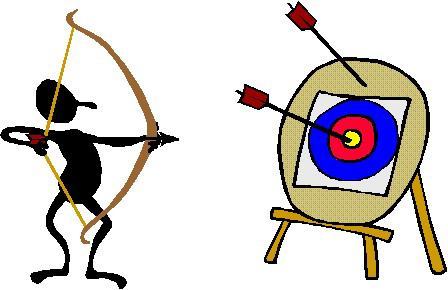
Post 26 archer

  • Striving to improve
  • Striving to move
  • Striving to win
  • Striving to begin

So many things to strive for. People tend to strive for things that are either just out of their reach or for things that come too easily.

When a goal is reached with little effort, it may have been a goal that should have been expanded. Striving is important. It keeps people interested, working, and committed. Striving usually involves physical, emotional and intellectual efforts, and sometimes spiritual effort as well. Too easy can dull the capacity to reason and opine.

Striving for just beyond is generally the better effort. Working towards, moving, struggling. These actions build character and personality. And sometimes strength and resilience.

When a goal is reached, it should be recognized and appreciated. It should not be ignored nor made light of. On the other hand, it should not become one’s existence.

——————————————

This season is the time for making resolutions and promises to oneself and to others. Striving to improve is a valuable goal; however, improving superficial things such as one’s figure is not a valuable goal.  Learning to eat in order to properly nourish one’s body is a valuable goal. Striving to move can be valuable to almost all in modern society. People are meant to move. It is one of the body’s most important needs (after water, sleep, food, and protection from the elements). Striving to win refers to being in a mind frame of success. Success in being a kind person, success in relationships, success with one’s creative endeavors, success at controlling the pull of distracting time wasters. Striving to begin is the big one. Easy to make resolutions, hard to really begin. The first step is actually not hard when the goals are worthwhile.

Striving to be a better person is worth the effort. Making the resolutions and keeping them is purposeful living.

Wishing you success in your efforts to strive!

Cycling around the circle

Heart

Cycle. Cycling. Cycling. Cycling. Cycle. Cycling. Cycling. Cycling.

Sounds like the start of a tongue-twister, but it is actually the rhythm of the seasons. One season moving into another season—winter to winspring to spring to sprinmer to summer and so on. Each season cycling into the next phase of the rhythm of the seasons.

Cycle. Cycle. Cycle. Cycle. Cycle.

The rhythm of the flowers. Grow outwardly grow inwardly grow downwardly grow in situ grow upwardly. Each flower cycling through the cycle of the flower rhythm.

Cycle. Cycle. Cycling. Cycling. Cycle. Cycling. Cycle. Cycling.

The rhythm of the forest. Trees growing trees dying trees after a fire. Animals living and dying. Moss growing and spreading. The many rhythmed space for life.

Where do we fit into the rhythms of the world? People fit in like pieces in a jigsaw puzzle. When people work with the rhythmed spaces, the pieces fit in more or less accurately. When people deny the rhythmed spaces, the pieces are in the wrong places. People are meant to work with, not work against. Live in harmony, not in dissonance. Cycling with the cycles to the rhythms of the world.

The grandest energy with ever-changing possibilities

Vitality

Vitality! This word should always be written in color and in bold—and with an exclamation point! So that people will read it with energy and with desire. Desire to feel the strength of the word deep within the core of one’s being.

V-i-t-a-l-i-t-y! Feel its pull and its launch. Living life in a rich sense of being. Living life with gusto and with verve. Living life with emotion—feeling the fullness of each moment as it passes into the past.

Vitality! Not agreeing to smallness or boredom or apathy. Embracing the largeness of life, its excitement and its joy (or sorrow). Embracing and feeling the blood flowing in the body and the breath in the lungs.

Vitality! Allowing ourselves to release into the amazement of ourselves!

“Your health is what you make of it. Everything you do and think either adds to the vitality, energy and spirit you possess or takes away from it.”
― Ann WigmoreThe Hippocrates Diet and Health Program

I want my way!

Post 52-my wayI want things my way. My way is best. My way or the highway. My way, not any other way.

Do you know people like that? Controlling types who must have things just the way they like them or a tantrum starts. I’m not talking about young children who naturally tantrum because they are learning the rules of socialization. I’m talking about adults who should have learned to compromise. People who tantrum (yes, it’s a verb here) when they cannot have things the way they want are in need of three things: a turn of focus towards others in serious need, physical expressions of caring (hugs, kisses, and smiles), and training in the art of listening.

You might say that this is easy for me to say, but how do you get the controlpeople  (yes, it’s one word) to do these things?

  1. You can forward this article to them (but they might start tantrumming).
  2. You can release them from your life if they are not family members.
  3. If they are family members who do not really need your company, you can limit your time with them.
  4. You can breathe in this rhythm when he or she starts to tantrum: breathe in to a count of 5, breathe out to a count of 4—until the person requires a response. The breathing and counting should help you lessen the tantrum’s effect on your body and will help you tune out the unpleasant words. When you respond, consider your own needs and say what they are. If the person start’s to tantrum again, try to sing a favorite song in your head until a response is required. Again, say what your needs are; however, before you do, think about how this person is in need of physical expressions of caring and try to feel compassion. Try to respond in a way that is less harmful to yourself; in other words, if the tantrum hurts you, say things that will not induce another tantrum, but without completely giving in. Not easy, but effective.

Controlpeople cannot be controlled, but their effects can be limited when we know our options.

Clutter in my head

Clutter-in the head

The last post was about clutter in one’s abode. Today, the clutter is inside one’s head. Cluttered thoughts about weight or appearance or something negative that someone said or something negative that I said or something I should have done better or something someone else should have done differently or …

The clutter in one’s head is more difficult to handle than the clutter in one’s abode. Years of societal criticism (including from one’s parents and friends) clutter the mind and take over space that should be used for creative thought and supportive thinking.

To unclutter the mind, the first step is to take a step—physically! Stand up, say “I am going to clean the clutter in my head”, and then take a step forward. Now, take another step forward, say “I am the person I am because of others, but also because of myself”, and then shake your whole body—head to feet—shake up everything. Next, take five deep breaths and then say “I can release the junk that is old and unhelpful.”  Finally, think about a tree that grows near where you live and resolve that every time you pass this tree, you will throw off some unnecessary thought that belittles you. When you get to the tree, take a deep breath, let the thought move out from the top of your head to one of the higher branches, and then move on.

Cluttered thinking can be tidied. Each time you release a cluttered thought, allow yourself to consider a positive aspect of yourself. Let this positive aspect take your concentration and really focus on it. Be sure to smile while you do this.

Balance comes from balanced thinking and balanced living. The more one’s thoughts are supportive, the more one’s life can be balanced.

Clutter

Clutter

Clutter is an expression of unhappiness. When one’s things are managed in a haphazard way, the first thought should be “What am I unhappy about?” The answers can be surprising.

Causes of clutter

Perhaps the clutter comes from unhappiness about one’s choices—mate, work or profession, or simply one’s choices of possessions

Perhaps the clutter comes from unhappiness about the amount of stuff-too much stuff!

Perhaps the clutter comes from unhappiness about obligations—too many obligations to handle.

Perhaps the clutter comes from unhappiness about one’s current life presentation (in other words, the form of one’s daily life).

Perhaps the clutter comes from unhappiness about having more than one should—guilt over one’s excess gifted existence.

Perhaps the clutter comes from unhappiness about past choices made or past indecision.

Perhaps the clutter comes from unhappiness about the way in which spiritual .omnipotence meted out one’s circumstances.

Clutter is much bigger than it seems.

The cure for clutter

Since the causes are multi-layered, then so too is the cure. Choose one of these cures and if it only addresses parts of your issues, then choose another.

Cure #1: Consider your expectations of yourself. Consider your expectations of your past—did you expect too much from your caregivers or from other important people in your life? Forgive the caregivers who were too tired. Forgive yourself for taking on too much. Declutter one significant area, then observe this area and be proud and kind to yourself. Declutter a second significant area, then observe this area and be proud and kind to yourself. Continue in this fashion until you have decluttered the areas that deserve to be uplifting.

Cure #2: Write a list of all the choices you have made that have affected your clutter. Examine the list to gain insight. Keep the list in a place where you can see it regularly and address each item by decluttering the corresponding stuff. Continue in this fashion until you have decluttered the areas that deserve to be uplifting.

Cure #3: Join a close friend in a decluttering effort. Each of you discuss the choices that have led to your current state of unhappiness. Agree to a decluttering goal and either write it down and sign it or create a decluttering song that you can sing when you declutter your own stuff. Encourage one another. Feel kindly thoughts for the other when he or she succeeds in decluttering. Continue in this fashion until you have decluttered the areas that deserve to be uplifting.

Care for one’s possessions

In general, people living in modern open societies buy too many things. If you see that you cannot care for the things you own, consider relinquishing many of them. Also, if you find that you are spending a large percentage of your day caring for your possessions so that you are unable to meet with friends or family or are unable to give of your time for helping others, consider relinquishing the possessions that require too much care.

Book #2—on its way!

Post 49-book 2

I have finished proofing the text of book #2, and I’m so excited that I’m writing a blog about this book. Its title is Pond a Connected Existence– Insights into Health and Life. Pond? As in ponder? No, as in “collect into a pond or large puddle”. This is the title I received. If anyone reading my blog has insight into this title, please share.

The topics discussed in this book include:

  • Is there such a thing as luck? Nope.
  • Is there such a thing as ADHD? Hmmm.
  • Are we obligated to pay our taxes? Yep, and to clean up trash in our community.
  • Can chaos in a marriage go away? Yes!

The book contains 13 wisdom essays that join The Gift of Intuitive, Dedicated Comfort in presenting wisdom from beyond us.

I’ll sign off with a quote from Pond a Connected Existence:

“Knowing what to do to keep healthy is basic required knowledge. Knowing what to eat or how much to drink to stay hydrated are the most obvious keys to good health. Understanding the need and frequency of sleep is required as well. Health is not the villain to be battled or feared; health is the means to meaningful living and ultimate satisfaction with one’s life. Health—physical, emotional, intellectual, and spiritual.”

Striving Revisited

For some reason, I am compelled to repost the Striving post. Someone out there has missed it on my blog and needs to read it. So if you think it might be you, read carefully.

Post 26 archer

  • Striving to improve
  • Striving to move
  • Striving to win
  • Striving to begin

So many things to strive for. People tend to strive for things that are either just out of their reach or for things that come too easily.

When a goal is reached with little effort, it may have been a goal that should have been expanded. Striving is important. It keeps people interested, working, and committed. Striving usually involves physical, emotional and intellectual efforts, and sometimes spiritual effort as well. Too easy can dull the capacity to reason and opine.

Striving for just beyond is generally the better effort. Working towards, moving, struggling. These actions build character and personality. And sometimes strength and resilience.

When a goal is reached, it should be recognized and appreciated. It should not be ignored nor made light of. On the other hand, it should not become one’s existence. As it says in Book #2:

“The moment—it’s here and then it’s gone.  However uplifting and fortifying memories may be, they are in the past and can be used in support of future efforts, but must not be one’s current existence. In other words, future actions should be based on current evaluation of the moment, giving minor notice to past achievements but remembering to continue to grow.”

What’s new in this repost: When a person strives for health, but his or her ability to heal is hampered by emotional or spiritual deficits, physical remedies will only help some of the time. To heal fully, the emotional or spiritual causes must be healed. Energy Guidance Complete is a way to understand the underlying causes. There are other methods as well, however be wary of healers who focus on negativity.

What’s this all about?

To understand the purpose of this blog, look at the new “The Wisdom” page.

I understood some of my tasks. I understand better now.

Spiritual Presence is available to you if you are open and willing to be moved.

Post 45-what for