A Balanced Approach to Wellness!

Posts tagged ‘spirituality’

I am delighted to tell you that I now write for Healing.Answers.com

Post 23-concentration

In honor of my new writing venue,  Healing.Answers.com, I am sharing an excerpt from the article “The Importance of Delight”.

“Why is it important to delight in delight?

The more we let ourselves be moved by the joyous moments in life, the more balanced we are. Our bodies and souls require HAPPY for proper functioning. Even when life is difficult and challenging, finding delight in simple pleasures can affect the way in which we handle the challenges and low tides. Finding moments of un-joylessness, un-annoyance, and un-restlessness lead to balance and to meaningful existence.

“The Importance of Delight” is not only the title of this article, it is also a directive from Spiritual Presence about our lives. Life is not meant to be easy, but it is meant to be interesting. The more we find pleasure in the world, the more we can contribute and receive.”

from http://healing.answers.com/emotional-health/the-importance-of-delight

Whenever boredom exists

Post 79-boredom

Boredom is a result of feelings of entitlement and sadness. A person who feels that he or she deserves to be entertained or to be treated “royally” does not make effort to create amusements or goals for himself or herself. A person, who for whatever reasons feels sadness and is unable to direct his or her reality (entertainment options or pastimes), may call the situation boredom for a lack of understanding of the true cause.

Whether the cause is entitlement or sadness, the resulting boredom adds to the person’s lack of bodily balance (physically, emotionally, intellectually, and spiritually).

Boredome leads to:

  • Reliant reality (reliance on others for things within one’s own realm)
  • Avoidance of handling the true issues
  • Improper behavior
  • Missed opportunities
  • Blame of others
  • Poor performance

What to do when you feel bored

  1. Examine your current reality for entitlement or sadness issues and address them.
  2. You probably need more movement in your life. Walk, dance, swim, bike, juggle—whatever activity lifts your spirits.
  3. You probably need more purpose in your life. Investigate volunteer opportunities in your area and volunteer.
  4. Strive!

When sadness hits

Post 78-Sadness

Sometimes terrible things happen to people. Sometimes young people have serious illnesses that disfigure or damage them. Or weaken them so they die too young. Sometimes natural disasters befall people and they are left homeless, hurt, or confused.  Or orphaned. Sometimes people hurt other people—intentionally or not—so that trauma or death results. Sometimes people damage themselves—intentionally or not.

In all these cases, the survivors and caregivers are required to continue on and live. Not an easy task. Caregivers suffer daily, both physically and emotionally. Survivors suffer too, although differently and in varying degrees of despair, guilt, and shock. Both are in need of support, kindness, and openness to their pain. In other words, a survivor or caregiver needs a quiet  audience (meaning the listeners are quiet) for them to bare their sadness. If the audience is not quiet, the sadness might not dissipate. Quiet and constancy are the qualities of people who are helpful to those who need to give way to the effects of their sadness.

When sadness hits because of the natural order of life (a parent dies in old age), the survivors also require the same quiet and constancy. Sadness is sadness no matter the cause, although extra understanding should be given to the survivors of tragedies.

The person who has suffered the trauma (but not death) needs even more constancy and support. This person must eventually release the hold of the trauma. As described in the book Oneself-Living (soon to be released):

“Negative remembrances require determination and desire to purge them. Negative remembrances that are traumatic are often too difficult to release with-out continuous and relegate-to-a-less-prominent-place focus. Although traumatic events damage the connection to self and the sense of security, a person can remove the vicious side of a trauma so that a normal life can be led. Leading a normal life means focusing on the tasks that are done each day to sustain life: intake of food and water, sleep, interaction with others, and appreciation of the natural environment. Holding on to the tainted memory(ies), or holding back because of self-manufactured fear, prevents purging of the trauma of the event. The trauma must be released.”

Sometimes, terrible things happen to people. Terrible things also happen to the animals that inhabit the Earth. Terrible things happen. Can something be done? Towards the animals, much can be done. Towards people, less can be done. Towards animals, much painful treatment are day-to-day practices that people do to animals for food, clothing, and decorative items. Becoming aware of what is done to animals is the right thing to do. In general, people have less control over the tragedies that happen to people. Nonetheless, awareness of wrongful treatment of people should bring action from people who can affect change.

Sadness is sadness, no matter the cause. Releasing sadness can be done—with patience, with kindness, and with readiness.

I love ME!

Post 75-learning to love I

Post 76-loving oneself

In the book The Gift of Intuitive, Dedicated Comfort, it says:

“…Finding ways to bring joy, love, movement, challenge, acceptance, patience, warmth, and balance should be pursued.”

These goals lead to loving oneself, purposeful living, and calm. These goals are doable. These goals should enable satisfaction in one’s life. Not to a simple or easy life—that is not the goal. The goal is to have the ability to weather whatever comes and to live with vitality and determination.

Each person determines the way to these goals. There are no exact directions for everyone. In general, smiling often is better than frowning and lifts one’s spirits. Remember to smile.

Moving can bring change—not moving to a new location—no! moving one’s body! Often, especially in dance or out in nature. A treadmill is fine, but a walk in nature is better. Moving in a group is very invigorating—in a dance class or exercise group or on a hike or in the water. Group dynamics can increase the mood benefits. But a group is not required to move. Taking computer breaks OFTEN and stretching—very important! Encouraging others to move –important too. In the book, Pond a Connected Existence, the human need for movement is number 5! Remember to move.

Balance can seem like an illusive goal, but it is not if you are open to balancing ALL the components of health—physical, emotional, intellectual, and spiritual. Being open is better than being determined to oppose. So much occurs that is not in our realm of understanding; why expect to understand everything? Balance through eating healthfully, working through negative emotions, challenging the intellect, and opening to spiritual possibilities.

And yes—being patient. Not an easy thing to be in our instant gratification society. Working towards a goal takes time, dedication, perseverance, and time. And more time. And more perseverance and time. And being prepared.

“Being prepared means readying for whatever—whatever happens, whatever doesn’t happen, whatever presents itself for opportunity or for disaster.” from Oneself—Living (soon to be published).

Self-love is possible!

Loving oneself—it can be done

Post 76-loving oneself

Loving oneself can occur and does occur when the awareness of its importance is brought to light. In the book, Pond a Connected Existence, the ten most important things that the average human requires are listed in the order of their importance. Self-love is number 8!

Self-love is not simple to achieve, especially for those who grow up in societies that do not value its importance. Nonetheless, people must strive to love themselves so that they can move on and love others.

What is self-love? It is described in the book Oneself-Living (soon to be published):

“Self-love, like [deep love of others], has six requirements: #1 obligation #2 appreciation #3 attraction #4 devotion. #5 flow #6 admiration

1  obligation to assist, support, and be available physically
2  appreciation of assistance, support, and character
3  attraction to inner and outer
4  held in close consideration at all times (devotion)
5  openness to surprise, acknowledgment of mortality, accommodation of cultures, and thoughtfulness
6  admiration for kindnesses, assistance, and acceptances done for others and for self”

The requirements of self-love

  1. obligation to assist, support, and be available physically: assist and support oneself when feeling unable to achieve goals or daily tasks and care for one’s physicality so that the body can be able to provide support for one’s tasks and goals.
  2. appreciation of assistance, support, and character: be able to see one’s assistance and support for oneself and be able to appreciate the variation of character traits (and not focus on negative traits).
  3. attraction to inner and outer: feel a sense of pull towards one’s physical appearance and one’s character traits. Especially for women, this requirement is important when the advertising and entertainment industries push unrealistic beauty indexes.
  4. held in close consideration at all times (devotion): remember to include one’s own needs when living life (not put other people’s needs first). Even a mother has to put her needs above her baby’s needs if she is going to tend to the baby properly. This requirement is not easy because it can be confused with being selfish, which it is not.
  5. openness to surprise, acknowledgment of mortality, accommodation of cultures, and thoughtfulness: all of these requirements are connected because they all require consideration of life’s realities.
  6. admiration for kindnesses, assistance, and acceptances done for others and for self: notice what one does for others (being kind, providing assistance, giving way when others’ needs require it) and applaud oneself for caring for personal needs and dreams.

Self-love is the basis for balanced living. Without it, one is always askew no matter how well one eats or exercises or volunteers.

“When we …are able to heal ourselves then only are we ready to help others.” by Ann Wigmore in the Naturama living textbook.

Learning to love I

Post 75-learning to love I

A continuation from yesterday’s post…

Not liking ourselves leads to not liking others

The work begins within!

When we are unkind to ourselves, we inhibit our ability to relate to others in a balanced and caring way. Their idiosyncrasies annoy us rather than entertain us. We relate to them in harshness and in impatience. When we are kind to ourselves, we expand our caring for ourselves and for others.

How to be kinder to ourselves

  1. Feel inside your body—think about its wondrous functioning (even if you are sick) and be appreciative towards the internal grandeur of your body.
  2. Think about a person you admire, and imagine that his or her admired qualities are in you too.
  3. Write a short wish for yourself that includes a wish for admiration. For example, write “I desire and wish for myself to admire myself” (You are not being graded on your writing composition.) Keep this written wish in a place that is private and accessible, for instance, on a shelf by your bed.
  4. Look at each finger on each hand and notice its shape and agility (if any of the fingers hurt or are arthritic, stroke the finger and send it compassion).
  5. Listen to music that invigorates you and think of yourself as being a joyous person.
  6. Touch your face and slowly breathe, while your feet are rocking back and forth on the ground. You can do this step while standing or sitting.
  7. Look at a reminder from your childhood (a picture or a knick knack) and then look at your favorite piece of clothing or a memento.

Another book published!

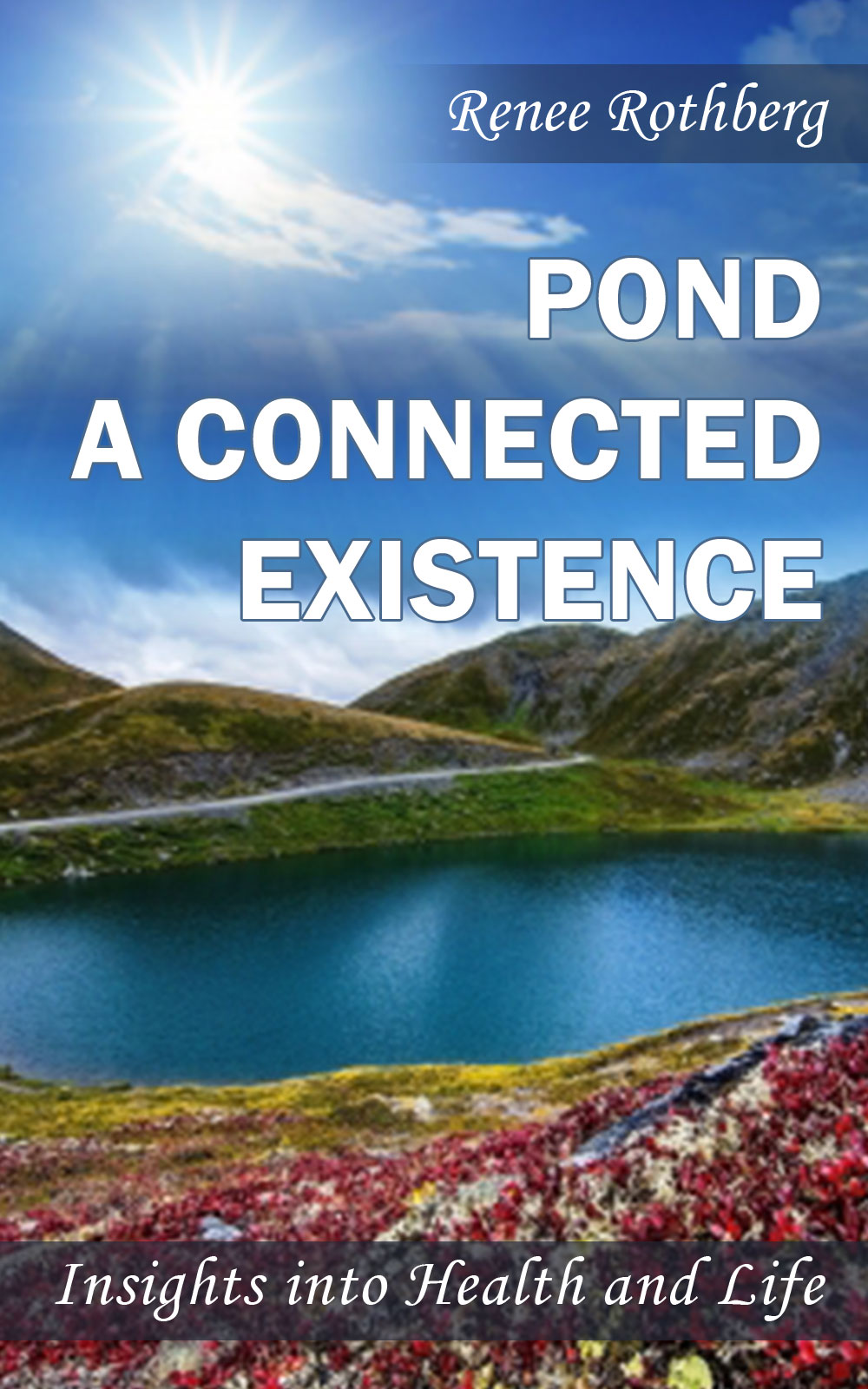
Cover for Pond a Connected ExistenceMy second book, Pond a Connected Existence, is published on amazon.com! In honor of wisdom presented in the book, here are a few quotes:

From the chapter “Behavior & Release”:

“…Sleep is an integral portion of the composition that is human life. Sleep and life intertwine. Life cannot be sustained without sleep. A healthy life requires healthy sleep. Too little sleep can cause accidents, illness, and shrinkage. Sleep that is sufficient leads to expansion, good health, less whining, productivity, and a more positive outlook. Some people view sleep as a nuisance; some people view it as a disturbance. Sleep can be a dreaded event when people see it as a time for tossing and turning or disturbing dreams or insomniatic existence…. Each person should understand his or her sleep requirements and be mindful to fulfill them.”

From the chapter “Determining Activity Value”:

“…People fill their limited time with unimportant and un-elevating wispy-fluff. They don’t realize the effects of empty and valueless time wasters. They think their choices have value, interesting dimensions, and resulting effects. Most often their choices have deficiency, narrow borders, and insignificant effects.

Wispy-fluff. Vanity of vanities. Empty undertakings.

Truly there are ways to live, ways to choose, ways to show love, ways to show affection, ways to transmit rules and requirements, and ways to interact with the environment. One simply has to decide to live in a sustaining and non-damaging manner. The choice is available to all.”

From the chapter  “Intrigue”:

“…People like and respond to distractions, rumors, and intrigue. They respond to knowing that others have it worse, that others need help, that others are suffering. They are comforted when others suffer as they do or at least have felt the suffering. But should others have it better or easier or with less struggle, the emotions change. Comfort turns to envy; wishes for well-being (for the other) turn into wishes for struggle. The more the inequality, the more discontent and jealousy and desire for others’ failure exist in the air. Permeating the atmosphere at social events, at work, at school. Seeping into conversations and into dreams. Disturbing sleep and disturbing digestion. Causing arguments or disgruntlement or dissatisfaction.….

… Refraining from participation in rumor-spreading and information-passing is sustaining. Not an easy thing to do; therefore, its value is high. To be balanced is to know how much to say, how much to keep back, and how much to say kindly”

How important is water?

Post 71-water

Water is the most important life-sustaining substance that we put in our bodies. That information is well known. What isn’t clear is whether the timing of drinking water is important. I recently received a forwarded email about this subject, and some of the claims seemed untrue to me so I asked my Source if there is general wisdom about when to drink water (drinking water during sports and physical exertion is not being presented). Here is the information I received:

  • A glass of water soon after waking is important for renewed activity in the body.
  • A glass of water before a meal helps the body digest the food.
  • A glass of water 15-20 minutes before sex helps with the proper functioning of the body.
  • A glass of water before doing homework can be helpful, especially when children have trouble settling down to study.
  • A glass of water during intense thinking (work, studies, creative endeavors, etc.) can help continue the progress.
  • A glass of water when a sudden onset of sadness or grief occurs can help lift the mood.
  • A glass of water when feeling a bit sleepy can help revive the body when sleep is not possible. (Keep in mind that it does not help if the person is very tired.)
  • A glass of water during spiritual activity can increase concentration.

What does frustration feel like?

Frustration
in my
Amazing
Life is
Leading
Purpose wrong

Post 70-Frustration

Purpose wrong
Leading
Life is
Amazing
in my
Frustration

Frustration—in my amazing life is leading, purpose wrong.
Purpose wrong leading? Life is amazing in my…frustration.

Frustration, in my amazing life the frustration I feel is leading me towards a purpose that is wrong. This purpose is wrong because the way it is leading is to a life that is not amazing, and in my frustration, I am agitated.

The message

When feeling frustrated, remembering that life is amazing is not enough. The best antidote to frustration is making something:

  • Making a comforting food that is also nutritious
  • Making another person happy
  • Making a trip to a beautiful landscape
  • Making a phone call to a person who lifts your spirits

Making something and not not just fretting is the way to elevating the spirit when the spirit is unclear.

When we set our alarm clock…

Post 69-People

“Certainty. We all want certainty. And sometimes we get it. When we prepare for things, we often get the desired outcome. When we measure and work in an exacting manner, our cakes taste right, they look beautiful, they make the eaters happy. When we wash our hands, they are clean. When we allow enough time, we (usually) arrive at our destination on time. When we set our alarm clock, we wake up on time—usually. When we build buildings with strong foundations, they keep us secure—except in times of war or destructive natural disasters.

-from the chapter “Certainty Relatively” in The Gift of Intuitive, Dedicated Comfort

When we set our alarm clock, the chance of waking up at the time we chose is somewhat guaranteed. When we plan our day, the chance of getting our chores/job/errands/extras done has increased. When we think about the family members we should reach out to, we sometimes reach out. When we remember that we should call a loved one, we occasionally call. When we consider the importance of connecting with a sibling or other close relative, we know it’s important, but we might or might not make the time for the connection. And so it goes.

Life is busy and if we don’t plan ahead, important things can get forgotten.

Compassion

Blog 66-CompassionSome people say that people are not compassionate by nature. That is not true. People are compassionate; compassion is part of the design. Women and men, in varying degrees depending on their hormonal make-up, are compassionate.

Compassion can be displayed in the ways in which people interact with one another, with animals, with inanimate objects (such as knick knacks and clothing), and with gems. In general, compassion should be shown towards living and breathing creatures; the compassion towards the nonliving items is compassion misplaced.

When a person confuses the recipient of compassion—the nonliving item in place of the living creature—something has occurred in that person’s life that upset the natural order for compassion. People are meant to feel compassion for other people, and not feeling compassion is the incorrect response. No! Compassion is kindness presented internally which stimulates warm and caring feelings for the people, animals, and nature in one’s surroundings.

To truly feel compassion for another person, one simply has to live the design.

Thoughts about people

Hearts

When we think about others, our thinking is colored by what we think about them. In other words, how we feel about them and how we feel they affect us, affects how we assess them. Also, our thinking about ourselves affects our thinking about others.

If someone has been kind to us, our opinion of this person could be kind in turn, or not, depending on if we think we deserved the kindness. If our opinion is that we didn’t deserve the kindness (because we know that we were neglectful, distracted, or undeserving), then we may consider this person to be foolish or lacking in deservedness as well. Our opinion will be negative rather than positive, when positive would have been the balanced thinking. The more we are balanced in our thinking about ourselves, the more we can evaluate others clearly and with objectivity.

How we see ourselves is how we see others. We must aim to be self-kind and self-forgiving and self-loving.

More to come on this topic…

When a young person dies

Post 62-death

Yesterday, I learned that the unthinkable happened. A young woman on a hiking/adventure holiday died. She and one of my sons were in high school together, and I know her and her mother. The funeral will take place when her body arrives back home.

I have written about death a few times in my books, and I turn to them and to Spiritual Presence to find understanding and comfort.

From the Gift of Intuitive, Dedicated Comfort:

“Each day brings an opportunity to move up or down, to build or waste, and to affect or be affected.”

The message: this young woman was a person who involved herself in life. Not only in her travels, but in her relationships and in her community.

From Pond a Connected Existence:

“The moments accumulate and produce the picture that is one’s life.”

The message: She spent her moments in uplifting and sustaining activities. The picture that is her life is one filled with vibrant colors and multiple dimensions. (See my earlier post “Finding one’s way” that explains life pictures.)

“An event occurs that requires action. The timing of the event influences possible actions. The action(s) taken are influenced by capabilities, preparation, presence of resources, and decisions. Overall attitude pervades the process. Many parts for an outcome.”

The message: Whatever happened, happened because of her capabilities, preparation, presence of resources, decisions, and attitude. And timing. “Many parts for an outcome.”

From the chapter “Concrete Living” in Oneself-Living:

“Natural death is painful for the survivors, but because it is “natural” is easier to accept. Deaths through accidents, disasters (natural or not), struggles such as wars and territorial conflicts, or other human-handed causes are harder to digest. These deaths cause more lingering effects…

Movement is always linear, from start to finish… The body is born, lives, and dies…

Concrete living: living with gusto and with verve, with awareness of an ending and with awareness of possibility, with thankfulness and with generosity. “

The message: Those left behind, the ones who remember and despair, must be comforted and supported. They must be allowed to mourn and feel overwhelming sadness. The comforters must be patient and open to the mourners’ grief. Slowly, as time passes, the mourners will be pulled back into the world of living, because that is the natural flow of life. Death is the natural ending to life. It can be the end and it can be the catalyst for living with gusto and verve, opportunity and hope, and purpose and determination.


Living = valuable

Once upon a time, there was a man who had a rubber band that he used in his everyday life. Sometimes he used it to keep things together, sometimes he used it to separate things, and sometimes he used it when he was bored. He had one rubber band, and he took care of it because it was valuable to him.

One day, he was distracted and the rubber band fell. He searched and searched, but could not find it. His determination to find it lessened, and he gave up. He realized that the value of the rubber band was not only its usefulness, but also his attachment to it. He realized that the rubber band would no longer be in his life and he changed his outlook about it. The rubber band was once his to use, and now he had to move on.

The man found a new rubber band that was the same color, but not the same elasticity. He used it less, and found other implements to help him with separating and joining things. He used several different implements and became attached to none of them.

The daily doings for this man did not change. He simply changed his methods. The rubber band, the second rubber band, and the other implements were simply ways to help him.

The message: When one thing fulfills many needs, its importance is exaggerated. All things are limited in their usefulness and in their ability to satisfy requisites. When things are expected to fulfill more than their normal capabilities, people are expecting too much. Things are simply the tools/entertainment/aids to a life that is assisted. More than things, people require interaction with people, animals, and plants. Things are not equal to living entities, and things should never be valued higher than people or animals or even plants.

Finding one’s way

Post 60-finding ones way

Above you see the average life path. Below you see what the desired route should be:

Post 60-finding ones way2

Full of trials and successes and attempts and experiences.

And if the life is short, the route can be:

Post 60-finding ones way3

Short, but meaningful.

And what about a long life that is purposeful, balanced, and connected? This life’s picture would be:

Post 60-finding ones way4

“…Moment after moment after moment. The moments accumulate and produce the picture that is one’s life. Enriching moments are vibrantly colored; valueless moments are dull and unexceptional.

Fullness and not. Life can be full—or not. The picture that is one’s life has dimensions: smooth in places that are enriched, jagged in places that are unbecoming, two-dimensional in places where a choice was not made. The form of the picture can be SO large, one simply has to choose to be giving and engaged and willing to participate in a well-lived life. Life that is experienced through true living lights the way for others.”

…from the chapter “Moment” in Pond a Connected Existence.

Deadlines

Post 59-focus

When a deadline is looming, people respond in many, many ways. Each person has a way of coping or approaching or ignoring or using the deadline to achieve/fail. Some people aim for success; some people aim for failure. Yes, both are aims and both are normal reactions depending on each person’s attitude, history, and current bodily balance or imbalance.

This post is being presented to those who aim for success. (I bet you thought it would be the other aim.)

Aiming for success is usually a positive aspiration. Success in one’s endeavors is considered to be the goal that should be reached. Success. What is success? The dictionary says that success means the attainment of wealth, honors, position, etc. In society, wealth, the receipt of awards, CEOs, elected leaders, and celebrity are the coveted (eagerly wished for) ideals.

Let’s look at success in life. What are successful life goals?

  • Maintaining good family relationships—not always easy, but worth making a goal.
  • Maintaining community—very important and worth the investment.
  • Maintaining a healthy outlook about oneself—influences all the other goals and is vital for reaching the goals with health and self-esteem unharmed.
  • Maintaining work requirements—delivering (a performance or a report), showing up when expected, influencing others or work conditions,  performing duties properly and with concern (no matter the type of work), providing the needed skills (relearning or staying current as needed), and focusing when focus is required.
  • Maintaining a relationship with the environment and the creatures that inhabit the planet. “Creatures” include animals and people.

Success is large and small. Large and small successes. Public and private successes. Often, the small and private successes are the most important.

Getting back to deadlines—each person determines the approach that works or doesn’t work. Remembering to attend to all of the life goals should help keep focus and lessen wasteful fretting and wasteful actions.

Feelings of non-movement

Post 58-stuck

Stuck stuck stuck stuck. Feeling stuck. Feeling that movement is hindered. By me? Perhaps. By others? Not sure. Am I at fault or them?

When life-or relationship-or business-or whatever is not moving as quickly as we’d like, we must not despair (and eat too many cookies or use our go-to despair crutch). At these times, we must breathe more deeply, see the sky more frequently, and think about our achievements.

Breathe to this count: breathe in to a count of 6, hold for a count of 4, breathe out to a count of 5. Breathe this way until relaxation starts to set in.

About the sky—really look at it and appreciates its colors and its movement.

And our achievements—think about little achievements and the larger ones, and then do the relaxation breathing again.

Life won’t go the way we want it most of the time, and we have to realize that fact and keep going.

Sense of touch

Post 57-sense of touch

  • Prickly
  • Intensity
  • Weight
  • Solidity
  • Temperature
  • Emotion
  • Wholesomeness (as related to food that is not processed)
  • Weightlessness
  • Vibrations
  • Movement

In my book, Pond a Connected Existence, there is a list of the top ten things that the average human requires. The tenth requirement is stimulation of the senses. Textures provide information about safety and enjoyment. About creativity and destruction. About power and sustenance. About self-awareness and well-being. Safety. Enjoyment. Creativity. Destruction. Power. Sustenance. Self-awareness. Well-being. S . E. C. D. P. S. S. W. Soul ever circling during purposeful sincere spiritual wonder.

Touch is very much a part of living. Touching a loved one is much needed balancing. If a loved one is unavailable, then touching an animal. If an animal is unavailable, then touching a part of nature—a flower, a blade of grass, a stone, etc. Coming into contact with something real, something containing the radiance of spiritual presence.

Touch can bring great joy when it is given kindly. Kindness is necessary for touch to be received wantingly. This requirement applies to women and men, differently but with the same importance.

Touch. With warmth, generosity, feeling, purpose, and kindness. Soulfully.

Spiritual Presence

Post 56-spiritual presence

Spiritual Presence was once a normal consideration in a person’s life. When people were more connected to nature, they naturally felt a connection beyond. In today’s world, our disconnect from nature has disconnected us from the natural connection to Spiritual Presence.

Here is information about Spiritual Presence from the chapter “How to Connect to Spiritual Presence” in my book, Pond a Connected Existence:

“The awareness [of connection to Spiritual Presence] is felt in many ways: intuition, gut feelings, sense of security or buttress or admonishment, hearing a voice or a whisper or a sense of a voice, vibrations throughout the body, flashes of knowing or of understanding, …, constant feeling of clear direction, flash of inspiration or clarity, signals of peace…

And from the chapter “Connections” in my book, The Gift of Intuitive, Dedicated Comfort:

“Spiritual presence is actually much easier to ascertain than many people believe. By observing nature, the actions of babies, the movement of the seasons, the shenanigans of animals, the idiosyncrasies of the opposite sex, and the idiosyncrasies of one’s own sex, a person can be filled with amazement at the complexity and richness of the world. This amazement should inspire reaching for connectedness to the energy from the true source of healing.”

Spiritual Presence is available to all, when the populace let themselves be open.

Striving revisted, twice

Again, I am compelled to repost the Striving post. The reason will become apparent at the end.

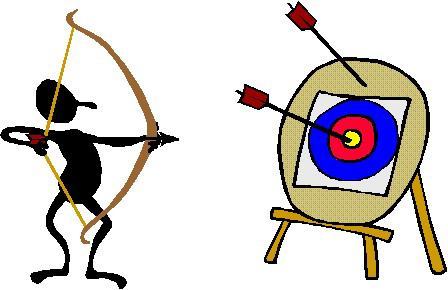
Post 26 archer

  • Striving to improve
  • Striving to move
  • Striving to win
  • Striving to begin

So many things to strive for. People tend to strive for things that are either just out of their reach or for things that come too easily.

When a goal is reached with little effort, it may have been a goal that should have been expanded. Striving is important. It keeps people interested, working, and committed. Striving usually involves physical, emotional and intellectual efforts, and sometimes spiritual effort as well. Too easy can dull the capacity to reason and opine.

Striving for just beyond is generally the better effort. Working towards, moving, struggling. These actions build character and personality. And sometimes strength and resilience.

When a goal is reached, it should be recognized and appreciated. It should not be ignored nor made light of. On the other hand, it should not become one’s existence.

——————————————

This season is the time for making resolutions and promises to oneself and to others. Striving to improve is a valuable goal; however, improving superficial things such as one’s figure is not a valuable goal.  Learning to eat in order to properly nourish one’s body is a valuable goal. Striving to move can be valuable to almost all in modern society. People are meant to move. It is one of the body’s most important needs (after water, sleep, food, and protection from the elements). Striving to win refers to being in a mind frame of success. Success in being a kind person, success in relationships, success with one’s creative endeavors, success at controlling the pull of distracting time wasters. Striving to begin is the big one. Easy to make resolutions, hard to really begin. The first step is actually not hard when the goals are worthwhile.

Striving to be a better person is worth the effort. Making the resolutions and keeping them is purposeful living.

Wishing you success in your efforts to strive!