A Balanced Approach to Wellness!

Posts tagged ‘Health’

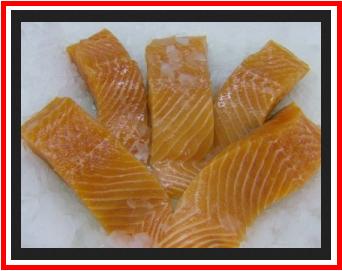
To eat farmed salmon or not?

Post 100-salmon

Recently an article was posted about eating farmed salmon vs. eating wild salmon. The author gave numerous reasons why not to eat the farmed salmon, but gave no reasons why not to eat the wild salmon.

I’m not going to cite all the reasons for eating this one vs. that one. What I am going to post is the wisdom from Spiritual Presence about eating salmon.

Salmon—to eat or not to eat

Salmon is a nutritious food and can be eaten no more than once a week. There is no difference between eating the wild salmon or the farmed salmon. The impact on nature from eating salmon more than once a week is too great. Remember—no more than once a week.

Food issues

Post 100-foods

There are so many things to know about foods. From this point on, I’ll be writing information about foods and beverages.

If there is a particular food or beverage you have questions about, add a comment to this post or send me an email through the Contact page.

Vitality revisited

Vitality

The feeling of life in one’s body is an extraordinary feeling. Noticing the feeling of being alive, of being awake, of being vital. Amazing! Yet taken for granted and not appreciated. Too many people focus on pain or discomfort or hurt feelings. Those things exist, but they are minor in comparison to the body’s vitality!

Vitality! This word should always be written in color and in bold—and with an exclamation point! So that people will read it with energy and with desire. Desire to feel the strength of the word deep within the core of one’s being.

V-i-t-a-l-i-t-y! Feel its pull and its launch. Living life in a rich sense of being. Living life with gusto and with verve. Living life with emotion—feeling the fullness of each moment as it passes into the past.

When the blues hit or the bones creak, they take the focus and move miraculous existence to second best. Keep in mind that emotional ebbs and physical challenges are just parts of living—but they are not the main elements. They steal attention from the important aspects of life, and people must be vigilant to not become too immersed in the difficult and unhappy moments.  Health is so multi-faceted that its wonder is often overlooked. Appreciating the wonder of health is imperative to living with vitality!

One more factor in attention deficit creation

Post 85-one more factor

Babies who are born healthy have the ability to observe and learn as they grow. Once they are socialized, their abilities to observe and learn have been set. Not set in stone, set in motion. The type of motion is the determining factor in learning inability. If the motion is too indulgent, pressured or inconsistent, then negative opinions of self and one’s abilities to focus and absorb are formed. If the motion is accepting, engendering of feelings of responsibility and consistent, then abilities are appreciated and worked. In either case, the ability to learn is there, but the perception of it is altered—positively or negatively.

Of the negative forces, indulgence has become a determining manipulator of people’s ability to work diligently, attempt new tasks and manage disagreeable ones, practice, and maintain a supportive attitude. Indulgence does not require wealth; it requires a caregiver who does not accept that sadness, difficulty, and frustration are normal parts of development. Indulgence leads to requiring immediate gratification and/or feelings of lack. When “attention deficit” is suspected, indulgence must be examined. It is reversible!

Of the positive forces, engendering feelings of responsibility is very important. Children must feel that their contributions are needed. Each small task that a child does in his or her home builds confidence and focus. People want to feel necessary and challenged—these are design features!

More to come…Please share this information with people who question the status quo of dealing with attention deficit issues.

Refuse to be labeled!

Post 83-Refuse labels

Refuse to be labeled!

Refuse to be called deficient!

Refuse to accept mediocrity in yourself!

Refuse to let others think of you as deficient or different!

Refuse to be less than you really are!

These instructions are for people who have been labeled with ADD or ADHD. The labeling applies to very few people, and even then, the labeling is inaccurate. The overuse of these labels is destructive. For people and for society. An epidemic is occurring in which perfectly normal people are turning into people with deficiencies, and who then must be treated. Perfectly normal includes people who have trouble sitting still. Perfectly normal includes people who must take breaks when doing prolonged activities that bore them. Perfectly normal includes people whose conversations jump from topic to topic-tangential conversations are normal. This list of perfectly normal can go on and on. Perfectly normal covers most “imperfections” in people.

Problems caused by genetic or birth defects (such as defects that result from alcohol or drug use by pregnant women), accidents, diseases, and such are different. The resulting people are different and require special attention—usually more exposure to nature and kindness.

Everyone struggles with something. That is the nature of existing.

More to come…Please share this information with people who question the status quo of dealing with attention deficit issues.

Attention deficits are societal deficits

Post 80-Attention

So many interventions are being forced on people these days for attention deficit issues. Symptoms are being treated, but not the causes. The next few posts on my blog will deal with the causes of attention deficit. If you find this outlook interesting, please forward the posts to other like-minded people.

We’ll start with a quote from Oneself—Living (soon to be published):

“Modern living requires focus on activities that can be dull, rote, repetitive, and constraining. Modern schools, work places, institutions, and organizations require participation in dull, rote, repetitive, and constraining tasks and situations. People were designed for tasks and situations that are ever-changing. Tasks that demand constant focus and lengthy concentration tax the natural nature of humans. Distractions, tempest, whirl, and hurly-burly—those are the situations people respond to…

People—are—designed—for—doing some of this, doing some of that, moving here, then moving there, short bouts of focus, studied execution of required tasks and chosen pursuits—and then sleep to recharge, repair, and function. People cannot hear and digest information delivered perfunctorily nor handle verbal assault nor accept displays of unimaginative and unmeant praise nor decipher dull and sterilized writing nor participate in uninspired presentations nor stay still for too long nor perform religious requirements without proper guidance and inspiration. Doing these things result in attention distraction, anger or enhanced criticism, dulled emotions and responses, and opposition against more than the cause of the opposition…

The creation of societies that reward unnatural behaviors and occupations and punish normal human behavior punish themselves. People force and repress and mold themselves to function within the constraints of the modern societies. They think they are superior when they manage to overcome their natural inclinations for movement and physical expression. People do manage to adjust to their polygonal existences, but their bodies and spirits bear the brunt of the altered requirements…

Assuming that a person has a deficit because he or she cannot stay still or cannot focus on a dull and uninspiring topic reflects badly on society. There are people born with deficits or who acquire deficits through accident or illness, but perceived deficits of people who are unable to force themselves to live within uncompromising regulations are not deficits—they are expressions of frustration or unreleased energy or laziness or despair.”

Tomorrow’s post: Healing attention issues through nature

Whenever boredom exists

Post 79-boredom

Boredom is a result of feelings of entitlement and sadness. A person who feels that he or she deserves to be entertained or to be treated “royally” does not make effort to create amusements or goals for himself or herself. A person, who for whatever reasons feels sadness and is unable to direct his or her reality (entertainment options or pastimes), may call the situation boredom for a lack of understanding of the true cause.

Whether the cause is entitlement or sadness, the resulting boredom adds to the person’s lack of bodily balance (physically, emotionally, intellectually, and spiritually).

Boredome leads to:

  • Reliant reality (reliance on others for things within one’s own realm)
  • Avoidance of handling the true issues
  • Improper behavior
  • Missed opportunities
  • Blame of others
  • Poor performance

What to do when you feel bored

  1. Examine your current reality for entitlement or sadness issues and address them.
  2. You probably need more movement in your life. Walk, dance, swim, bike, juggle—whatever activity lifts your spirits.
  3. You probably need more purpose in your life. Investigate volunteer opportunities in your area and volunteer.
  4. Strive!

When sadness hits

Post 78-Sadness

Sometimes terrible things happen to people. Sometimes young people have serious illnesses that disfigure or damage them. Or weaken them so they die too young. Sometimes natural disasters befall people and they are left homeless, hurt, or confused.  Or orphaned. Sometimes people hurt other people—intentionally or not—so that trauma or death results. Sometimes people damage themselves—intentionally or not.

In all these cases, the survivors and caregivers are required to continue on and live. Not an easy task. Caregivers suffer daily, both physically and emotionally. Survivors suffer too, although differently and in varying degrees of despair, guilt, and shock. Both are in need of support, kindness, and openness to their pain. In other words, a survivor or caregiver needs a quiet  audience (meaning the listeners are quiet) for them to bare their sadness. If the audience is not quiet, the sadness might not dissipate. Quiet and constancy are the qualities of people who are helpful to those who need to give way to the effects of their sadness.

When sadness hits because of the natural order of life (a parent dies in old age), the survivors also require the same quiet and constancy. Sadness is sadness no matter the cause, although extra understanding should be given to the survivors of tragedies.

The person who has suffered the trauma (but not death) needs even more constancy and support. This person must eventually release the hold of the trauma. As described in the book Oneself-Living (soon to be released):

“Negative remembrances require determination and desire to purge them. Negative remembrances that are traumatic are often too difficult to release with-out continuous and relegate-to-a-less-prominent-place focus. Although traumatic events damage the connection to self and the sense of security, a person can remove the vicious side of a trauma so that a normal life can be led. Leading a normal life means focusing on the tasks that are done each day to sustain life: intake of food and water, sleep, interaction with others, and appreciation of the natural environment. Holding on to the tainted memory(ies), or holding back because of self-manufactured fear, prevents purging of the trauma of the event. The trauma must be released.”

Sometimes, terrible things happen to people. Terrible things also happen to the animals that inhabit the Earth. Terrible things happen. Can something be done? Towards the animals, much can be done. Towards people, less can be done. Towards animals, much painful treatment are day-to-day practices that people do to animals for food, clothing, and decorative items. Becoming aware of what is done to animals is the right thing to do. In general, people have less control over the tragedies that happen to people. Nonetheless, awareness of wrongful treatment of people should bring action from people who can affect change.

Sadness is sadness, no matter the cause. Releasing sadness can be done—with patience, with kindness, and with readiness.

Loving oneself—it can be done

Post 76-loving oneself

Loving oneself can occur and does occur when the awareness of its importance is brought to light. In the book, Pond a Connected Existence, the ten most important things that the average human requires are listed in the order of their importance. Self-love is number 8!

Self-love is not simple to achieve, especially for those who grow up in societies that do not value its importance. Nonetheless, people must strive to love themselves so that they can move on and love others.

What is self-love? It is described in the book Oneself-Living (soon to be published):

“Self-love, like [deep love of others], has six requirements: #1 obligation #2 appreciation #3 attraction #4 devotion. #5 flow #6 admiration

1  obligation to assist, support, and be available physically
2  appreciation of assistance, support, and character
3  attraction to inner and outer
4  held in close consideration at all times (devotion)
5  openness to surprise, acknowledgment of mortality, accommodation of cultures, and thoughtfulness
6  admiration for kindnesses, assistance, and acceptances done for others and for self”

The requirements of self-love

  1. obligation to assist, support, and be available physically: assist and support oneself when feeling unable to achieve goals or daily tasks and care for one’s physicality so that the body can be able to provide support for one’s tasks and goals.
  2. appreciation of assistance, support, and character: be able to see one’s assistance and support for oneself and be able to appreciate the variation of character traits (and not focus on negative traits).
  3. attraction to inner and outer: feel a sense of pull towards one’s physical appearance and one’s character traits. Especially for women, this requirement is important when the advertising and entertainment industries push unrealistic beauty indexes.
  4. held in close consideration at all times (devotion): remember to include one’s own needs when living life (not put other people’s needs first). Even a mother has to put her needs above her baby’s needs if she is going to tend to the baby properly. This requirement is not easy because it can be confused with being selfish, which it is not.
  5. openness to surprise, acknowledgment of mortality, accommodation of cultures, and thoughtfulness: all of these requirements are connected because they all require consideration of life’s realities.
  6. admiration for kindnesses, assistance, and acceptances done for others and for self: notice what one does for others (being kind, providing assistance, giving way when others’ needs require it) and applaud oneself for caring for personal needs and dreams.

Self-love is the basis for balanced living. Without it, one is always askew no matter how well one eats or exercises or volunteers.

“When we …are able to heal ourselves then only are we ready to help others.” by Ann Wigmore in the Naturama living textbook.

Practical advice

Post 72-practical adviceOne of my blog followers thanked me for the practical advice I provided in yesterday’s post (about when to drink water). Her comment led me to look through my blog and see how much practical advice I provide. Not as much as I had thought! I have mainly provided wisdom about many topics that we all deal with without presenting a how-to. Would y’all like more practical advice? Let me know.

Here is a list of practical advice that has been presented through my blog since I began writing it in September:

1. If you have experienced a minor trauma, do the following steps:

  • Notice the physical state of your body.
  • Breathe normally (breaths don’t have to be deep, but should not be quick).
  • Think about how things turned out more-or-less okay.
  • Do movements, like a little victory dance, which will release the bodily tension.

from “Overcoming small traumas”

2.  To connect to your environment:

  • Consider the available channels for community service in your area and select one that is doable for you. Then examine your time wasters and select one or two that can be replaced by the community service. Then make it happen!

from “Connections are the means–connection to one’s environment, post 3 of 7”

3.  To connect to creatures:

  • Caring for pets, supporting humane zoos, supporting centers for animal care, abstaining from using animals for decorative objects, and supporting animal habitats in the wild are important ways for humans to fulfill their obligations to other creatures.

from “Connections are the means–connection to other creatures, post 5 of 7”

4.  When feeling hesitant to take an action or make a decision notice three things:

  • Does the action or decision make you feel fearful, worried, or unqualified to act/decide?
  • Does the action or decision cause your intuition to signal a strong response–positive or negative?
  • Does the action or decision require you to be more active than you normally would? If so, are you hesitating out of laziness or inertia?
  • Once these questions are addressed, a decision should be easier to make and an action should be easier to take.

from “Hesitation”

5.  To maintain the “glow” during Christmas time:

  • Be sure to schedule time to experience the beauty and rhythm of this very special time.

from “Christmas doings”

6.  To deal with clutter:

  • …Declutter one significant area, then observe this area and be proud and kind to yourself. Declutter a second significant area, then observe this area and be proud and kind to yourself. Continue in this fashion until you have decluttered the areas that deserve to be uplifting.

from “Clutter”

7.  To handle too-controlling people:

  • You can release them from your life if they are not family members.
  • If they are family members who do not really need your company, you can limit your time with them.
  • You can breathe in this rhythm when he or she starts to tantrum: breathe in to a count of 5, breathe out to a count of 4—until the person requires a response. The breathing and counting should help you lessen the tantrum’s effect on your body and will help you tune out the unpleasant words…

from “I want my way”

8.  To add more touch to your life:

  • Touching a loved one is much needed balancing. If a loved one is unavailable, then touching an animal. If an animal is unavailable, then touching a part of nature—a flower, a blade of grass, a stone, etc.

from “Sense of touch”

9.  When feeling stuck:

  • Breathe to this count: breathe in to a count of 6, hold for a count of 4, breathe out to a count of 5. Breathe this way until relaxation starts to set in.
  • …look at [the sky] and appreciates its colors and its movement.
  • …think about little achievements and the larger ones, and then do the relaxation breathing again.

from “Feelings of non-movement”

10.  When feeling frustrated, the best antidote is making something:

  • Making a comforting food that is also nutritious
  • Making another person happy
  • Making a trip to a beautiful landscape
  • Making a phone call to a person who lifts your spirits

from “What does frustration feel like”

How important is water?

Post 71-water

Water is the most important life-sustaining substance that we put in our bodies. That information is well known. What isn’t clear is whether the timing of drinking water is important. I recently received a forwarded email about this subject, and some of the claims seemed untrue to me so I asked my Source if there is general wisdom about when to drink water (drinking water during sports and physical exertion is not being presented). Here is the information I received:

  • A glass of water soon after waking is important for renewed activity in the body.
  • A glass of water before a meal helps the body digest the food.
  • A glass of water 15-20 minutes before sex helps with the proper functioning of the body.
  • A glass of water before doing homework can be helpful, especially when children have trouble settling down to study.
  • A glass of water during intense thinking (work, studies, creative endeavors, etc.) can help continue the progress.
  • A glass of water when a sudden onset of sadness or grief occurs can help lift the mood.
  • A glass of water when feeling a bit sleepy can help revive the body when sleep is not possible. (Keep in mind that it does not help if the person is very tired.)
  • A glass of water during spiritual activity can increase concentration.

Compassion

Blog 66-CompassionSome people say that people are not compassionate by nature. That is not true. People are compassionate; compassion is part of the design. Women and men, in varying degrees depending on their hormonal make-up, are compassionate.

Compassion can be displayed in the ways in which people interact with one another, with animals, with inanimate objects (such as knick knacks and clothing), and with gems. In general, compassion should be shown towards living and breathing creatures; the compassion towards the nonliving items is compassion misplaced.

When a person confuses the recipient of compassion—the nonliving item in place of the living creature—something has occurred in that person’s life that upset the natural order for compassion. People are meant to feel compassion for other people, and not feeling compassion is the incorrect response. No! Compassion is kindness presented internally which stimulates warm and caring feelings for the people, animals, and nature in one’s surroundings.

To truly feel compassion for another person, one simply has to live the design.

Finding one’s way

Post 60-finding ones way

Above you see the average life path. Below you see what the desired route should be:

Post 60-finding ones way2

Full of trials and successes and attempts and experiences.

And if the life is short, the route can be:

Post 60-finding ones way3

Short, but meaningful.

And what about a long life that is purposeful, balanced, and connected? This life’s picture would be:

Post 60-finding ones way4

“…Moment after moment after moment. The moments accumulate and produce the picture that is one’s life. Enriching moments are vibrantly colored; valueless moments are dull and unexceptional.

Fullness and not. Life can be full—or not. The picture that is one’s life has dimensions: smooth in places that are enriched, jagged in places that are unbecoming, two-dimensional in places where a choice was not made. The form of the picture can be SO large, one simply has to choose to be giving and engaged and willing to participate in a well-lived life. Life that is experienced through true living lights the way for others.”

…from the chapter “Moment” in Pond a Connected Existence.

Deadlines

Post 59-focus

When a deadline is looming, people respond in many, many ways. Each person has a way of coping or approaching or ignoring or using the deadline to achieve/fail. Some people aim for success; some people aim for failure. Yes, both are aims and both are normal reactions depending on each person’s attitude, history, and current bodily balance or imbalance.

This post is being presented to those who aim for success. (I bet you thought it would be the other aim.)

Aiming for success is usually a positive aspiration. Success in one’s endeavors is considered to be the goal that should be reached. Success. What is success? The dictionary says that success means the attainment of wealth, honors, position, etc. In society, wealth, the receipt of awards, CEOs, elected leaders, and celebrity are the coveted (eagerly wished for) ideals.

Let’s look at success in life. What are successful life goals?

  • Maintaining good family relationships—not always easy, but worth making a goal.
  • Maintaining community—very important and worth the investment.
  • Maintaining a healthy outlook about oneself—influences all the other goals and is vital for reaching the goals with health and self-esteem unharmed.
  • Maintaining work requirements—delivering (a performance or a report), showing up when expected, influencing others or work conditions,  performing duties properly and with concern (no matter the type of work), providing the needed skills (relearning or staying current as needed), and focusing when focus is required.
  • Maintaining a relationship with the environment and the creatures that inhabit the planet. “Creatures” include animals and people.

Success is large and small. Large and small successes. Public and private successes. Often, the small and private successes are the most important.

Getting back to deadlines—each person determines the approach that works or doesn’t work. Remembering to attend to all of the life goals should help keep focus and lessen wasteful fretting and wasteful actions.

Feelings of non-movement

Post 58-stuck

Stuck stuck stuck stuck. Feeling stuck. Feeling that movement is hindered. By me? Perhaps. By others? Not sure. Am I at fault or them?

When life-or relationship-or business-or whatever is not moving as quickly as we’d like, we must not despair (and eat too many cookies or use our go-to despair crutch). At these times, we must breathe more deeply, see the sky more frequently, and think about our achievements.

Breathe to this count: breathe in to a count of 6, hold for a count of 4, breathe out to a count of 5. Breathe this way until relaxation starts to set in.

About the sky—really look at it and appreciates its colors and its movement.

And our achievements—think about little achievements and the larger ones, and then do the relaxation breathing again.

Life won’t go the way we want it most of the time, and we have to realize that fact and keep going.

Sense of touch

Post 57-sense of touch

  • Prickly
  • Intensity
  • Weight
  • Solidity
  • Temperature
  • Emotion
  • Wholesomeness (as related to food that is not processed)
  • Weightlessness
  • Vibrations
  • Movement

In my book, Pond a Connected Existence, there is a list of the top ten things that the average human requires. The tenth requirement is stimulation of the senses. Textures provide information about safety and enjoyment. About creativity and destruction. About power and sustenance. About self-awareness and well-being. Safety. Enjoyment. Creativity. Destruction. Power. Sustenance. Self-awareness. Well-being. S . E. C. D. P. S. S. W. Soul ever circling during purposeful sincere spiritual wonder.

Touch is very much a part of living. Touching a loved one is much needed balancing. If a loved one is unavailable, then touching an animal. If an animal is unavailable, then touching a part of nature—a flower, a blade of grass, a stone, etc. Coming into contact with something real, something containing the radiance of spiritual presence.

Touch can bring great joy when it is given kindly. Kindness is necessary for touch to be received wantingly. This requirement applies to women and men, differently but with the same importance.

Touch. With warmth, generosity, feeling, purpose, and kindness. Soulfully.

The grandest energy with ever-changing possibilities

Vitality

Vitality! This word should always be written in color and in bold—and with an exclamation point! So that people will read it with energy and with desire. Desire to feel the strength of the word deep within the core of one’s being.

V-i-t-a-l-i-t-y! Feel its pull and its launch. Living life in a rich sense of being. Living life with gusto and with verve. Living life with emotion—feeling the fullness of each moment as it passes into the past.

Vitality! Not agreeing to smallness or boredom or apathy. Embracing the largeness of life, its excitement and its joy (or sorrow). Embracing and feeling the blood flowing in the body and the breath in the lungs.

Vitality! Allowing ourselves to release into the amazement of ourselves!

“Your health is what you make of it. Everything you do and think either adds to the vitality, energy and spirit you possess or takes away from it.”
― Ann WigmoreThe Hippocrates Diet and Health Program

I want my way!

Post 52-my wayI want things my way. My way is best. My way or the highway. My way, not any other way.

Do you know people like that? Controlling types who must have things just the way they like them or a tantrum starts. I’m not talking about young children who naturally tantrum because they are learning the rules of socialization. I’m talking about adults who should have learned to compromise. People who tantrum (yes, it’s a verb here) when they cannot have things the way they want are in need of three things: a turn of focus towards others in serious need, physical expressions of caring (hugs, kisses, and smiles), and training in the art of listening.

You might say that this is easy for me to say, but how do you get the controlpeople  (yes, it’s one word) to do these things?

  1. You can forward this article to them (but they might start tantrumming).
  2. You can release them from your life if they are not family members.
  3. If they are family members who do not really need your company, you can limit your time with them.
  4. You can breathe in this rhythm when he or she starts to tantrum: breathe in to a count of 5, breathe out to a count of 4—until the person requires a response. The breathing and counting should help you lessen the tantrum’s effect on your body and will help you tune out the unpleasant words. When you respond, consider your own needs and say what they are. If the person start’s to tantrum again, try to sing a favorite song in your head until a response is required. Again, say what your needs are; however, before you do, think about how this person is in need of physical expressions of caring and try to feel compassion. Try to respond in a way that is less harmful to yourself; in other words, if the tantrum hurts you, say things that will not induce another tantrum, but without completely giving in. Not easy, but effective.

Controlpeople cannot be controlled, but their effects can be limited when we know our options.

Clutter in my head

Clutter-in the head

The last post was about clutter in one’s abode. Today, the clutter is inside one’s head. Cluttered thoughts about weight or appearance or something negative that someone said or something negative that I said or something I should have done better or something someone else should have done differently or …

The clutter in one’s head is more difficult to handle than the clutter in one’s abode. Years of societal criticism (including from one’s parents and friends) clutter the mind and take over space that should be used for creative thought and supportive thinking.

To unclutter the mind, the first step is to take a step—physically! Stand up, say “I am going to clean the clutter in my head”, and then take a step forward. Now, take another step forward, say “I am the person I am because of others, but also because of myself”, and then shake your whole body—head to feet—shake up everything. Next, take five deep breaths and then say “I can release the junk that is old and unhelpful.”  Finally, think about a tree that grows near where you live and resolve that every time you pass this tree, you will throw off some unnecessary thought that belittles you. When you get to the tree, take a deep breath, let the thought move out from the top of your head to one of the higher branches, and then move on.

Cluttered thinking can be tidied. Each time you release a cluttered thought, allow yourself to consider a positive aspect of yourself. Let this positive aspect take your concentration and really focus on it. Be sure to smile while you do this.

Balance comes from balanced thinking and balanced living. The more one’s thoughts are supportive, the more one’s life can be balanced.

Book #2—on its way!

Post 49-book 2

I have finished proofing the text of book #2, and I’m so excited that I’m writing a blog about this book. Its title is Pond a Connected Existence– Insights into Health and Life. Pond? As in ponder? No, as in “collect into a pond or large puddle”. This is the title I received. If anyone reading my blog has insight into this title, please share.

The topics discussed in this book include:

  • Is there such a thing as luck? Nope.
  • Is there such a thing as ADHD? Hmmm.
  • Are we obligated to pay our taxes? Yep, and to clean up trash in our community.
  • Can chaos in a marriage go away? Yes!

The book contains 13 wisdom essays that join The Gift of Intuitive, Dedicated Comfort in presenting wisdom from beyond us.

I’ll sign off with a quote from Pond a Connected Existence:

“Knowing what to do to keep healthy is basic required knowledge. Knowing what to eat or how much to drink to stay hydrated are the most obvious keys to good health. Understanding the need and frequency of sleep is required as well. Health is not the villain to be battled or feared; health is the means to meaningful living and ultimate satisfaction with one’s life. Health—physical, emotional, intellectual, and spiritual.”

Striving Revisited

For some reason, I am compelled to repost the Striving post. Someone out there has missed it on my blog and needs to read it. So if you think it might be you, read carefully.

Post 26 archer

  • Striving to improve
  • Striving to move
  • Striving to win
  • Striving to begin

So many things to strive for. People tend to strive for things that are either just out of their reach or for things that come too easily.

When a goal is reached with little effort, it may have been a goal that should have been expanded. Striving is important. It keeps people interested, working, and committed. Striving usually involves physical, emotional and intellectual efforts, and sometimes spiritual effort as well. Too easy can dull the capacity to reason and opine.

Striving for just beyond is generally the better effort. Working towards, moving, struggling. These actions build character and personality. And sometimes strength and resilience.

When a goal is reached, it should be recognized and appreciated. It should not be ignored nor made light of. On the other hand, it should not become one’s existence. As it says in Book #2:

“The moment—it’s here and then it’s gone.  However uplifting and fortifying memories may be, they are in the past and can be used in support of future efforts, but must not be one’s current existence. In other words, future actions should be based on current evaluation of the moment, giving minor notice to past achievements but remembering to continue to grow.”

What’s new in this repost: When a person strives for health, but his or her ability to heal is hampered by emotional or spiritual deficits, physical remedies will only help some of the time. To heal fully, the emotional or spiritual causes must be healed. Energy Guidance Complete is a way to understand the underlying causes. There are other methods as well, however be wary of healers who focus on negativity.