A Balanced Approach to Wellness!

Posts tagged ‘self-help’

Life as a page

Blank page

“A blank page. Each person’s life when just starting out is like a blank page. Some pages never get filled. Some pages get filled partially. Some pages are SO full of interactions, questions, adventures, accomplishments, failures, starts, stops, and attempts. Some pages are full of starts, stops and attempts, starts, stops and attempts, starts, stops and attempts. Some pages have tentative actions while others have decisiveness. Some pages contain laughter and joy. Some pages, only sadness and disappointment. Most pages have a bit of this and a bit of that, but they don’t have as much as they should of BALANCE, PURPOSE, and SUBSTANCE.”

From the Introduction to Oneself-Living

Life can be viewed in many ways. Seeing it as a blank page allows for creativity and possibility. Filling the page with color and poetry and formulas and shapes and adventure logs and so much more. Or filling it with lists of “can’ts” over and over. A blank page allows each person to make their life into a personal story that is captivating in its uniqueness.

A blank page is what we get at birth. A life that ends too quickly can still be filled with creativity and possibility if the person fills it so. A life that is long can be empty of creativity and possibility if the person fills it so. The filling of the page is important. The color comes from interaction with others and with Spirit. The poetry comes from moments of connection. The formulas come from learning and striving. The shapes come from self-awareness and self-expression. The adventure logs recount life travels, the good and bad, as life develops.

Filling the page with oneself makes the most sense. Not filling it with what others want, but with what you want. What you want…

Each person has a separate page. A separate blank page. It’s never too late to add color, poetry, formulas, and shapes.

The world according to ATTITUDE

Attitude

ATTITUDE influences when opportunity presents possibilities or barriers.

Possibilities or barriers? These words reflect the attitude.  Possibilities are attitude contributing. Barriers are attitude constricting. Society does not always present possibilities to its residents; however, when actual barriers are not in the way, attitude can prevail.

ATTITUDE is subjective. One person lies in bed all day because of a sprained toe. Another person is out and about even when unable to move both legs because of paralysis. Others pity themselves because of difficult relationships. Someone else forges ahead with friendships after having outlived most friends and family. People strive or don’t strive when presented with the same situations. Subjective ATTITUDE.

ATTITUDE is the attribute that interprets and influences responses, behavior, and subsequent decisions and actions. It interprets the daily happenings and it creates the subsequent reality.

ATTITUDE truly is a choice.

To see the world with eyes of gratitude is to see the small and large contributions of nature’s creatures (including people). To experience the world with appreciative intention is to experience majesty. To move through the day with vibrant life force is to feel the full offering that living presents. The world according to ATTITUDE!

The world according to SUFFERING

Suffering-no

SUFFERING appears when expectations are unrealistic.

Expectations of life lived with ease and conveniences are expectations of life for china dolls in a display case. Ease and convenience are available, but they are subjective components of life. Ease is not real life. Ease is obtained after much investment in tasks and trials. Convenience has become Want number 1, with a focus on as little investment in energy as possible. Ease and convenience are possible, but when they are expectations of daily life, the appearance of SUFFERING is increased.

SUFFERING is subjective. One person suffers when  social  engagements are erratic. Another person suffers when a sneeze interrupts the train of thought. Another suffers when a meal is too boring. Someone else suffers because sleep is disturbed by the urge to urinate. Another suffers through inability to move parts of the body. Someone else suffers from other peoples’ successes.  Others suffer from too much air conditioning. Subjective SUFFERING.

SUFFERING is no choice but to give up. That is true suffering. Pain in the body hurts, but it usually does not lead to no choice. Pain in the body means “Hey person, notice me! Take care of me! Change something!”

Pain in the body is meant to be a conversation between physical and thought:  “My _____ (fill in the blank) hurts. I feel it and I need to invest in thought, attempts, and changes to help the pain recede. If I keep doing what I’m doing, the pain might become a permanent part of my existence. If that happens, I must adjust my expectations of life and create living that includes the pain.  Adjustment of habits and lifestyle or adjustment of life expectations? I decide and I choose.”

SUFFERING can be removed from the realm of daily life by choosing to see life as an interesting challenge, whatever happens. Choosing to leave SUFFERING for the very final moment of life and living all the life that comes before that moment with gratitude, appreciation, and vibrancy.

To see the world with eyes of gratitude is to see the small and large contributions of nature’s creatures (including people). To experience the world with appreciative intention is to experience majesty. To move through the day with vibrant life force is to feel the full offering that living presents. The world according to ATTITUDE!

Important tests for health

Post 80-Attention

For optimal health, the following health maintainers should be monitored:

  1. Consumption of nutritious and satisfying foods. (Focusing on foods that are bereft of nutritional value or are lacking in the aspects that naturally gratify [for example, fat-free foods] undermine physical, emotional, and intellectual health.)
  2. Interactions with other people. (Too little interaction undermines emotional and spiritual health.)
  3. Participation in physical activities that bring joy and challenge. (Participation in physical activities that are not enjoyed undermines emotional and spiritual health.) Daily physical activity is necessary to keep the bones, muscles, and flows working properly.
  4. Rhythmic breathing that is varied and appropriate for the body’s activities.
  5. Sensitivity to environmental concerns. (Disregard for plant life, water sources, and conditions for animal rearing undermines the grounding of the world and damages physical and intellectual health.)
  6. Appreciation for life’s gifts.
  7. Attention to self-needs. (Ignoring one’s needs damages all the aspects of balanced health. This area does not mean self-centeredness. It means self-support.)
  8. Sufficient and satisfying sleep.

Each of these health maintainers is vital for well-being and balance. Focusing on a few of them is not enough.

“A good life is one in which a person knows that he or she has affected, uplifted, and connected.” from the book “Vitality!”.

http://amzn.com/1499599196

Underachievement

Underachievement

What does underachievement mean?

It means knowing what you want, but settling for something else.

It means having companionship that causes you shrinkage.

It means following the path of others when those paths are inappropriate.

It means seeing yourself in a belittling mirror.

It means agreeing to suggestions that just hearing them causes shutting down.

Who are affected by underachievement?

Children who aim to please no matter what the request.

Partners in a relationship who agree to unwanted treatment.

Friends who have their own opinions but are ignored.

Followers of celebrities who allow the celebrities’ achievements to be more important than personal achievements.

Why do people let themselves underachieve?

Boredom

Fear

Guilt

Culture

Ease

How can an underachiever bring change?

Find positivity in aspects of one’s life.

Grow these positive aspects.

Allow the positive aspects to be the focus.

The magic pill

Post 106 personal resistance

I have been guiding people towards balance through Energy Guidance Complete. This work involves people making changes in their habits and in their choices. This approach requires a positive spirit and willingness to change.

When people apply the wisdom of Energy Guidance Complete, their symptoms abate and their goals become reachable.

Here’s the amazing aspect of my work–and by amazing I mean that I am shaking my head with disbelief–when presented with healing that requires a willing spirit and desire for health, too many choose to remain afflicted and floundering. Too many want me to say a magic sentence and all will be right for them. Too many want me to tell them a secret cure to fix all ails. Too many want to be well without changing a thing. Too many want to be svelte without putting down the fork and stuffing their mouths with worthless and damaging edible things that masquerade as food. Too many prefer to give their kids a pill rather than make them eat breakfast every morning. Too many want ease.

Promises of an easy life come from marketing blurbs and diet supplements. Real life requires investment in proper nutrition, adequate sleep, and daily exercise. And community service and time for friends.

The magic pill is loving oneself and living a life that exudes this love. This magic pill comes with the following instructions:

  1. Keep a positive attitude and complain less.
  2. Breathe more deeply and stand straighter.
  3. Acknowledge ability to be well and pursue wellness.

Energy Guidance Complete is spiritually guided healing that requires each person to invest in themselves. With spiritual guidance amazing changes can happen, but taking part by the individual causes the amazing changes to become reality.

To complain or not to complain

pain

There is a woman I know who complains whenever she gets the chance. Nothing and no one is off limits from her fault finding. There is another woman I know who suffers from debilitating pain and who has experienced much more suffering than the woman who always complains, yet she never complains.

“…life is amazing and large, and should be embraced.”

“People are constantly forced to make choices throughout their day.”

“Much depends on our attitude and on our desire to be well.”

To complain or not to complain?

Complaining is easier than accepting responsibility or accepting things that didn’t go the way we wanted. Complaining leads to less awareness of others and to over-focus on oneself. The more a person complains, the less he or she lives peacefully.

Living peacefully

Living as though the events that befall can be handled with neutrality and insightfulness. Understanding that there are ebbs that test our strength and simple joys that overwhelm. Raising concern when injustice occurs and when unwellness or health require care. Remaining faithful when circumstances test faith.

Ways to curb complaining

  1. When you catch yourself about to complain, breathe deeply then breathe more deeply until the desire to complain passes.
  2. Fix what can be fixed.
  3. Help a cause or an organization that helps people with handicaps, helps animal welfare, or helps sustain the environment.

“The feeling of life in one’s body is an extraordinary feeling. Noticing the feeling of being alive, of being awake, of being vital. Amazing!”

The quotes in this blog post are from Vitality! How to Create a Life That Is Healthy.

Rebalance

balance

Once upon a time, we were balanced. That moment occurred when we were born, and it continued to occur when our caretakers cared for us in loving and attentive ways. Balance continued when our caregivers saw our individual nature and nourished our individuality. Balance continued to occur when we grew and people in our community accepted us for who we are. We developed our skills and our talents and we each found our way to develop our influence in the community. We built relationships that were loving and giving and we followed our path until the path stopped. Our influence on the people around us was large, because we were balanced and accepting of ourselves and all around us. We were balanced and stayed balanced throughout our lifetime.

A fairy tale? Balance throughout our lifetime?

Staying balanced is key to living a life that is fulfilling and vibrant. Even if our childhoods were not balanced and even if we did not develop our skills and talents to their potential, we can return to a balanced state by focusing on positive aspects of ourselves and caring for ourselves in a loving and attentive way. Rebalance is possible when we truly want it.

Rebalance occurs when we care for our bodies properly with adequate sleep, proper nutrition, consistent care for the eyes (not too much screen time), and enough exercise. Physical care is not enough for rebalance to occur. We must also balance our emotions through releasing negativity (see https://energy-guidance-complete.com/2014/09/30/enough-drawers/) and connecting to others (see https://energy-guidance-complete.com/2013/10/08/connections-are-the-means/).

Rebalance requires deep and relaxing breathing. Rebalance requires regular connection to nature. Rebalance requires seeing oneself through kind and accepting eyes.

Rebalance is possible. It is not a fairy tale.

Change approach: Is 10:90 reality?

90 1- reality

“The feeling of life in one’s body is an extraordinary feeling. Noticing the feeling of being alive, of being awake, of being vital. Amazing! Yet we often take the amazingness for granted and don’t appreciate it. Too many of us focus on pain or discomfort or hurt feelings. Those things exist, but they are minor in comparison to the body’s vitality!

When the blues hit or the bones creak, they take the focus and move miraculous existence to second place. Keep in mind that emotional ebbs and physical challenges are just parts of living—but they are not the main elements. They steal attention from the important aspects of life, and we must be vigilant to not become immersed in the difficult and unhappy moments.” This reminder about the importance of perspective is from the “Introduction” in Vitality!.

10 : 90. This ratio is important to remember. It is the average of negative and positive things in a person’s life. 10% is the negative things; 90% is the positive things. The positive things are largely taken for granted and the negative things receive importance way beyond their significance.

10 : 90. Bah. That 10% feels heavy. How can it be so small? The little annoyances and the larger afflictions expand beyond their actual effects because they are deviations from the normal state and they are cacophonous communication from our bodies. When something is out of whack or when happenings occur that derail us, the noise they make catch our attention and require action. The 10% perpetuate. Because they bother or annoy or require attention, they grow—if not in actual size then in demand for attention. The 10% needs attention and resolution (when possible).

10 : 90. The 90% is the take-for-granted percentage. It includes these three things: sleeping and rising refreshed and ready for the next day (when sleep is not trivialized), regular functioning of the body, and ability to accomplish many goals. It includes these three things: having shelter from the elements, delight in possessions, and clothing for the body. And it includes home helpers (washing machine, refrigerator, lighting, entertainment suppliers [TV, stereo, computer, etc.], and many more), indoor plumbing, and food that is easily accessible and does not need to be foraged or hunted. Continuing on, there is photography and there is storage. The list grows and diversifies for each person, family, and community.

The 10 is small next to the 90  SMALL  Small   small. The 90 is deserving of thanks and attention.

Think 90 : 10 !


Choosing value over wispy fluff

Cotton

“…when moments are wasted or spent on destructive pursuits or focused on valueless fluff, balance and security are taken away.”  This quote pounds us with the truth about wasting time in the chapter “Moment” in Pond a Connected Existence.

I know this wisdom; I truly do, and yet I still choose valueless fluff when meaningful endeavors call to me. Wasteful time wasters abound, and I let them pull me down. Down into the abyss of valueless activity. Far into the place where time is irretrievable, where time is lost and cannot be replaced. Time gone, flittered away on meaningless wispy fluff.

The lure of smallness is greater than the push to impact. Having an impact on others, on society, on global conservation, on local causes, and on family issues, is people-ness. Impacting and not ignoring, impacting and not allowing laziness to win out. To live with narrow expectations might seem easier, but in reality it leaves people empty when the end comes. When the end comes, knowing that impact took place because of one’s positive efforts makes the exit less difficult.

Energy Guidance Complete illuminates the way, but the way has to be followed. Step by step, one change at a time, one better choice and then another. Following the guidance because it is wise and then following the soulfully felt guidance because it is intuitively wise. Energy Guidance Complete and soulful guidance: two ascents that flow from the same source.

(This post is from Exploring Energy Guidance Complete, My Journey, the book I am currently writing.)

Illness and its consequences

illness

Illness is end result of improper or incorrect care. Illness reflects prior actions and illnesses. Emotional responses and imbalance can also trigger illness.

The main contributors to ill health are discussed in an earlier post: https://energy-guidance-complete.com/2014/06/05/the-forty-contributors-to-ill-health-and-to-possible/ These contributors also contribute to the various illnesses that strike. For example, sleep deprivation and dehydration can lead to general ill health and to succumbing to a virus.

The body has defenses to protect against invading germs, but if these defenses are troubled by internal weaknesses or disruptions, then the germs can overcome the defenses. Balanced health is required to keep the germs at bay.

When the body is chronically weak and disrupted, illness can cause life-changing consequences, as happened to an acquaintance. He is now in a facility that handles people who are well enough to not be in a hospital, but are too far gone to be at home. He was an active and innovative community member who overlooked his own physical needs. He slept too little. He ate too little, and when he ate, he often ate foods that did not nourish. He forgot to drink water regularly and he forgot to wear warm clothing when it was cold. He was emotionally inundated with other people’s problems and he would forget to address his own emotional hurts. He was spiritually searching, but not spiritually open to personal spiritual connection. His health was overlooked, and illness was seen as a nuisance. He became ill a few years ago, ignored the illness, became ill a few more times, took various medications (but not better care of himself), and  his body eventually “turned” on him. His decline was all-encompassing affecting his physical, emotional, and intellectual health. Doctors were consulted; medications were administered (with some success, but with too many side effects); workload was lessened; people were avoided. His chronically ill-cared-for body could not overcome the onslaught of germs, worry, medications, more worry, and more germs.

This post is a reminder to take care of yourself and to treasure the body that houses your soul.

The importance of delight

(taken from my article of the same name on Healing.Answers.com  )

OLYMPUS DIGITAL CAMERA

Delighting in simple pleasures has become a lost art. Very young children do it; they can’t help themselves. They haven’t yet been conditioned to expect more.

Being told to delight in simple pleasures is a rather broad commandment.  First of all, what is a simple pleasure? Second of all, what exactly does it mean to delight in something? And third, why is it so important?

What is a simple pleasure?

A simple pleasure is a thing, a connection, or an event that causes a person to feel a smile within the body. In general, large and elaborate things or events that, while positive, create different reactions within the body.

Simple pleasures rarely change in life. What delights a child should delight an adult, unless the adult has been too tarnished or damaged. There are infinite simple pleasures and each person feels perhaps 3,000 in his or her lifetime. The more open a person is to the amazement of life on Earth, the more simple pleasures he or she can feel.

Examples of simple pleasures are:

  • Seeing a beautiful flower, smelling it, touching its petals
  • Approaching a large tree, looking up into its leaves so high above, touching the bark
  • Walking barefoot on sand and feeling it between the toes
  • Standing outside during a mild rain shower with face uplifted to the sky, feeling the drops on the face
  • Being held by someone who loves you
  • Being rocked by someone who loves you
  • Holding a pet in your arms, stroking the fur, seeing the pet’s reactions
  • Feeling strength in your hands, their versatility, their capability

What does it mean to delight in something?

To delight in something means to roll in its hold on you. Not to really roll, rather to let it take you over in childlike amazement. As if you are a small child witnessing wonder.

Many people lose the wonder of things as they age and experience experiences over and over again. To see a tree for the millionth time is less amazing than seeing a tree for the first time, and yet, the millionth tree is really as amazing as that first one. Finding delight in each and every experience that is pleasurable is a goal worth pursuing. Avoiding becoming jaded, avoiding becoming apathetic.

Why is it important to delight in delight?

The more we let ourselves be moved by the joyous moments in life, the more balanced we are. Our bodies and souls require HAPPY for proper functioning. Even when life is difficult and challenging, finding delight in simple pleasures can affect the way in which we handle the challenges and low tides. Finding moments of un-joylessness, un-annoyance, and un-restlessness lead to balance and to meaningful existence.

Tip

A simple way to recall the joyousness of childhood is to be outside near a plant that has a scent you find pleasing.  Sit down next to the plant and let yourself be absorbed by its scent and its fullness of life. (Be sure to protect your clothes before you sit; otherwise, you’ll be upset when you see your dirty clothes and forget the joyous moment!)

Conclusion

“The importance of delight” is the title of this post. It is also a directive from Spiritual Presence about our lives. Life is not meant to be easy, but it is meant to be interesting. The more we find pleasure in the world, the more we can contribute and receive.

Same you, new view

flower arrangements-focused 2jpg

The view from inside is often critical and too focused. Self-examination usually reveals missteps and mistakes, faulty executions, and missing sound evaluations.

In reality, missteps and mistakes might have happened, but at a lower level than the internal review presented. People tend to be too self-critical and judgmental.

What is the new view?

The new view is examination without negative judgment, evaluation without name-calling and put-downs. The new view is passionate but realistic, thorough but forgiving, expectant but fair, demanding but evenhanded.

We know our capabilities and our aptitude. We know our achievements and successes from the past. Focusing on the desired goals and working towards them guide us and lessen the hold of criticism and self-doubt.

To repeat: focusing on the goals and working towards them, letting the criticism and self-doubt flitter away, is the start to a new view of oneself.

“Implementing openness and patience and understanding towards oneself provide the way for balancing personal opinion. Being open to one’s own abilities and gifts. Being patient when learning new skills. Being patient when trying new endeavors. Understanding that perfection is the realm of Spirit only and that the created perfection of the world flows from very imperfect segments. Perfection and perfectionism should be banned words! Unattainable, time wasters, alienating.” …from Oneself—Living

Uneven breathing—the balancing breath

Breathe

–    Inhale, exhale. Inhale, exhale.
The rhythm of breathing.
–    Inhale, exhale. Inhale, exhale.
The motivator of healing.

Releasing with the exhale.
Circulating with the inhale.
–    Body well.
–     Health urged.

Rhythmic breathing is natural. Inhalations and exhalations of equal length are usual when the body is at rest. When the body is in motion, the rhythm changes, but the lengths of the inhalations and exhalations remain relatively equal.

Rhythmic breathing of unequal lengths can be used for developing greater breathing capacity and healing. In general, when the exhalations are longer than the inhalations, healing is encouraged, if this rhythmic breathing is for an extended period of time. For example, inhalations to a count of six and exhalations to a count of eight, when rhythmically done for at least 15 minutes, start various balancing mechanisms.

Each person has a capacity for uneven rhythmic breathing depending on physical condition, age, breathing habits, and current sleep situation (slept enough or sleep deprived).

Daily uneven rhythmic breathing can be a tool for balance and well-being.

–    Inhale: 6, exhale: 8. Inhale: 6, exhale: 8.
The rhythm of uneven breathing.
–    Inhale: 7, exhale: 9. Inhale: 7, exhale: 9.
The path towards healing.

Releasing with the exhale.
Circulating with the inhale.
–    Body well.
–    Health urged.

Life with pain

pain

Back pain, headaches, knee pain, reflux, stomachaches, plantar fasciitis (heel pain), toothaches, constipation, tendonitis, neck pain, and more.

Pain occurs because of deliberate infliction, injury, poor choices, ill-use, and improper posture (when standing, sitting, reaching, lifting, reclining, or working). Pain can be interesting or fearsome, over-preened or overlooked, intense or annoying. The anticipation of pain is less frightening when awareness of its cause and extent are known. Chronic pain causes curbed activity, poor decision making, despair, and questioning.

Chronic pain is exhausting. Chronic pain can be empowering—if the pain enables refusal of unpleasant tasks (such as disliked household tasks) —or if the pain provides attention (for people who like to complain and feel that they don’t receive enough attention). Chronic pain is one more hurdle to overcome (for those who see it as a challenge) or defeat (for those who see it as an overwhelming obstacle).

Many therapies and lifestyle changes are able to reduce, and often rid, pain that is bothersome or chronic. People who suffer from pain benefit from introspective focus on the causes and intensification of their pain. Life with pain is not the given; it should be the exception.

What happens when life is lived elsely

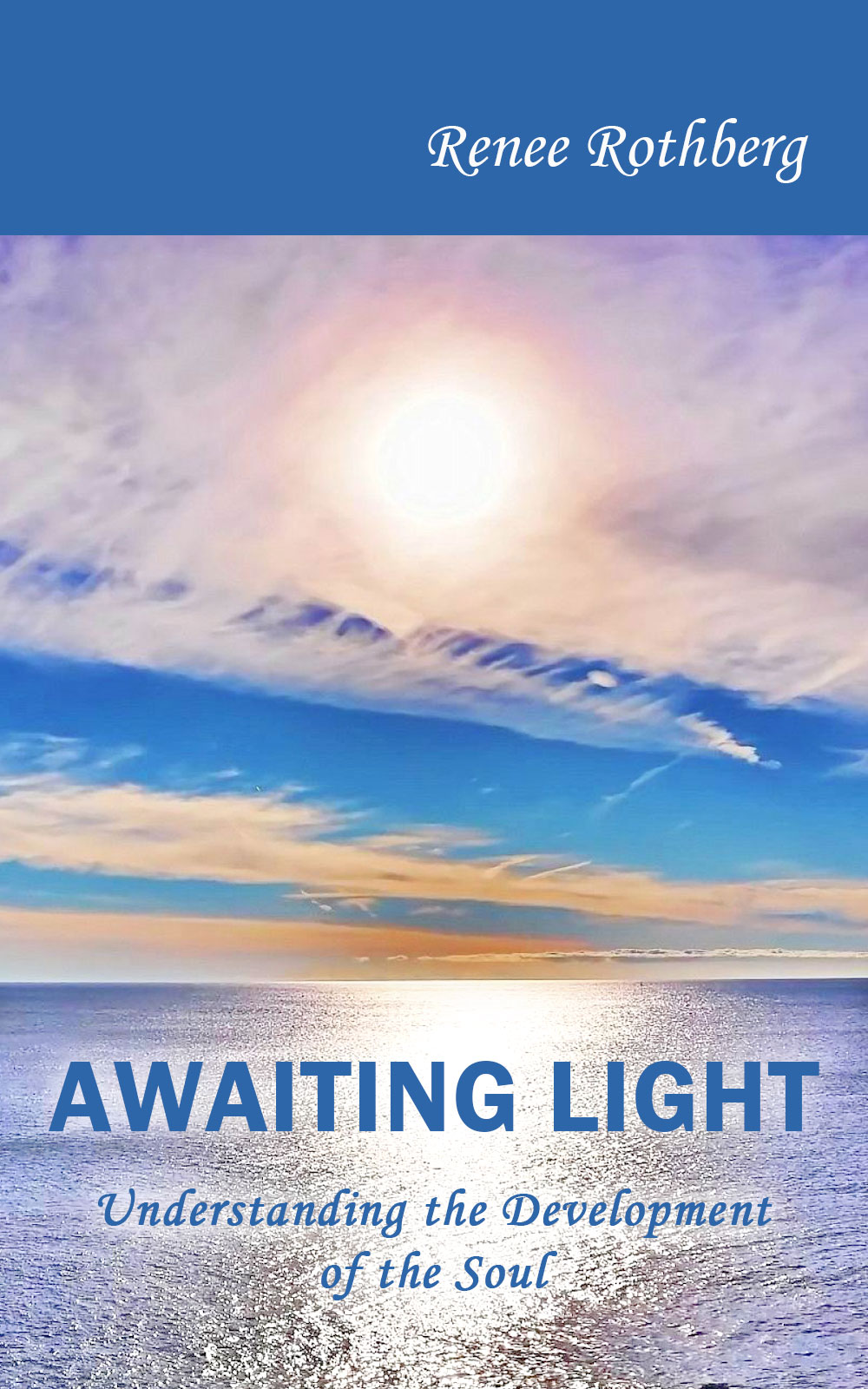
Awaiting Light

elsely: 1. Not authentic  2. Not according to design

Each person receives a soul when born, and this soul dictates direction and clarity. As described in Awaiting Light—Understanding the Development of the Soul:

“The soul determines personality, the types of things that draw our interest and attention, our pace in absorbing information and performing activities, our pull towards certain times of the day and seasons, our comfort with temperature and weather variations/frequencies, our moods and mood over-all, our intuition, and our drive to live. The soul affects health and well-being, and generally works to keep the body in balance.”

When we live soulfully, we feel our needs and direction and we live authentically. When we live according to someone else’s idea of how we should live or according to our misinterpretation of how we should live, we are living elsely.

Elsely leads to unsureness, illness, frustration, mediocrity, and regret. Living an untrue-to-oneself life affects one’s partner, children, friends, and associates. Living elsely creates a life that is manageable, but lacking. Living elsely creates a life that is half-full.

To know oneself is not easy. Unintentional negative influence by caregivers causes people to veer from their true path. Societal expectations cause people to question their ideas and actions.

By understanding one’s soulful being, life can be lived fully and with satisfaction. Reading the book Awaiting Light is a first step towards understanding the makeup of the soul and examining personal traits and desires. Awaiting Light is available through amazon.com and its global distributors.

“The path to understanding is through openness to wonder and willingness to imagine. This book is written so that all can know that their actions matter and that their personalities and sensitivities have reasons for being so. Having this information assists in raising children to be their real selves and encourages adults to understand their natural interests and societally created pursuits. Having this information leads to accepting each person as he or she is, which brings balance and elevation of all.”

Concrete Living


Concrete Living

From the chapter “Concrete Living” in Oneself—Living:

“The sky is ever changing. The weeds are ever growing. The sand is ever shifting. The bugs are ever multiplying. Natural elements always change, grow (from beginning to end), shift, and/or multiply. The natural order is just so.

People too are ever changing, growing, shifting, and multiplying. The natural order is just so. The body changes, takes in, lets out, grows up, withers away, builds, processes, and moves.

Life is not concrete; life is fluid. The flow may be slow, but stagnated it is not. Life jerks, life cruises and glides, life putt-putts, life sails, and life decelerates. Movement is always linear, from start to finish. Linear in development, multifaceted in development possibilities. The body is born, lives, and dies. The living is huge…or can be…or should be….

… Planning: making plans, long-term or not, short-term or notconcrete living.

Spontaneous actions: last-minute get-togethers or get-goingsconcrete living.

Laughing, smiling, wide-eyed appreciation, willingness to errconcrete living.

Concrete living: living with gusto and with verve, with awareness of an ending and with awareness of possibility, with thankfulness and with generosity.”

Review of the tests for maintaining health

Health

The last seven posts presented the tests that should be performed regularly to improve and sustain health. These tests require thought and desire to live purposefully. These tests monitor all aspects of health: physical health and sustenance of the body, emotional health, intellectual input, and connectedness to the world beyond our personal territory. These tests prevent a life lived partially, if we are careful to live with the understanding of our impact on the world.

“Knowing what to do to keep healthy is basic required knowledge. Knowing what to eat or how much to drink to stay hydrated are the most obvious keys to good health. Understanding the need and frequency of sleep is required as well. Health is not the villain to be battled or feared; health is the means to meaningful living and ultimate satisfaction with one’s life.” …from Pond a Connected Existence

The better the health, the more we can focus on life outside ourselves. Letting go of overemphasis on food or self or possessions or appearance can free us to be focused on real issues. Eating too much or too little or improperly are wasteful endeavors. Trying to do everything alone or holding back from taking part in society are against our design. Coveting or buying too many possessions hurt us emotionally and hurt the environment. Caring more for how we look than how we treat others is simply mistaken behavior.

If you haven’t yet looked at the tests, take a look now and consider the questions thoughtfully. Each of us impacts our society and beyond our society so much more than we realize. And our impact comes back around and affects our health—for better or worse.

Wishing you amazing test results!

Renee

treble_staff

The basic tests for maintaining health, Test #7

treble_staff

The post “Monitoring Health” (https://energy-guidance-complete.com/2014/08/24/monitoring-health/) brings awareness of the seven tests that should be performed in order to evaluate health.

Look at your “I deserve it”s and your excuses and your complaints and your excesses, and consider how they prevent a life lived fully. A life lived fully is thankfulness & gratitude and appreciation & hope and kindness & patience and focus & striving and gusto & vitality.

Here is Test #7.

Test #7: Full engagement in life

This test reveals the fullness of your life—if you are attentive to the possibilities and gifts that are within your grasp.

For this test, there are colors and circumstances that can be used to “color” the possibilities:

*blue    *life     *raspberry     *green     *brown     *purple     *shadow    

Consider which color(s) or circumstance(s) match your attitude. More than one color can be used on a line.

  • my place in the world
  • contemplation about my death
  • body-soul connection
  • my hidden skills
  • my choices that I didn’t make (someone else made them and I went along)

After you have selected the colors/circumstances, think about why you selected them and what they mean.

Living with awareness of your gifts and the possibilities to use them is good for your health!

Post 132-breathe-in unison


The basic tests for maintaining health, Test #6

treble_staff

The post “Monitoring Health” (https://energy-guidance-complete.com/2014/08/24/monitoring-health/) brings awareness of the seven tests that should be performed in order to evaluate health.

Focusing on foods that are bereft of nutritional value or are lacking in the aspects that naturally gratify (for example, fat-free foods) undermine physical, emotional, and intellectual health. Choosing to eat based on criteria not related to sustenance of the body has evolved. As stated in Vitality!— How to Create a Life That Is Healthy:

“Eating for the sake of keeping the body alive is not a part of life for most people living in modern society. Eating for the sake of the enjoyment of the food is modern society’s take on food. The enjoyment, not the life-giving aspect, is the focus.”

Here is Test #6.

Test #6: Consumption of nutritious and satisfying foods

Here are questions for the basic test:

  1. Potato vs. french fries
    The potato, baked or mashed (not from instant mashed potatoes and not with an overabundance of butter and milk), is the healthier choice.
    Which one do you choose more often? Which one is better for your body?
    (This question does not apply to people who have a medical allergy to potatoes.)
  2. Seasonal fruit platter vs. fruit cocktail dessert
    Seasonal applies to fruits that are in season in your location. Fruit cocktail applies to fruit in a can. Seasonal also applies to fresh fruit, preferably not waxed.
    Which one do you choose more often? Which one is better for your body?
  3. Roasted chicken vs. chicken smothered in a creamy sauce
    The non-meat version: pasta with a vegetable-rich sauce vs. macaroni and cheese
    Which one do you choose more often? Which one is better for your body?
  4. Tilapia vs. salmon
    Tilapia is an abundant fish; salmon is over-eaten and is endangered in some areas. In general, seafood such as tilapia, catfish, herring, oysters, sole, shrimp, and trout can be eaten up to three times a week total. Seafood that should be eaten less are salmon, Chilean sea bass, clams, cod, crab, crayfish, flounder, haddock, halibut, lobster, mackerel, mullet, mussels, octopus, perch, prawns, sea urchin, skate, snapper, squid, and tuna. Sardines aren’t in either grouping and can be eaten up to twice a week (in place of another fish serving). These groupings are based on environmental issues. At this point in time, consumption of mahi-mahi and whale should be limited to almost none. The debate over farmed or wild salmon is discussed here: https://energy-guidance-complete.com/2014/03/06/to-eat-farmed-salmon-or-not/
    Which fish do you choose more often? Can you do with less? Can you consider the environment when making choices about nourishing your body?
  5. Carbonated beverages, decaffeinated beverages, beverages that are referred to as energy drinks
    These beverages have been presented to us as better than water for quenching our thirst and giving us energy and vitality. Do you believe that is true?
    Which would you rather have to drink—a drink that fits into one of these three categories or water? Which drink do you think your body would rather have?

    There are many more questions; however, these five are a good beginning. Consider your answers and then consider the significance of each question.

    Eating wisely is good for your health!

Post 100-foods